
 English
 简体中文
 Français
 日本語
 한국어
 Português
 Русский
 Español



Technical Articles
What are the types of laboratory tube furnaces widely used in the fields of materials science, chemistry, physics, and engineering? How to choose? And what are its application areas? Let's take a detailed look below!
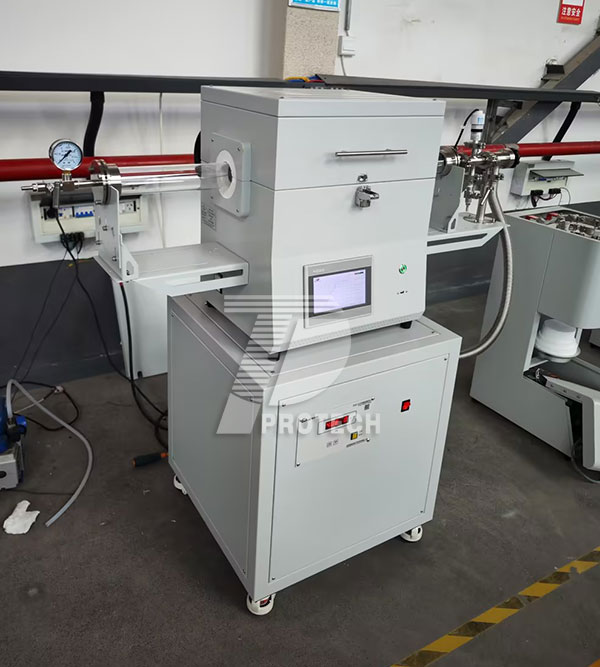
Commonly used laboratory tube furnaces (click on the image to view product details)
1. Common types of laboratory tube furnaces
Laboratory tube furnaces can be classified into the following types based on their structure, function, and application scenarios:
Classified by furnace tube material
Quartz tube furnace: high temperature resistance (≤ 1100 ℃), good transparency, suitable for experiments that require observation or photochemical reactions, but prone to react with alkaline substances.
Corundum tube furnace (alumina tube): high temperature resistance (≤ 1600 ℃), strong chemical stability, suitable for metal heat treatment, ceramic sintering, etc.
Metal tube furnace: such as stainless steel, with strong pressure resistance, suitable for high-pressure atmosphere experiments (such as hydrogen reduction).
Classified by heating element
Resistance wire furnace: with a maximum temperature of about 1200 ℃, low cost, suitable for low-temperature experiments.
Silicon carbon rod furnace: with a maximum temperature of about 1400 ℃, it heats up quickly and is suitable for medium to high temperature experiments.
Silicon molybdenum rod furnace: The highest temperature is about 1700 ℃, with good high-temperature stability, suitable for ultra-high temperature experiments.
Classified by furnace structure
Horizontal tube furnace: The furnace tube is placed horizontally and is suitable for long sample or continuous feeding experiments.
Vertical tube furnace: The furnace tubes are placed vertically, saving space and suitable for powder or small sample experiments.
Openable tube furnace: The furnace body can be opened for easy loading and unloading of samples, suitable for frequent operation scenarios.
Classified by the number of temperature zones
Single temperature zone tube furnace: With a single heating zone and high temperature uniformity, it is suitable for simple heat treatment.
Multi zone tube furnace (such as dual zone and triple zone): independent temperature control, suitable for gradient experiments or complex heat treatment.
Classified by functional extensions
Vacuum tube furnace: Integrated vacuum system, with a vacuum degree of up to 10 ⁻ Pa, suitable for anti oxidation experiments.
Atmosphere tube furnace: supports the introduction of inert (such as nitrogen, argon), reducing (such as hydrogen), or reactive gases, suitable for specific chemical reactions.
Rotating tube furnace: The furnace tube can rotate and is suitable for uniform heating of powder or liquid samples.
CVD/PECVD tube furnace: specialized for chemical vapor deposition, supporting thin film growth or material surface modification.
2. Selection guide for laboratory tube furnace
The selection should comprehensively consider experimental requirements, budget, and operational convenience, with key parameters including:
temperature range
Select the heating element based on the highest temperature required for the experiment:
≤ 1200 ℃: Resistance wire furnace;
1200-1400 ℃: silicon carbide rod furnace;
≥ 1400 ℃: Silicon molybdenum rod furnace.
Example: Ceramic sintering requires 1600 ℃, and a corundum tube furnace heated with silicon molybdenum rods should be selected.
Furnace tube material
Quartz tube: suitable for experiments with low temperature and high transparency requirements;
Corundum tube: suitable for experiments with high temperature and high chemical stability requirements;
Metal tube: suitable for high-pressure or corrosive atmosphere experiments.
Number of temperature zones
Single temperature zone: suitable for simple heat treatment or uniform heating;
Multi temperature zone: suitable for gradient experiments (such as material phase transition studies) or complex heat treatments.
Atmosphere control
If an inert or reducing atmosphere is required, choose an atmosphere tube furnace and equip it with a mass flow controller (MFC) to accurately control the gas flow rate.
Example: The metal reduction experiment requires the introduction of hydrogen gas, and an atmosphere furnace with a hydrogen interface should be selected.
vacuum requirement
To prevent material oxidation, choose a vacuum tube furnace with a vacuum degree that meets experimental requirements (such as 10 ⁻ ³ Pa).
Safety and durability
Choose equipment with safety functions such as over temperature protection, leakage protection, and trip protection;
Prioritize modular design for easy maintenance and replacement of furnace tubes.
3. Application scenarios of laboratory tube furnace
Laboratory tube furnaces are widely used in the fields of materials science, chemistry, physics, and engineering, with typical applications including:
Material sintering and heat treatment
Ceramic materials: densification achieved through high-temperature sintering, improving mechanical and electrical properties;
Metal materials: annealing, quenching, tempering treatment to optimize grain structure and hardness;
Composite materials: Preparation of carbon fiber reinforced composite materials or metal based composite materials.
Chemical synthesis and reaction
Organic/inorganic synthesis: synthesizing polymer materials and nanomaterials under inert or reducing atmospheres;
Catalyst preparation: Preparation of metal oxide or non-metal oxide catalysts through pyrolysis or reduction reactions;
Thermal decomposition reaction: synthesis of carbon materials such as carbon nanotubes and graphene.
Physical performance testing
Measurement of thermal expansion coefficient: studying the dimensional changes of materials at high temperatures;
Thermal conductivity testing: evaluating the thermal conductivity of materials;
Magnetic/Electrical Performance Testing: Analyzing the magnetic or electrical properties of materials at high temperatures.
In the field of new energy and environmental protection
Solar materials: preparation of high-efficiency solar cell materials (such as perovskite);
Lithium ion batteries: sintered positive electrode materials (such as high nickel ternary, lithium iron phosphate) or solid electrolytes;
Waste disposal: high-temperature decomposition of organic waste or heavy metal pollutants.
Teaching and Research
University laboratory: used for basic experiments in materials science, chemistry, physics and other courses;
Research institutions: Support cutting-edge topics such as new material development and reaction mechanism research.
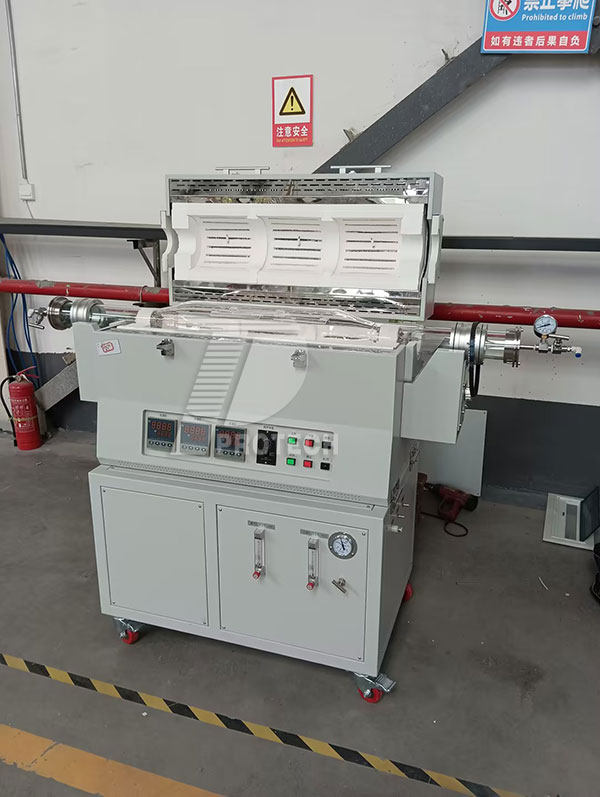
A laboratory tube furnace that can rotate and tilt (click on the image to view product details)
4. Summary and Prospect
The laboratory tube furnace is the core equipment for high-temperature experiments, with diverse types and strong functional scalability. When selecting, a comprehensive decision should be made based on experimental requirements (temperature, atmosphere, vacuum, etc.), budget, and operational convenience. With the development of new energy, semiconductors, and nanotechnology, tube furnaces are moving towards high temperature, intelligence (remote monitoring through the Internet of Things), energy conservation (efficient heating elements), and multifunctionality (integrated CVD, rotation, and other functions), providing stronger support for scientific research and industrial production in the future.Click to learn more laboratory tube furnaces! Or click on online customer service to learn more about product information!


Inquiry
Please leave a message here. We will reply you in 24 hours.


