
 English
 简体中文
简体中文 French
 日本語
日本語 Korean
 Português
 Русский
 Spanish



NEWS
When choosing a powder calcination rotary tube furnace, multiple factors need to be considered, such as temperature range, heating elements, furnace tube and crucible materials, temperature zone design, rotation function, sealing and atmosphere control, safety and operational convenience, customization requirements, and brand and after-sales service. Let's take a detailed look below!
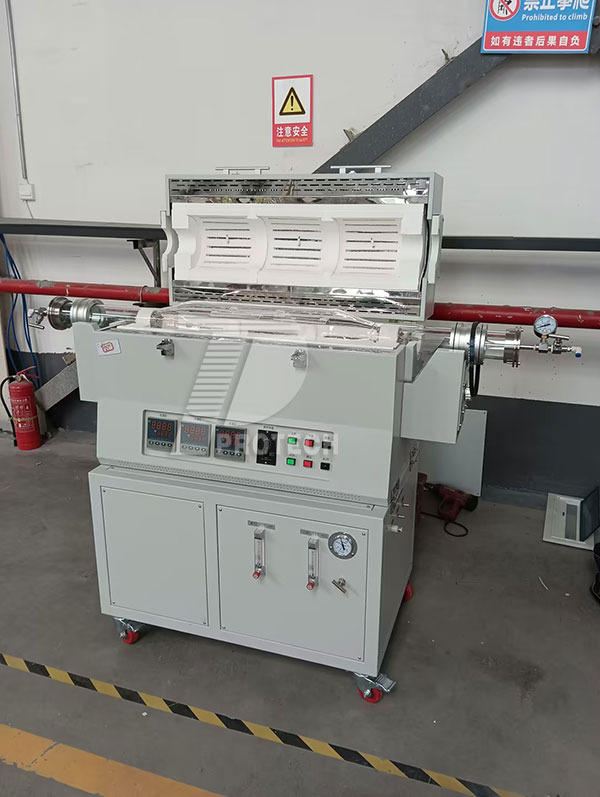
Commonly used powder calcination rotary tube furnace (click on the picture to view product details)
1. Temperature range and heating element
Temperature range: Determine the maximum calcination temperature required based on experimental or production needs. The maximum operating temperature of tube furnaces with different heating elements varies. For example, the maximum operating temperature of a tube furnace for resistance wire heating elements is generally around 1200 ℃, while for silicon carbide heating elements it can reach 1400 ℃, and for MoSi2 heating elements it can reach 1700 ℃.
Heating element: The type of heating element not only affects the maximum operating temperature, but also affects heating efficiency and stability. When choosing, it is necessary to select suitable heating elements based on the specific needs of the experiment or production.
2. Furnace tube and crucible material
Furnace tube material: The material of the furnace tube should match the highest calcination temperature. For example, quartz tubes are suitable for calcination below 1200 ℃, while corundum tubes can withstand higher temperatures up to 1700 ℃.
Crucible material: The material of the crucible also needs to be selected according to the calcination temperature. Quartz crucibles are suitable for temperatures below 1200 ℃, while alumina crucibles can withstand higher temperatures up to 1700 ℃. In addition, it is necessary to consider the chemical compatibility between the crucible and the sample to avoid reactions at high temperatures.
3. Temperature zone design
Single temperature zone and multi temperature zone: Single temperature zone tube furnaces are suitable for experiments or production that do not require high temperature uniformity, while multi temperature zone tube furnaces can provide a longer constant temperature zone to meet the demand for high temperature uniformity. Multi zone tube furnaces also allow for controlled temperature gradients, making them suitable for experiments or production that require multiple temperature stages.
Constant temperature zone length: The constant temperature zone is the area of uniform temperature inside the tube furnace, and the sample should be placed in this area to ensure uniform heating. When selecting, the appropriate length of the constant temperature zone should be chosen based on the size of the sample or the required heating volume for the experiment.
4. Rotation function
Rotation mechanism: The rotating tube furnace uses a rotation mechanism to continuously roll and move materials inside the furnace, ensuring more uniform heating of the materials. This is important for powder calcination, as it can effectively avoid problems such as local overheating or uneven sintering.
Rotation speed and stability: Rotation speed and stability are also factors to consider when choosing a rotary tube furnace. A suitable rotation speed can ensure uniform heating of materials, while a stable rotation mechanism can prevent materials from splashing or being damaged during the rotation process.
5. Sealing and atmosphere control
Sealing performance: For experiments or production that require calcination in a specific atmosphere, the sealing performance of tube furnaces is crucial. Good sealing performance can prevent external gases from entering the furnace and affecting experimental or production results.
Atmosphere control system: Some high-end rotary tube furnaces are also equipped with atmosphere control systems, which can control the composition and flow rate of the atmosphere inside the furnace, meeting the experimental or production needs with high atmosphere requirements.
6. Safety and operational convenience
Safety protection measures: When choosing a rotary tube furnace, attention should be paid to whether its safety protection measures are complete. For example, whether safety devices such as over temperature protection and leakage protection are equipped to ensure the safety of equipment and operators.
Convenience of operation: Convenience of operation is also a factor to consider when choosing a rotary tube furnace. For example, whether it is equipped with touch screen control, remote control and other functions to reduce operational difficulty and improve work efficiency.
7. Customized requirements
Customized according to specific needs: If there are special customization requirements for experiments or production, such as special furnace size, temperature range, atmosphere control system, etc., you can choose a rotary tube furnace manufacturer that can provide customized services.
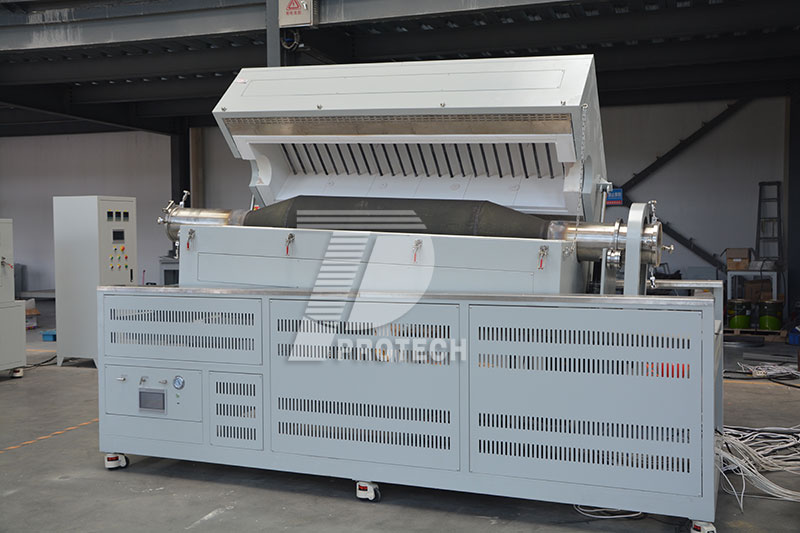
Large output powder calcination rotary tube furnace (click on the picture to view product details)
8. Brand and after-sales service
Brand reputation: Choosing a reputable brand and manufacturer to produce a rotary tube furnace can ensure the quality and stable and reliable performance of the equipment.
After sales service: Good after-sales service can ensure timely resolution of equipment problems encountered during use. Therefore, when choosing a rotary tube furnace, attention should be paid to the manufacturer's after-sales service policy and service quality.Click to learn more customized rotary tube furnaces! Or click on online customer service to learn more about product information!
Leave A Message


