
 English
 简体中文
简体中文 French
 日本語
日本語 Korean
 Português
 Русский
 Spanish



NEWS
The graphite heating vacuum furnace combines the excellent characteristics of graphite materials and the advantages of vacuum environment, demonstrating many advantages in material processing, heat treatment, scientific research experiments, and other fields. Let's take a detailed look below!
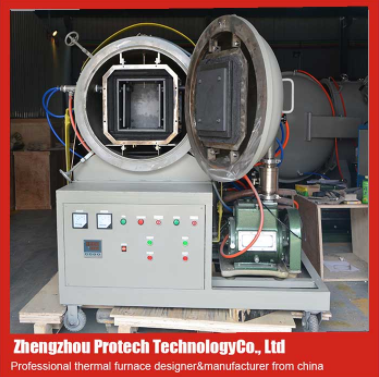
Commonly used graphite heating vacuum furnace (click on the picture to view product details)
1. Excellent high-temperature performance
Strong high temperature resistance: The melting point of graphite is as high as 3650-3700 ℃, and it can work stably above 2500 ℃ in an inert or vacuum environment, far exceeding metal heating elements (such as molybdenum wire, which has a maximum operating temperature of about 1700 ℃ but is prone to oxidation). This enables graphite heating vacuum furnaces to meet the requirements of high-temperature sintering, melting, and other processes, such as preparing high-temperature alloys, ceramic materials, etc.
Good thermal stability: Graphite is not prone to creep or deformation at high temperatures and can maintain stable heating performance. Its coefficient of thermal expansion is low, and the thermal stress generated during temperature changes is small, which is beneficial for extending the service life of the equipment.
2. Better heating uniformity
Radiant heat transfer dominates: In a vacuum environment, heat conduction and convection are greatly weakened, and heating mainly relies on radiative heat transfer. Graphite, as a heating element, can uniformly emit infrared radiation, making the temperature distribution inside the furnace more uniform. This is very important for processes that require precise temperature control, such as semiconductor material growth, optical component annealing, etc.
Flexible structural design: Graphite heating elements can be designed in various shapes such as tubular, plate-shaped, rod-shaped, etc. to adapt to different furnace structures and heating needs. By reasonably arranging heating elements, the temperature field distribution inside the furnace can be further optimized to improve heating uniformity.
3. High chemical stability
Strong adaptability to inert environments: Under vacuum or inert gas (such as argon, nitrogen) protection, graphite heating elements are not easily subjected to chemical reactions with the surrounding environment, avoiding problems such as oxidation and corrosion. This enables graphite heating vacuum furnaces to process atmosphere sensitive materials such as metal powders, ceramic precursors, etc.
Low risk of material contamination: Graphite heating elements are not easily volatile or decomposed at high temperatures, and do not produce harmful gases or impurities, causing pollution to the processed materials. This is of great significance for the preparation of high-purity materials such as semiconductor silicon wafers, optical crystals, etc.
4. Better energy-saving effect
High thermal efficiency: Graphite heating elements have high radiation efficiency and can effectively convert electrical energy into thermal energy, reducing energy loss. Meanwhile, the vacuum environment reduces heat conduction and convection losses, further improving thermal efficiency.
Fast heating speed: Due to the small heat capacity and good thermal conductivity of graphite heating elements, the heating speed is fast, which can shorten the heating cycle and improve production efficiency. This has great advantages for processes that require rapid heating, such as hot pressing sintering, rapid annealing, etc.
5. Long service life
Good thermal shock resistance: Graphite material has good thermal shock resistance and can withstand frequent temperature rise and fall cycles without cracking or damage. This makes the graphite heating vacuum furnace perform well in processes that require repeated start-up and shutdown, such as experimental research and small-scale production.
Low maintenance cost: Due to the fact that graphite heating elements are not easily damaged and easy to replace, maintenance costs are relatively low. Meanwhile, the price of graphite materials is relatively stable, and the long-term usage cost is controllable.

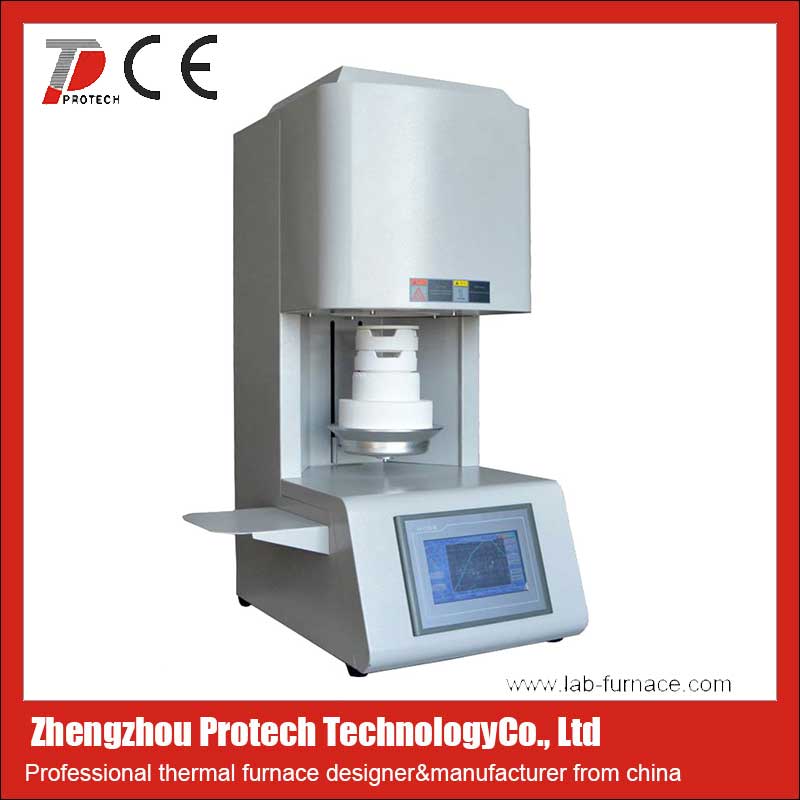
Vertical graphite heating vacuum furnace (click on the picture to view product details)
6. Widely applicable in various fields
Material preparation: Graphite heating vacuum furnace can be used to prepare high-temperature alloys, ceramic materials, composite materials, etc., meeting the demand for high-performance materials in aerospace, new energy, electronic information and other fields.
Heat treatment: In the field of metal heat treatment, graphite heating vacuum furnace can be used for annealing, quenching, tempering and other processes to improve the microstructure and properties of metal materials.
Research experiments: In the fields of materials science, physics, chemistry, and other scientific research areas, graphite heating vacuum furnaces provide a stable and controllable high-temperature environment for experimental research, which helps to explore the synthesis and properties of new materials.Click to learn more customized vacuum furnaces! Or click on online customer service to learn more about product information!
Leave A Message


