
 English
 简体中文
简体中文 French
 日本語
日本語 Korean
 Português
 Русский
 Spanish



NEWS
The nitrogen vertical tube furnace is a heating device that combines a nitrogen protective atmosphere with a vertical tube structure. Its core feature is to use nitrogen to create an inert environment, prevent material oxidation at high temperatures, and achieve efficient and uniform heating through a vertical design. It is suitable for scenarios with strict material performance requirements in scientific research experiments and industrial production. Let's take a detailed look below!

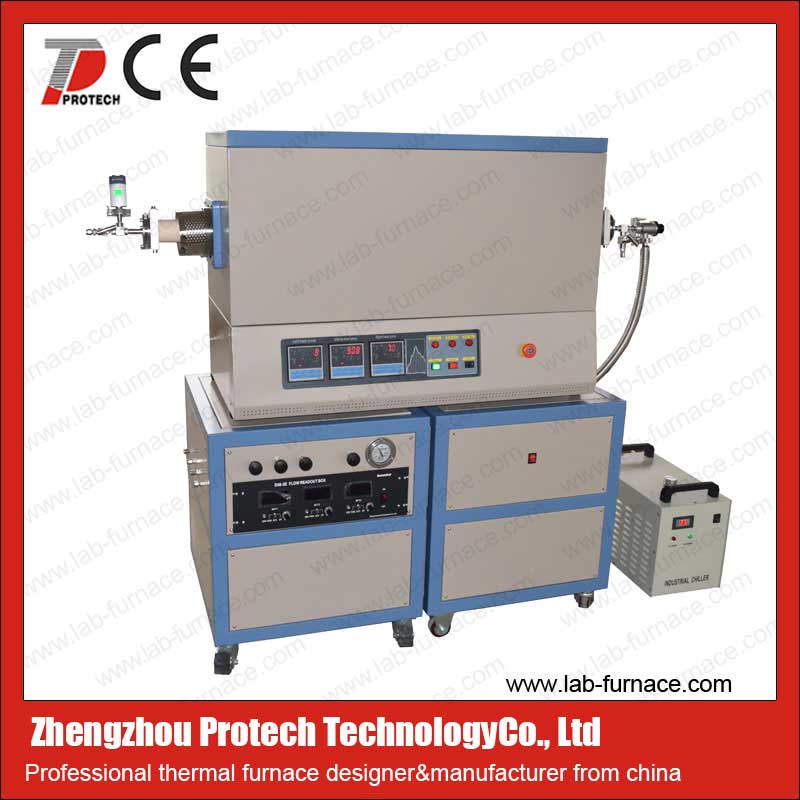
A commonly used vertical tube furnace (click on the image to view product details)
1. Structural characteristics
Vertical design
The furnace tube is placed vertically, and the material is added from the top and heated in the furnace before being discharged from the bottom. This structure is compact, occupies a small area, is easy to install and move, and utilizes gravity to ensure stable distribution of materials in the furnace, reducing the risk of segregation.
Tubular furnace
Made of high-temperature resistant ceramic fibers or corundum materials, it has better insulation performance and reduces heat loss. Uniformly distribute heating elements (such as silicon carbon rods, alloy wires, silicon molybdenum rods) in the furnace to ensure temperature uniformity and avoid local overheating.
Atmosphere control system
Equipped with a vacuum system (such as vacuum pump, valve, meter) and gas inlet device, it can pre evacuate to a high vacuum degree (such as 10 ⁻ Pa), and then introduce protective gases such as nitrogen to create an inert environment and suppress oxidation reactions.
2. Core functions
High-temperature protection
Nitrogen, as a protective gas, has stable chemical properties and isolates oxygen at high temperatures (such as 1400 ℃) to prevent material oxidation, decarburization, or other chemical reactions, ensuring stable material properties.
Accurate temperature control
Adopting multi temperature zone independent temperature control technology, by adjusting the heating power of each temperature zone, complex temperature gradient distribution can be achieved to meet different process requirements (such as oxidation, evaporation, deposition in semiconductor material preparation).
Flexible atmosphere adjustment
In addition to nitrogen, gases such as argon and hydrogen can also be introduced to create an oxidizing, reducing, or inert atmosphere, suitable for various material processing needs (such as metal heat treatment and ceramic sintering).
3. Typical application scenarios
scientific research experiment
Materials research: Used for sintering and heat treatment of new alloys, ceramics, and semiconductor materials, studying the phase transition, diffusion, and other behaviors of materials at high temperatures.
Sample processing: Prepare nanomaterials, composite materials in the laboratory, or perform annealing, quenching, and other treatments on samples.
industrial production
Metal heat treatment: Quenching, tempering, and annealing of metal parts to improve mechanical properties such as hardness and strength.
Ceramic sintering: Manufacturing high-density, high-strength ceramic products (such as ceramic tiles, vessels).
Glass processing: realizing the hot bending, melting, and vessel manufacturing of glass, controlling the composition and structure of glass.
In the field of new energy, optimize the sintering process of lithium battery positive and negative electrode materials to improve battery performance and stability.
special process
Fluidized pyrolysis: Nitrogen is introduced into a fluidized bed to make materials (such as biomass and coal) fluidized, rapidly pyrolyzing into gas, liquid, and solid products to improve reaction efficiency.
High temperature corrosion resistance testing: In the development of nuclear energy materials, the corrosion resistance performance of materials is tested under high temperature nitrogen environment.
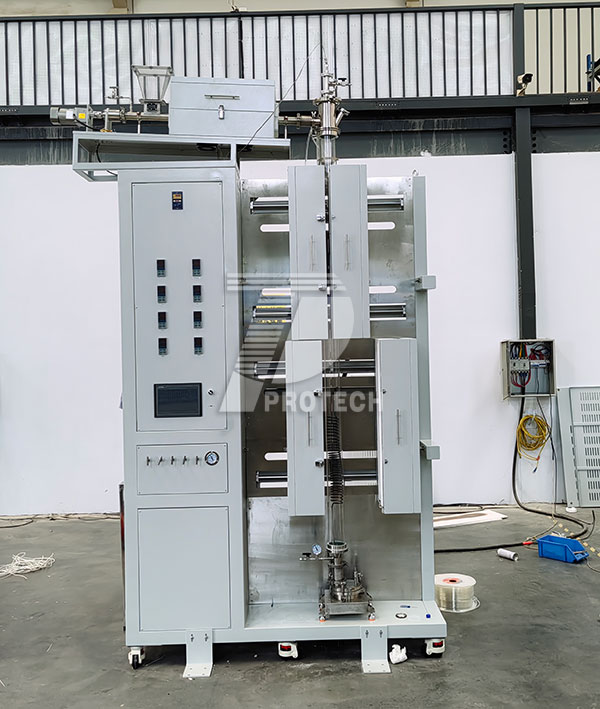
Large industrial vertical tube furnace (click on the picture to view product details)
4. Technical advantages
High Efficiency and Energy Saving
Adopting good heating technology and insulation materials, high thermal efficiency, low energy consumption, in line with the trend of green production.
Easy to operate
Equipped with a high-definition touch screen operation interface, it supports preset program control of heating, insulation, and cooling processes, reducing operational difficulty.
safe and reliable
Integrate multiple safety devices such as over temperature alarm, overcurrent protection, couple break protection, leakage protection, and gas leak detection to ensure the safety of equipment and personnel.
Adaptable
It can handle various materials (such as metals, ceramics, glass, semiconductors) to meet the customized requirements of different industries for material properties.Click to learn more Vertical tube furnaces! Or click on online customer service to learn more about product information!
Leave A Message


