English
 简体中文
简体中文 French
 日本語
日本語 Korean
 Português
 Русский
 Spanish



NEWS
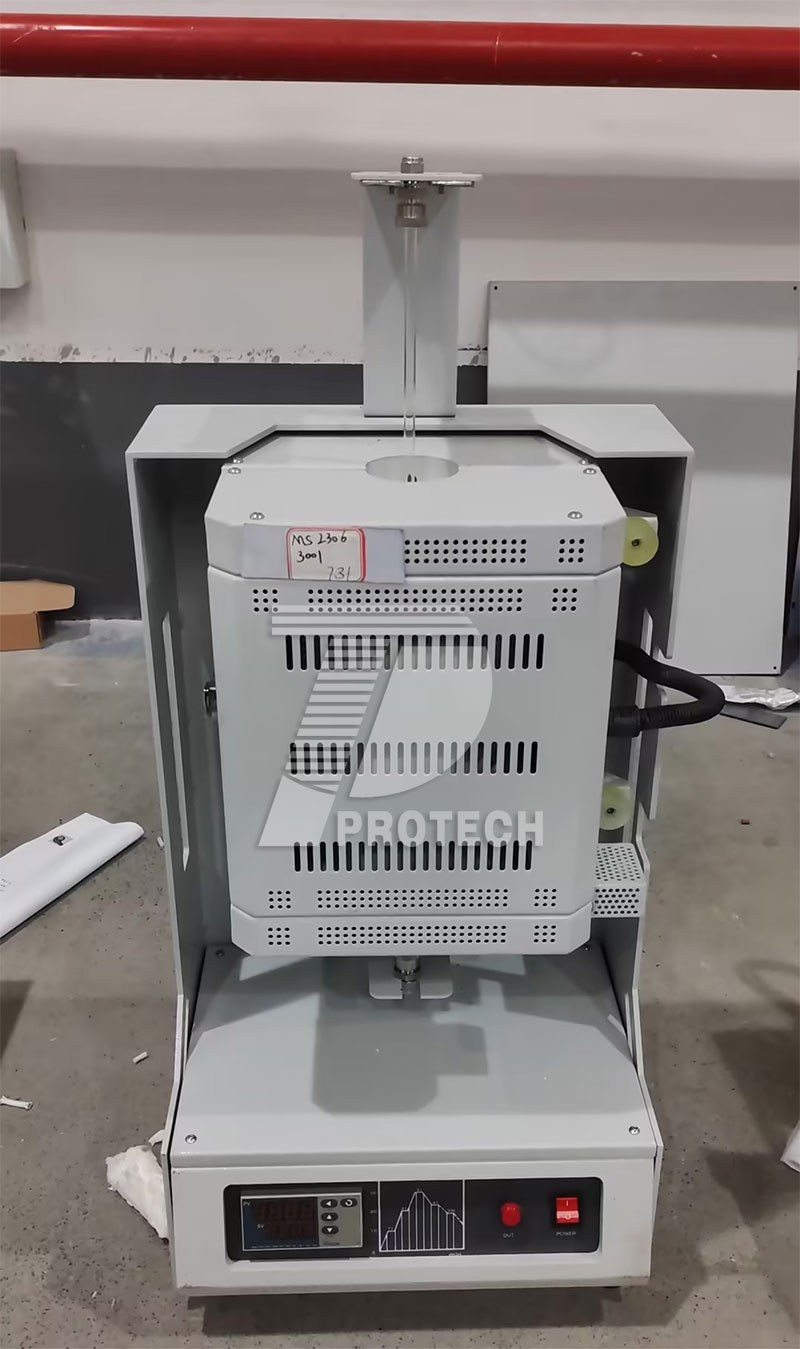
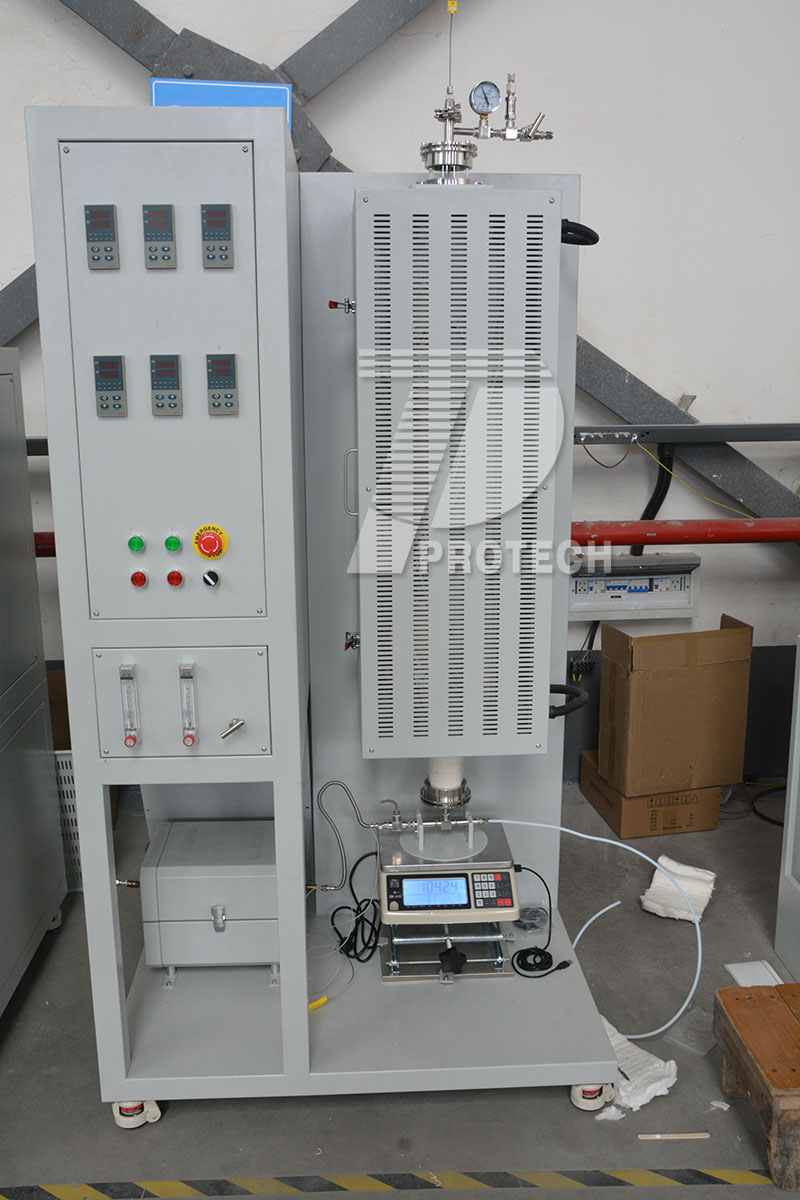
The new vertical experimental tube furnace has shown great advantages in structural design, thermal field control, space utilization, operational safety, functional scalability, and environmental protection and energy saving. Let's take a detailed look below!
Structural design optimization
Vertical layout: The vertical structure installs the furnace tube vertically, reducing the footprint and making it particularly suitable for laboratory or production sites with limited space. For example, a 1.2-meter-high vertical furnace only requires a ground area of 0.5 square meters, while a horizontal furnace of the same volume requires 1.2 square meters.
Modular expansion: Vertical furnaces can easily stack long multi zone furnace tubes, achieving multi zone processing and higher thermal efficiency. Some models support double-layer or three-layer structures, greatly increasing production capacity and meeting large-scale production needs.
Flexible aspect ratio: The length to diameter ratio (L/D) of the furnace tube can be customized to 20:1 or above, suitable for the growth needs of one-dimensional materials such as nanowires and fibers. For example, the preparation of carbon nanotube arrays requires furnace tubes with L/D ≥ 15:1.
Accurate control of thermal field
Vertical airflow design: Utilizing gravity to create vertical circulation of gas within the furnace tube, reducing temperature fluctuations caused by horizontal airflow. In the semiconductor annealing process, vertical airflow can ensure that the temperature difference on the wafer surface is controlled within ± 5 ℃, which is much better than the ± 10 ℃ for horizontal structures.
Temperature gradient control: Temperature gradient control in the vertical direction inside the furnace is achieved through layered heating elements, such as from top 1000 ℃ to bottom 600 ℃, suitable for special processes such as gradient annealing and hot pressing sintering.
Reduce thermal convection interference: The vertical layout avoids the problem of heat accumulation at the bottom of the furnace tube, especially suitable for long-term high-temperature experiments (such as above 1200 ℃), which can reduce the risk of material cracking caused by thermal stress.
Efficient utilization of space
Small footprint: Compared to horizontal furnaces, vertical structures stack heating elements, furnace tubes, and control systems vertically, reducing the footprint by about one-third under the same power, making them suitable for clean rooms or small laboratories with limited space.
Easy to integrate with automation: The vertical structure has stronger compatibility with automation equipment such as robotic arms and conveyor belts. For example, in photovoltaic cell production, it can achieve unmanned operation throughout the entire process from wafer loading to annealing.
Improved operational security
Reduce manual intervention: Samples are vertically loaded and unloaded through top or bottom lifting platforms to avoid the risk of collision caused by lateral pushing of horizontal furnaces. In high temperature environments (such as 1000 ℃), vertical operation can reduce the probability of operators being exposed to thermal radiation and improve safety.
Multiple protection functions: It has overheating and disconnection protection functions, and some models are also equipped with overvoltage, overcurrent, leakage and other protection systems to ensure that the equipment automatically cuts off the power supply in case of abnormal situations, ensuring operational safety.
Reduce insulation layer loss: Vertical layout reduces the heat dissipation area of the furnace side wall, combined with multi-layer insulation structure, which can reduce standby energy consumption.
Strong functional scalability
Atmosphere gradient control: The vertical structure facilitates the design of multi-stage air intakes, achieving atmosphere gradient distribution and reducing side reactions. For example, during the deposition of ZnO thin films in MOCVD, the oxygen concentration gradient control reduces the impurity content.
Dynamic process support: facilitates the design of rotating bases or vibrating feeding systems, suitable for dynamic deposition or powder calcination processes. For example, when calcining the positive electrode material of lithium-ion batteries, rotating the base can reduce the deviation of particle size distribution.
Multi field coupling capability: can integrate microwave, plasma or laser assisted heating modules to improve process efficiency. For example, microwave-assisted CVD vertical furnace increases the growth rate of graphene.
Better environmental protection and energy conservation
Efficient and energy-saving: adopting good heating technology and insulation materials, high thermal efficiency and low energy consumption. Some models have increased heating speed and reduced energy consumption under the same power, which is in line with the development trend of green environmental protection.Click to learn more Vertical tube furnaces! Or click on online customer service to learn more about product information!
Leave A Message