English
 简体中文
简体中文 French
 日本語
日本語 Korean
 Português
 Русский
 Spanish



NEWS
As a commonly used heat treatment equipment in university laboratories, vertical tube furnaces have numerous experimental application fields. So, what is the vertical tube furnace for laboratory chemical synthesis? Let's take a detailed look below!
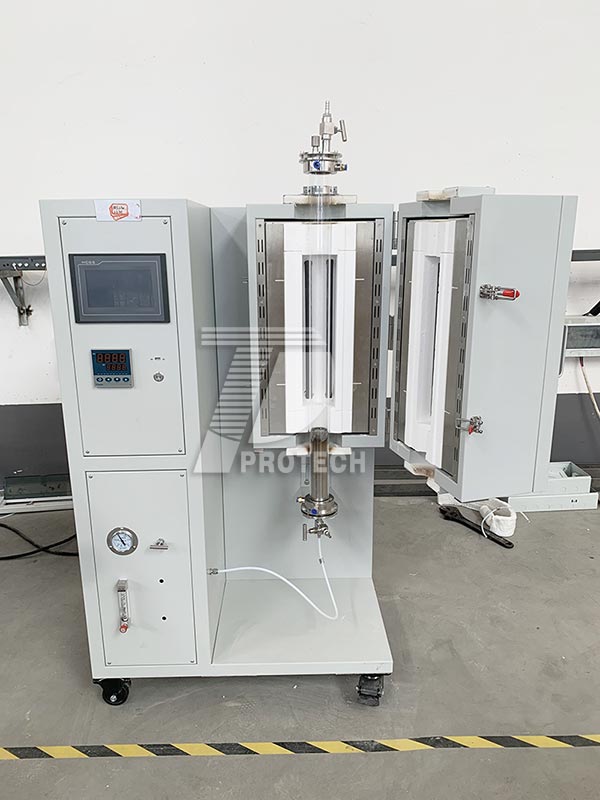
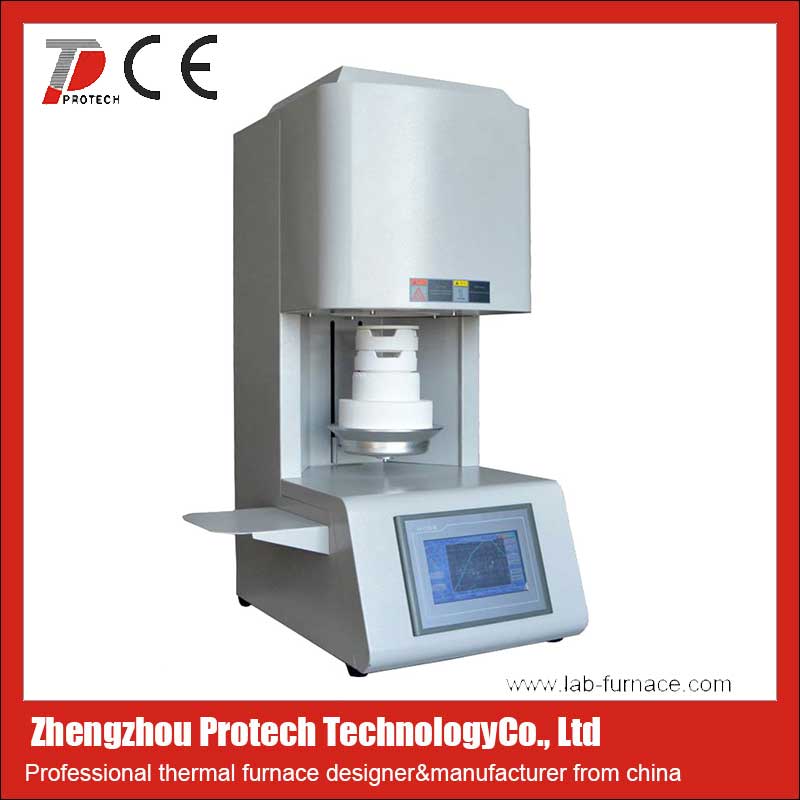
A commonly used experimental vertical tube furnace (click on the image to view product details)
1. Core Structure and Function
Vertical furnace body design
Compact structure: Small footprint, convenient for laboratory layout and movement, especially suitable for scenarios with limited space.
Gravity assisted material conveying: Materials are added from the top and heated in the furnace before being discharged from the bottom, reducing the risk of blockage and improving operational stability.
Heating and temperature control system
Heating element: using resistance wire, electric heating tube or alloy wire, converting electrical energy into thermal energy to achieve uniform heating.
Intelligent temperature control: equipped with PID regulation, self-tuning function, and 30 segment program programming, the temperature control accuracy reaches ± 1 ℃, supporting rapid temperature rise (≤ 20 ℃/min) and precise constant temperature.
Temperature monitoring: Thermocouples (such as S-type platinum rhodium thermocouples) provide real-time feedback on temperature data to ensure controllable experimental conditions.
Furnace and Sealing Technology
Refractory material: The furnace is made of high-purity alumina polycrystalline fiber material, which has strong thermal shock resistance, resistance to rapid cooling and heating, and a long service life.
Sealing structure: The furnace door is equipped with a high-temperature sealing ring and a circulating water cooling system to ensure long-term use without air leakage; The flange connection is made of stainless steel material and high-temperature sealing ring, supporting long-term pressure maintenance.
Gas control system
Multi atmosphere support: Inert or reducing gases such as nitrogen, argon, and hydrogen can be introduced to meet different chemical reaction requirements.
Flow control: Accurately adjust the gas flow rate through a mass flow meter, combined with a pressure control system to maintain a slight positive pressure inside the furnace and prevent external pollution.
2. Technical advantages
Efficient heat transfer and reaction
Fluidized bed technology (optional): Some models combine fluidized bed design to ensure full contact between gas and solid particles, increasing the heat transfer area by several times and achieving temperature uniformity within ± 5 ℃, greatly improving reaction efficiency.
Uniform temperature field: Vertical tube bundle layout and optimized airflow design ensure uniform temperature distribution inside the furnace, avoiding local overheating or underheating.
Safety and reliability
Multiple protections: independent over temperature protection, overcurrent, leakage, and short circuit protection to ensure safe operation of the equipment.
Explosion proof design: The furnace is equipped with explosion-proof doors to prevent danger caused by excessive pressure.
Convenience of operation
Automated control: The touchscreen interface supports one click startup, program editing, and real-time monitoring, reducing manual intervention.
Rapid cooling: Air insulation technology and thermal induction drive system, combined with automatic cooling fans, accelerate the cooling of the furnace shell and improve experimental efficiency.
3. Typical application scenarios
material synthesis
High temperature sintering and crystallization treatment of nanomaterials, ceramic materials, metal oxides, etc.
Catalyst preparation: By precise temperature and atmosphere control, uniform loading of the active components of the catalyst is achieved.
Heat treatment experiment
Study the changes in microstructure and properties of metal materials through annealing, quenching, tempering and other heat treatment processes.
Doping and diffusion processes of semiconductor materials to optimize electrical properties.
Multiphase catalytic reaction
Fluidized bed models are suitable for gas-solid phase catalytic reactions, such as CO oxidation, methanol synthesis, etc., to study reaction kinetics and catalyst activity.
Simulate industrial reaction conditions and provide data support for catalyst scale-up production.
Atmosphere Protection Experiment
Material synthesis is carried out in an inert or reducing atmosphere to prevent oxidation or decarburization, such as the preparation of metallic lithium and the reduction of carbon materials.
4. Selection suggestions
temperature range
Select the highest temperature (such as 1200 ℃, 1400 ℃, 1600 ℃, 1800 ℃) according to experimental requirements to ensure coverage of the target reaction conditions.
Furnace tube size
Choose the diameter and length of the furnace tube based on the amount of material (such as Φ 30 × 800mm, Φ 60 × 1000mm) to avoid space waste or operational limitations.
Atmosphere control
If a complex atmosphere is required (such as mixed gases, dynamic switching), choose a model equipped with a multi-channel gas switching system.
after-sales service
Assess the technical support capability and spare parts supply cycle of suppliers to reduce maintenance costs in the later stage.Click to learn more Vertical tube furnaces! Or click on online customer service to learn more about product information!
Leave A Message