
 English
 简体中文
简体中文 French
 日本語
日本語 Korean
 Português
 Русский
 Spanish



NEWS
In the research and development scenarios of university laboratories, research institutes, and new material enterprises, small experimental rotary tube furnaces are commonly used precision heat treatment equipment. Compared with traditional fixed tube furnaces, it is equipped with a rotatable furnace tube structure, which can make the heating of powder and granular materials more uniform, effectively solving experimental problems such as uneven sintering, local overheating, and insufficient reaction of materials. It is widely used in the calcination, sintering, reduction, annealing and other processes of lithium battery materials, ceramic powders, chemical raw materials, metal materials, magnetic materials, etc.

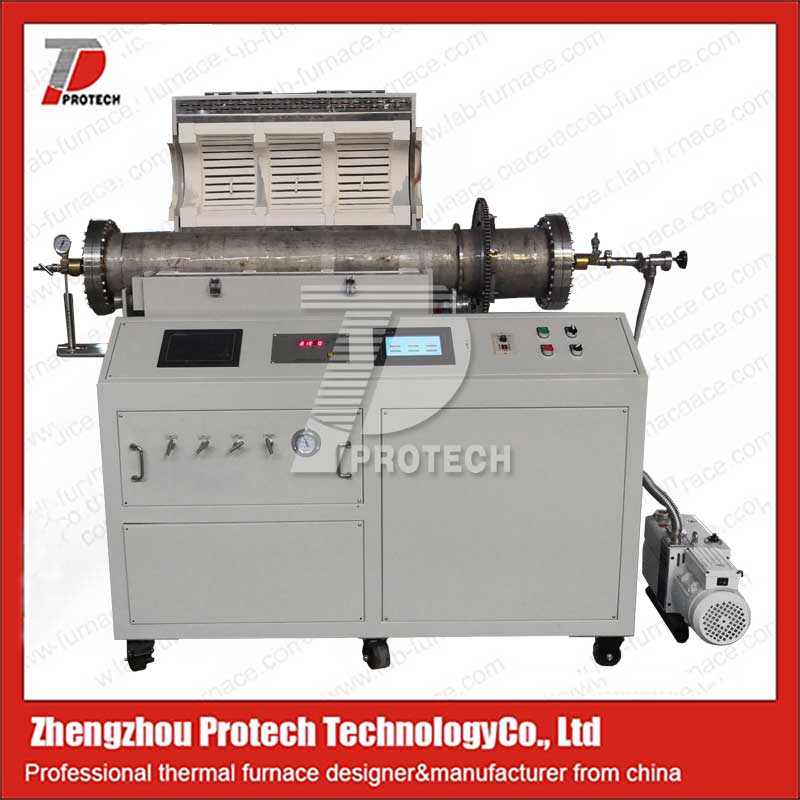
Small experimental rotary tube furnace (click on the picture to view product details)
Many users are prone to problems such as experimental data deviation, equipment idleness, and poor experimental repeatability when purchasing small experimental rotary tube furnaces due to parameter mismatch, incorrect configuration selection, and unsuitable scenarios. Below is a complete and practical reference guide for selecting small experimental rotary tube furnaces, based on the general laboratory experimental standards and equipment technical parameters, to help you quickly and accurately select and avoid purchasing errors.
1. Clarify experimental requirements and identify core usage scenarios
The first step in selection is not to look at device parameters, but to more accurately match one's own experimental scenario. The equipment configuration, temperature, and atmosphere requirements for different application scenarios vary greatly, and more accurate positioning of requirements can greatly improve selection efficiency.
a. New energy material experiment: Suitable for sintering, coating, and carbonization processes of lithium battery positive and negative electrode materials, energy storage materials, and photovoltaic powders, with high requirements for temperature stability, atmosphere purity, and furnace tube rotation uniformity, supporting inert gas and reducing atmosphere environments.
b. Research and development of chemical powders: High temperature calcination, drying, and modification experiments of various inorganic powders, catalysts, and adsorbents, relying on the rotation function of furnace tubes to achieve dynamic heating of materials and avoid powder accumulation and agglomeration.
c. Ceramics and New Materials Experiment: Precision ceramic powders such as alumina, silicon nitride, and silicon carbide are pre fired and densified, requiring high temperature uniformity and no impurity pollution.
d. Metal and Electronic Materials Experiment: Annealing of small metal parts, purification of magnetic materials, vacuum heat treatment of electronic components, often requiring vacuum or atmosphere protection to prevent oxidation and discoloration of workpieces.
e. Teaching and research in universities: Emphasis is placed on equipment that is compact, portable, easy to operate, and has a wide range of adjustable parameters, suitable for basic and comparative experiments in multiple categories.
2. Selection criteria for core technical parameters (top priority)
The core performance of a small-scale experimental rotary tube furnace is determined by four major parameters: temperature system, furnace tube configuration, rotation system, and atmosphere system. It is also a key indicator for distinguishing equipment quality and adapting experimental accuracy.
a. Working temperature and selection of heating elements
-Conventional experiments below 1000 ℃: Preferred resistance wire heating elements with stable heating, low energy consumption, and high cost-effectiveness, suitable for most basic powder calcination and drying experiments.
-High temperature experiment from 1300 ℃ to 1600 ℃: Silicon molybdenum rod heating elements must be selected, which have strong high temperature resistance, can maintain a stable temperature for a long time, and are suitable for high-temperature sintering experiments of new materials and precision ceramics.
b. Matching of furnace tube material and size
-Quartz furnace tube: Suitable for experiments below 1100 ℃, acid and alkali resistance, no impurity precipitation, high transparency, easy to observe experimental conditions, and higher cost-effectiveness. It is the first consideration for conventional scientific research.
Size selection technique: The inner diameter of the furnace tube should be 10-20mm larger than the maximum size of the experimental material, with reserved space for thermal expansion to avoid cracking caused by material thermal expansion squeezing the furnace tube; Laboratory small-scale research and development, commonly using small specifications with pipe diameters of 80-120mm and pipe lengths of 300-600mm, suitable for countertop placement.
The rotation function is the core that distinguishes this device from ordinary tube furnaces, directly determining the uniformity of material heating. The selection focuses on the adjustable range of rotational speed and rotational stability: the conventional rotational speed is 0-30r/min with infinite speed regulation, which can be adjusted according to the thickness of the powder and the characteristics of the material. The fine powder is suitable for low-speed rotation to avoid dust, and the granular material is suitable for medium and high-speed rotation to ensure uniform heating of the material. At the same time, a silent motor should be equipped to operate without shaking or deviation, ensuring the stability of the experimental process. According to the experimental process, it can be divided into four types: ordinary air environment, inert atmosphere, reducing atmosphere, and vacuum environment. Optional selection can avoid equipment function waste or insufficient parameters.
-Anti oxidation experiment (powder protection, annealing): Optional sealed atmosphere system, supporting the introduction of inert gases such as nitrogen and argon.
3. Key points for selecting equipment structure and adaptability
a. Small integrated structure: The preferred desktop compact design has a small overall volume and light weight, without the need for complex installation. A single person can complete loading, unloading, and start stop operations, and is suitable for various conventional laboratory spaces.
b. Safety protection configuration: Essential functions include over temperature alarm, power-off protection, leakage protection, and furnace constant temperature protection. During high-temperature experiments, automatic warning and shutdown are provided to avoid experimental safety risks and adapt to the safety regulations of standardized laboratories in universities and enterprises.
c. Only focus on peak temperature and ignore long-term operating temperature: Most devices are labeled with instantaneous peak temperatures of 1200 ℃ and 1400 ℃. Long term full temperature operation will accelerate component aging and temperature control inaccuracy. When selecting, the rated long-term constant temperature of the equipment should be used as the standard.
d. Neglecting equipment repeatability accuracy: The core of scientific research experiments is data repeatability, and it is necessary to confirm the temperature control accuracy, speed stability, and atmosphere control accuracy of the equipment to avoid excessive deviation in batch experimental data.
The small-scale experimental rotary tube furnace belongs to precision scientific research equipment, and the quality and after-sales service of the equipment directly affect the long-term experimental progress. It is recommended to prioritize choosing a professional electric furnace source manufacturer, which can provide parameter customization and technical guidance services. For special materials and processes, exclusive equipment configurations can be customized. At the same time, confirm the factory's well-equipped after-sales system, provide equipment installation and commissioning, operation training, lifelong maintenance, and parts replacement services, and solve the difficulties of equipment operation and maintenance in the later stage.

Customized small experimental rotary tube furnace (click on the image to view product details)
Choosing a small experimental rotary tube furnace, the core logic is centered on the experimental process, matching four major parameters of temperature, furnace tube, rotation, and atmosphere, while considering equipment stability, operational convenience, and safety. By combining our own experimental scenarios for precise selection, we do not blindly choose high-end or low-priced equipment. This not only meets all the needs of scientific research, teaching, and material development, but also effectively controls procurement costs, improving experimental efficiency and data accuracy.Click to learn more rotary tube furnaces! Or click on online customer service to learn more about product information!
Leave A Message


