
 English
 简体中文
简体中文 French
 日本語
日本語 Korean
 Português
 Русский
 Spanish



NEWS
In the industries of new material research and development, powder calcination, electronic ceramics, and powder metallurgy, atmosphere furnaces are the core equipment for sample sintering, degreasing, and heat treatment. Many procurement and research and development personnel are prone to misunderstandings when selecting models: blindly purchasing large atmosphere furnaces for small batches of samples causes waste of funds and energy consumption, and selecting small experimental furnaces incorrectly in the early stage of mass production leads to insufficient production capacity and difficulty in scaling up process data.
Atmosphere furnaces are divided into three categories based on the amount of material loaded: small experimental atmosphere furnaces, pilot atmosphere furnaces, and industrial large-scale atmosphere furnaces. The core criteria for selection are the single feeding amount, experimental purpose, and subsequent expansion planning. Below, we will divide the equipment parameters and applicable working conditions into three dimensions: sample development, small-scale pilot testing, and large-scale production, to help you match the furnace type more accurately based on your own experimental scale.
1. Small experimental atmosphere furnace: specialized for the development of gram to kilogram level samples and formulation sampling
Applicable scenarios
The core requirements for university laboratories, new material research institutes, enterprise R&D laboratories, and quality inspection laboratories are the debugging of new material formulas, exploration of sintering processes, and validation of new product small samples. They do not engage in mass production, and the single feeding ranges from a few grams to less than 5kg, with frequent changes in raw material formulas, sintering atmospheres, and temperature rise and fall curves.
Mainstream equipment parameters
Box type small atmosphere furnace: The commonly used furnace size ranges from 100 × 100 × 200mm to 300 × 200 × 400mm, with a temperature control range of 1000 ℃/1200 ℃/1600 ℃ to choose from. There are two types of heating elements: resistance wire, silicon carbon rod, and silicon molybdenum rod; Adopting a sealed furnace structure, it supports various protective atmospheres such as nitrogen, argon, and nitrogen hydrogen mixtures, and the atmosphere flow rate is manually controlled by a precision flow meter.
Advantages and limitations of selection
✅ Advantages: The device is compact in size, easy to move, has fast heating and cooling speed, and has low cost of consumables for a single process test; Program temperature control can store multiple sets of process curves, making it easy to repeatedly debug formulas; Low procurement cost and easy maintenance in the later stage.
❌ Shortcoming: limited furnace volume, unable to batch feed; The furnace temperature range is small and cannot be used for mass production of kilograms or more.
Adapt to industry raw materials
Research and development of electronic ceramic powders, magnetic material samples, new energy precursor powders, hard alloy samples, and inorganic non-metallic new materials.

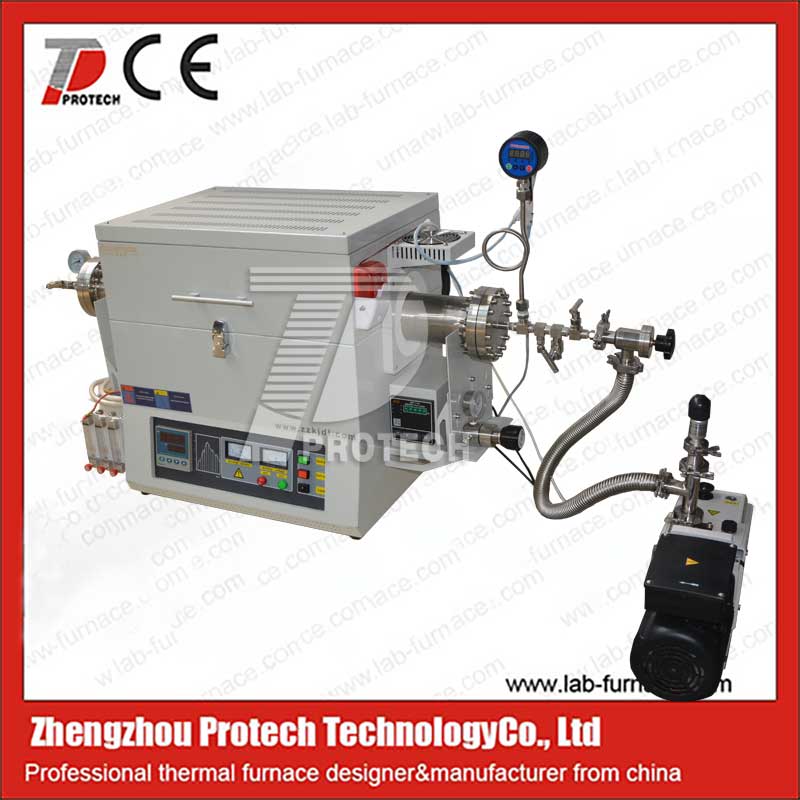
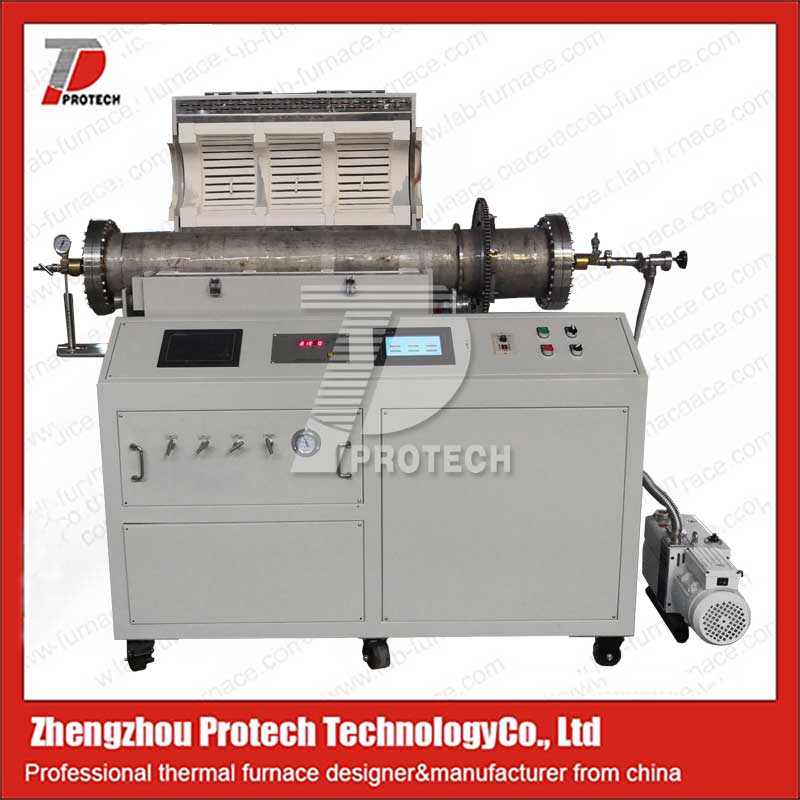
Small experimental atmosphere furnace (click on the image to view product details)
2. Pilot atmosphere furnace: connecting experimental and mass production, process amplification verification and optimization
Applicable scenarios
After the formulation is finalized, it is necessary to verify the stability of the process. A single feeding of 5-50kg and daily processing of tens to hundreds of kilograms of raw materials are used in the enterprise's pilot workshop and small-scale trial production workshop to scale up the mature laboratory process to industrial parameters and provide data support for the procurement of large-scale production atmosphere furnaces.
Features of the equipment
The furnace size starts from 500 × 400 × 600mm, with independent temperature control in multiple temperature zones, and the uniformity of the furnace temperature field is controlled within ± 5 ℃; Configure a multi-channel precision gas distribution system, which can automatically mix multiple mixed atmospheres. Optional manual trolley feeding and discharging structure is available, and some models reserve automation transformation interfaces.
Key Selection Points
Plan to expand production in the later stage, prioritize selecting models with reserved expansion space for furnace size and power, and avoid significant differences in process parameters in the later stage;
The sintering raw materials have a corrosive atmosphere, and the furnace lining is made of high-purity corundum or silicon carbide material to extend the service life of the furnace body.

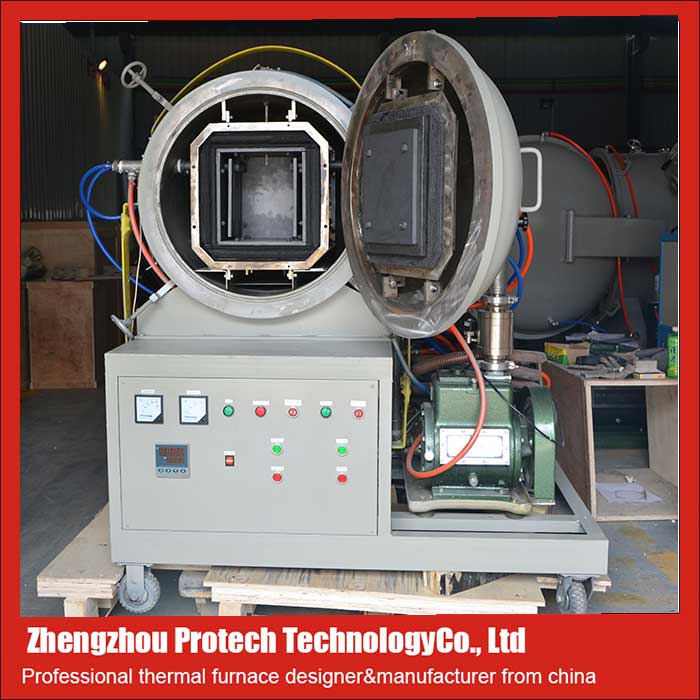
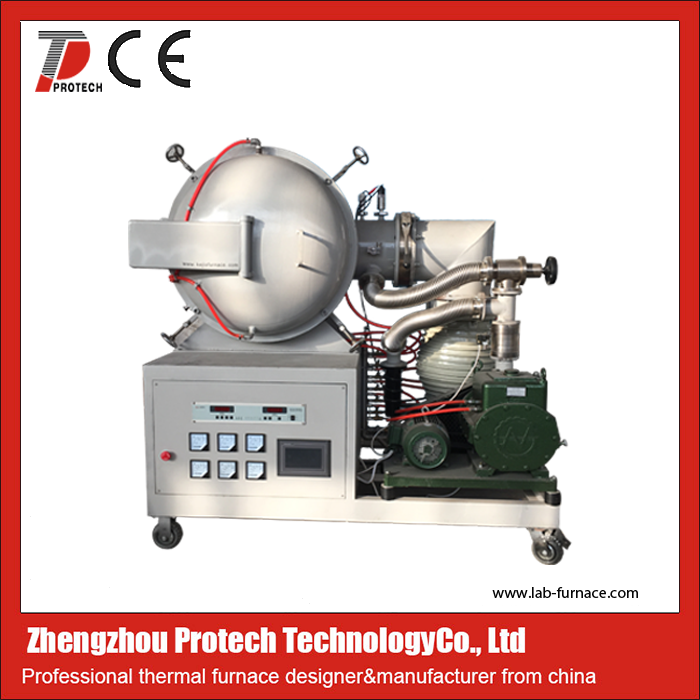
A commonly used pilot atmosphere furnace (click on the image to view product details)
3. Large scale industrial atmosphere furnace: specialized for mass production of 100kg to ton scale
Applicable scenarios
The process is fully standardized, and large-scale industrial production is carried out. Powder metallurgy factories, special ceramic production enterprises, and new energy material mass production workshops can feed more than 100 kilograms per time, with a daily production capacity of several hundred kilograms to several tons, and can continuously produce for a long time without interruption.
Classification of mainstream furnace types
Trolley type large atmosphere furnace: fully automatic trolley feeding and discharging, large volume furnace, suitable for whole boat stacking sintering, mostly used for batch atmosphere annealing sintering of stainless steel parts and hard alloy blanks; Configure a high-power circulating atmosphere system, with sealed atmosphere recycling to reduce the loss of protective gas.
Standard configuration
Multi level safety interlocking, over temperature power-off protection, atmosphere leakage alarm, exhaust gas treatment interface, energy-saving high-purity fiber insulation is selected for continuous high-temperature operation, effectively reducing production power consumption costs.
4. Four major selection criteria, quickly match according to one's own experimental scale
4.1 Division by weight of single loading
<5kg、 Frequent formula changes → Small experimental atmosphere furnace
5kg~50kg、 Process scale-up trial production → pilot atmosphere furnace
Single production>100kg, stable mass production → Large industrial atmosphere furnace
4.2 Classification by purpose of use
New product development, process exploration, and multi formula comparative testing: selecting a small experimental furnace
Process finalization, small-scale trial production, and validation of mass production feasibility: selecting a trial atmosphere furnace
Stable shipment of mature products and large-scale processing: choose large atmosphere furnaces
4.3 According to temperature and atmosphere requirements
≤ 1600 ℃, frequent switching of multiple atmospheres: Small experimental furnace has the highest cost-effectiveness
Fixed atmosphere, long-term stable sintering: more suitable for pilot/large-scale furnaces, with higher gas utilization efficiency
4.4 According to the site and power supply conditions
Small laboratory space, 220V electricity: Priority given to small atmosphere furnaces
Standard production workshop, 380V industrial electricity: pilot and large-scale atmosphere furnaces
5. Tips for selecting and avoiding pitfalls
Many start-up companies only focus on research and development in the early stages, directly purchasing large atmosphere furnaces, resulting in high equipment idle rates and high electricity and gas costs;
Some enterprises are eager to start mass production in the early stage and expand production with small experimental furnaces, resulting in uneven sintering of batch products and a sharp decline in yield rates;
If short-term research and development, and long-term production is planned within 1-2 years, a pilot atmosphere furnace can be purchased first, taking into account both early sampling and small-scale trial production in the later stage, saving the cost of secondary equipment replacement.
6. Summary
Simply summarize the selection logic: for small-scale research and development, choose a small experimental atmosphere furnace; for process scale-up, choose a trial atmosphere furnace; for stable mass production, choose a large atmosphere furnace. Small furnaces focus on flexible and low-cost testing, while large furnaces emphasize continuous and stable production on a large scale. If the sintering conditions of the raw materials are special (strong corrosive atmosphere, ultra-high temperature sintering, irregular workpieces), the equipment manufacturer can be contacted to customize the furnace size, heating power, and atmosphere system according to the sintering process non-standard. Customization can be made as needed to better adapt to production and experimental needs.Click to learn more customized atmosphere furnaces! Or click on online customer service to learn more about product information!
Leave A Message


