
 English
 简体中文
简体中文 French
 日本語
日本語 Korean
 Português
 Русский
 Spanish



NEWS
In the fields of superhard materials, composite materials, and semiconductors, CVD (chemical vapor deposition) tube furnace diamond powder coating technology has become the mainstream solution for surface modification and functionalization of diamond powder due to its advantages of controllable cost, flexible process, and good coating uniformity. Below, we will systematically disassemble the entire process of CVD gold coated diamond powder in a tube furnace from four dimensions: core principles, key process parameters, equipment selection points, and common problem solutions. We will take into account both scientific research experiments and small-scale production needs, allowing you to quickly grasp the core technology and avoid selection and process errors.

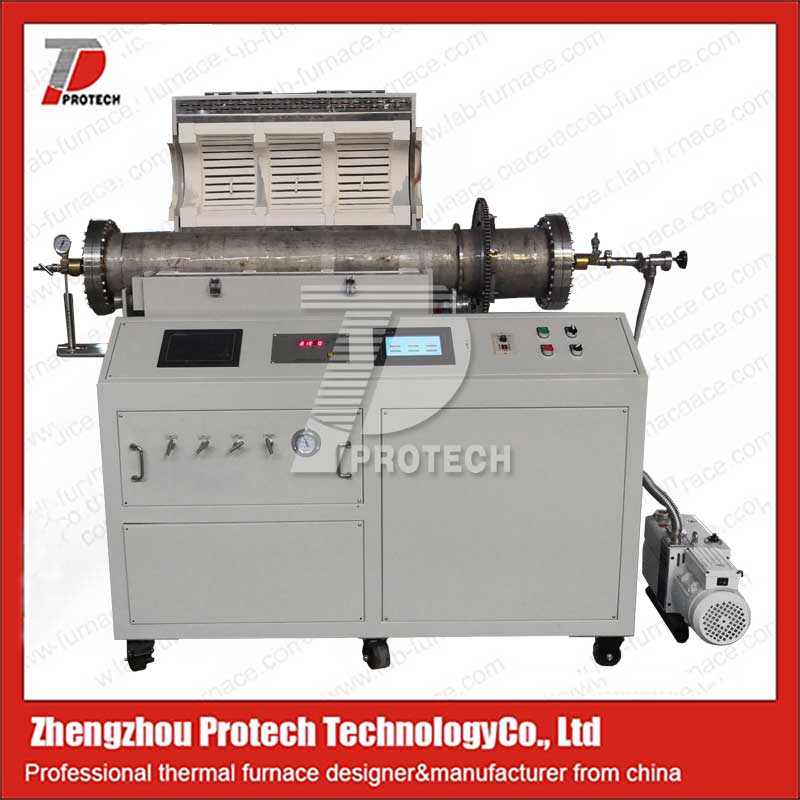
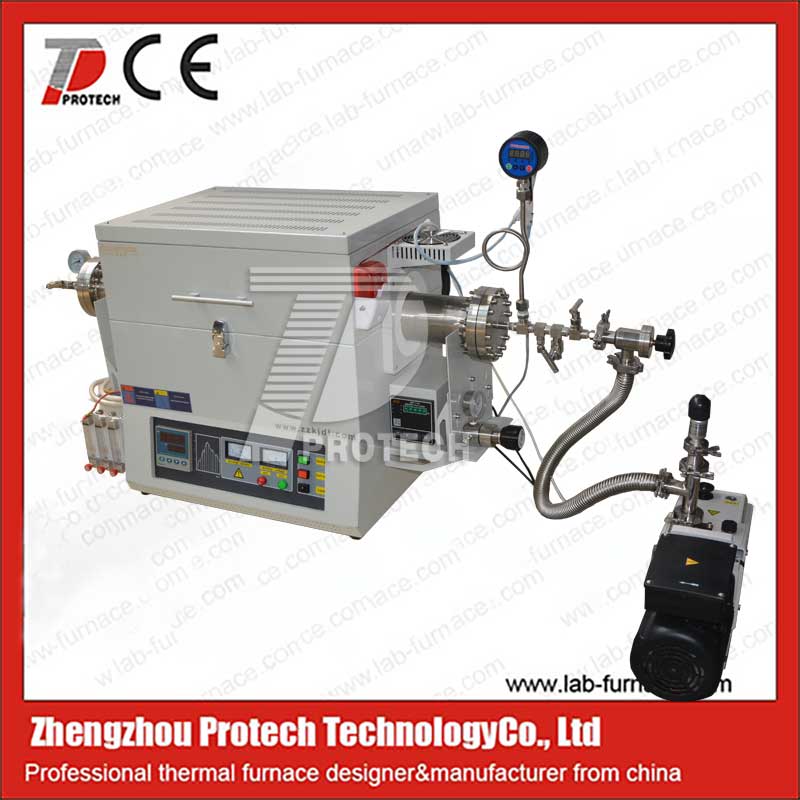
Commonly used low vacuum CVD tube furnace (click on the image to view product details)
1. Core principle of CVD tube furnace coated with diamond powder
The core of CVD gold-plated diamond powder is to use high-temperature energy to excite the decomposition of carbon source gas under vacuum/protective atmosphere, generate activated carbon atoms and deposit them directionally on the surface of diamond powder, forming a dense and uniform diamond coating or densification layer. As the core equipment, the tube furnace provides a closed and controllable high-temperature reaction chamber, coupled with gas path, vacuum and temperature control system, to achieve accurate control of the deposition process.
At present, the mainstream process suitable for tube furnaces is resistance wire CVD, which is mature in technology, low in equipment cost, and suitable for batch processing of diamond powder.
2. Key process parameters of CVD gold-plated diamond powder (directly determining coating quality)
Process parameters are the core factors that affect the density, uniformity, purity, and growth rate of diamond powder coatings. They need to be more accurately controlled according to the requirements of powder particle size (micron/nanometer level) and coating thickness. The following are the standard parameter ranges and optimization principles for the CVD process of tube furnace.
2.1 Temperature parameters: the core foundation of sedimentation reactions
Powder substrate temperature: 700-950 ℃ (optimal 800-900 ℃), carbon atom migration is poor below 700 ℃, and the coating is sparse. Gas parameters: determine the purity and growth rate of the coating
Gas ratio: Hydrogen (H ₂) serves as the carrier gas and etching gas, while methane (CH ₄) serves as the carbon source; A high concentration of CH ₄ can easily generate graphite and amorphous carbon, while a low concentration can slow down the growth rate.
Total gas flow rate: 50-300 sccm (standard cubic centimeters per minute), commonly 100 sccm; Low flow rate leads to poor exhaust emissions and accumulation of impurities; If it is too high, the activated carbon groups will be quickly carried away, and the deposition efficiency will decrease.
Atmosphere purity: Gas purity ≥ 99.99%, avoiding impurities such as oxygen and nitrogen from mixing in; Oxygen will oxidize the resistance wire and diamond, while nitrogen can easily form nitrogen doped defects, reducing the stability of the coating.
2.3 Pressure Parameters: Affects Coating Density and Adhesion
Sedimentation pressure: 1-10 kPa (low vacuum environment), optimal 3-5 kPa; Excessive pressure leads to frequent collisions of gas molecules, significant energy loss of active groups, and loose coating; Low pressure results in slow sedimentation rate and high vacuum load on the equipment.
Vacuum degree: Before deposition, it is necessary to evacuate to a high vacuum of 10 ⁻ ³ to remove air and water vapor from the chamber, prevent powder oxidation at high temperatures, and ensure the purity of the carbon source gas.
2.4 Time parameter: Control coating thickness
Deposition time: Based on the target thickness, the growth rate of diamond coating is set. Conventional coatings need to be deposited for 2-10 hours. If the time is too short, the coating will be discontinuous, and if it is too long, it may cause coarse grains and increased internal stress, leading to coating cracking.
2.5 Powder pretreatment parameters: Improve coating adhesion
Cleaning: Diamond powder needs to be cleaned by ultrasonic cleaning with acetone, anhydrous ethanol, and deionized water in sequence to remove surface oil stains and impurities and avoid coating detachment.
Etching: After cleaning, use hydrogen gas to etch at 800 ℃ to remove non diamond carbon on the surface of the powder, increase surface active sites, and improve coating adhesion.
3. Comprehensive Guide to Equipment Selection for CVD Tube Furnace (Suitable for Diamond Powder Deposition)
Tube furnace is the core carrier of CVD gold-plated diamond powder. The selection should focus on five core dimensions: temperature zone design, furnace tube material, vacuum system, gas path control, and safety configuration, taking into account process adaptability, stability, and cost. The following are the selection criteria.
3.1 Selection of Furnace Body and Temperature Zone: Prioritize multi temperature zones and high-temperature resistant structures
Number of temperature zones: Double temperature zone or triple temperature zone tube furnace is preferred (single temperature zone is only suitable for simple experiments). Multiple temperature zones can accurately control the temperature of the resistance wire zone and the powder deposition zone, avoiding uneven coating caused by temperature fluctuations in a single temperature zone; The length of the heating zone is selected according to the amount of material, usually 300-500mm.
Maximum working temperature: ≥ 1200 ℃ (with a reserve of 50-100 ℃ to avoid long-term full load operation), long-term stable working temperature ≥ 1000 ℃, suitable for substrate temperature requirements of diamond deposition at 700-950 ℃.
Furnace structure: Double layer shell design, filled with high-purity alumina fiber insulation layer in the middle, combined with air cooling system, reduces the surface temperature of the furnace body (≤ 60 ℃), reduces heat loss, saves energy and ensures operational safety.
3.2 Furnace tube selection: Material determines high temperature resistance and airtightness
Material selection:
High purity corundum tube: resistant to high temperature (≤ 1200 ℃), acid and alkali corrosion, strong chemical stability, no impurity precipitation, suitable for the harsh atmosphere requirements of diamond powder deposition.
Quartz tube: It has good transparency and high cleanliness, but the maximum operating temperature is ≤ 1100 ℃. It is only suitable for low-temperature experiments or small-scale trial production.
Specification and dimensions: Inner diameter of Φ 40- Φ 100mm (selected according to the powder loading amount, powder boat width ≤ 1/2 of furnace tube inner diameter), length of 800-1200mm, with sufficient reaction space and airflow channel reserved.
Sealing configuration: KF/ISO standard vacuum flanges are used at both ends, paired with double-layer fluororubber/metal sealing rings to ensure no air leakage under extreme vacuum and prevent air backflow from affecting the quality of the coating.
3.3 Vacuum System Selection: Ensuring Low Vacuum Deposition Environment
Core configuration: Combination of mechanical vacuum pump and vacuum gauge. The ultimate vacuum of the mechanical pump is ≥ 10 ⁻ ³ Pa, which meets the requirements of high vacuum exhaust before deposition and stable maintenance of low vacuum (1-10 kPa) during the deposition process.
3.4 Gas system selection: more accurate control of gas ratio and flow rate
Core components: High precision Mass Flow Controller (MFC), with a control accuracy of ± 1% FS, suitable for gases such as H ₂ and CH ₄, achieving a linearly adjustable flow rate of 0-500 sccm and precise ratio of H ₂ and CH ₄.
Gas path design: Multi way intake (at least 2 channels, compatible with H ₂, CH ₄), equipped with gas mixer, pressure reducing valve, solenoid valve, to achieve automatic gas switching and stable transportation; Install a combustion tower/gas washing cylinder at the exhaust end to treat unreacted methane and hydrogen, ensuring safety and environmental protection.
3.5 Temperature control system selection: key to sedimentation stability
Temperature control system: PID intelligent temperature controller, supports more than 30 stages of programmed heating, and can set multiple stages of heating, insulation, and cooling curves; Equipped with S-type thermocouple (temperature measurement range 0-1600 ℃), real-time monitoring of furnace temperature with a temperature control accuracy of ± 1 ℃.
3.6 Safety Configuration Selection: Avoiding High Temperature and Gas Risks
It must be equipped with over temperature alarm, power-off protection, thermocouple protection, and gas leakage alarm functions; The furnace door is equipped with a safety lock, which cannot be opened under high temperature conditions; Install anti backfire devices on hydrogen pipelines to eliminate the risk of explosion.
3.7 Selection Comparison Table (Quick Matching Requirements)
| Selection dimension | Research experimental type | Small batch production type |
| Temperature zone | Dual temperature zone, heating zone 300mm | Three temperature zones, heating zone 450-500mm |
| Furnace tube | Quartz tube/corundum tube,Φ 40mm | High purity corundum tube,Π 80-Φ 100mm |
| Vacuum system | Mechanical pump (10 ⁻⁴ Pa) | Mechanical pump+molecular pump (10 ⁻⁵ Pa) |
| Air path | 2-channel MFC, manual control | 3-4 MFC channels, automatic proportioning |
4. Common Problems and Solutions (Avoiding Pits Guide)
Loose and easy to peel off coating: The reasons are incomplete powder cleaning, low substrate temperature, and high CH ₄ concentration; Solution: Strengthen ultrasonic cleaning and hydrogen etching, raise the substrate temperature to 850-900 ℃, and reduce CH ₄ concentration.
Uneven coating thickness: The reasons are uneven temperature field, unstable airflow, and excessive powder accumulation; Solution: Choose a multi zone tube furnace, optimize the gas flow rate, reduce the thickness of powder spreading, and regularly flip the powder.
The sedimentation rate is too slow (<0.1 μ m/h): the reason is that the concentration of CH ₄ is too low, the total flow rate is too small, and the vacuum degree is too high; Solution: Increase the concentration of CH ₄ to 3-5%, adjust the total flow rate to 150-200 sccm, and maintain the pressure.

Sliding CVD tube furnace (click on the image to view product details)
5. Summary
The core of CVD tube furnace diamond powder plating technology is more accurate control of process parameters and adaptation to professional equipment: in terms of process, CVD is the core, strictly controlling the three key parameters of temperature, gas ratio, and pressure, and doing a good job in powder pretreatment; On the equipment, priority should be given to specialized tube furnaces with multiple temperature zones, high-purity quartz tubes, high-precision gas paths, and vacuum systems, balancing stability and safety.Click to learn more CVD devices! Or click on online customer service to learn more about product information!
Leave A Message


