
 English
 简体中文
简体中文 French
 日本語
日本語 Korean
 Português
 Русский
 Spanish



NEWS
When choosing a high-temperature gas permeable muffle furnace, it is necessary to consider multiple aspects such as temperature range, furnace size and material, temperature control accuracy and program, atmosphere control capability, safety protection, brand and after-sales service. Let's take a detailed look below!
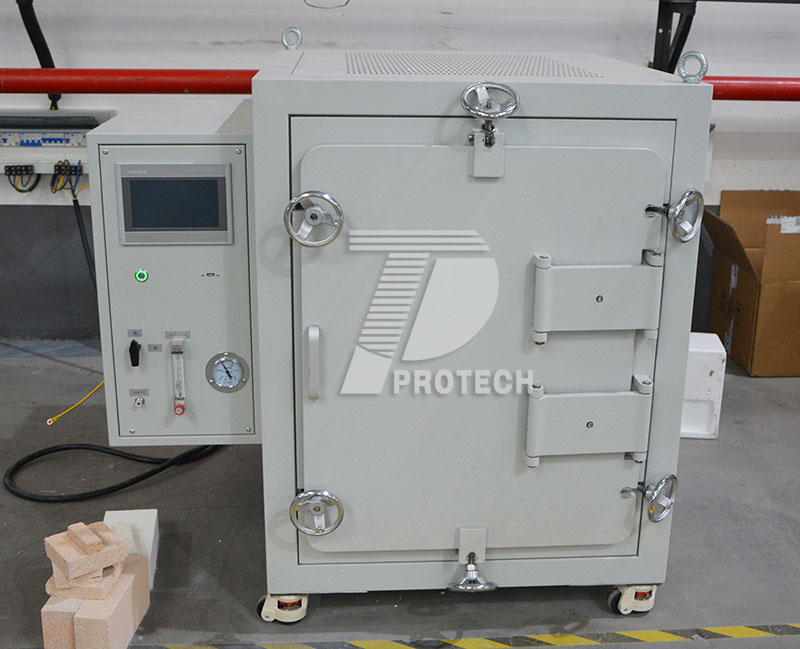
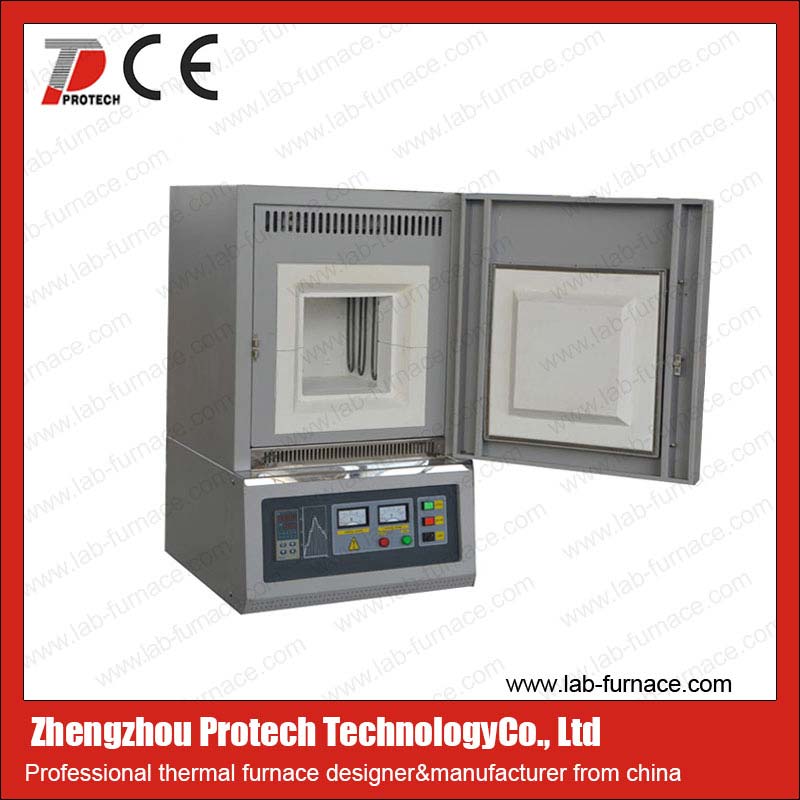
Small 1200 ℃ high-temperature atmosphere furnace (click on the picture to view product details)
1. Clear core requirements: temperature, size, atmosphere, temperature control program
Temperature range matching process requirements
Maximum temperature: 100-200 ℃ higher than the actual process temperature. For example, if the process requires 1600 ℃, the long-term operating temperature of the equipment should be ≥ 1700 ℃ to avoid overheating losses.
Low temperature requirement (≤ 1000 ℃): For coal moisture/ash content determination, resistance wire heating (Cr2Al2Mo2 material) is optional, with high cost-effectiveness.
Medium temperature requirements (1000-1400 ℃): such as ceramic sintering, metal annealing, prioritizing silicon carbon rod heating, balancing cost and stability.
High temperature requirement (≥ 1500 ℃): For special ceramics and high-temperature alloy treatment, silicon molybdenum rod heating (with transformer) must be selected, and it is confirmed that the long-term working temperature is 50-100 ℃ higher than the process temperature.
Furnace size adaptation sample and loading capacity
Sample size: The effective volume of the furnace (length x width x height) needs to meet the placement requirements of "sample+crucible/bracket", while reserving 10% -20% space to ensure uniform thermal circulation.
Small scale experiment: such as sintering of trace samples, selecting furnace size ≤ 200 × 200 × 200mm.
Medium batch processing: For parallel experiments with multiple sets of samples, select 200 × 300 × 200mm to 400 × 400 × 400mm.
Non standard requirements: such as heat treatment of large workpieces, confirm whether the manufacturer supports furnace size customization, and evaluate whether the heating element layout is suitable to ensure uniform temperature field.
Matching atmosphere control ability with process environment
Air atmosphere: For ordinary metal annealing and coal ash content determination, choose the basic muffle furnace without the need for an additional atmosphere system.
Protective atmosphere: For nitrogen/argon environments that prevent oxidation (such as ceramic sintering), it is necessary to confirm the equipment's "atmosphere sealing" (flange sealing material: high-temperature PTFE or metal sealing ring) and gas flow control (whether it is equipped with precision needle valves).
Vacuum environment: For processes that avoid gas reactions (such as semiconductor material processing), attention should be paid to "ultimate vacuum degree", "vacuum holding capacity", and whether vacuum pumps are standard (such as rotary vane pumps, diffusion pumps, and the latter should be selected for high vacuum requirements).
Temperature control program requirements match process complexity
Simple process: such as single temperature constant control, basic PID temperature control (supporting 1-3 stage programs) is sufficient.
Complex process: such as multi-stage heating/insulation/cooling (such as ceramic sintering curve), it is necessary to select "multi-stage programmable temperature control" (30 segment program, supporting curve storage and retrieval), and confirm whether "heating rate limitation" is supported.
2. Verify key performance: temperature control accuracy, heating efficiency, component lifespan
Temperature control accuracy and temperature field uniformity
Temperature control accuracy: Good equipment should reach ± 1 ℃ (confirm thermocouple type: N-type for low temperature, S-type for medium high temperature, and B-type for temperatures above 1600 ℃).
Uniformity of temperature field: Request the "temperature field test report" provided by the manufacturer (such as a temperature difference of ≤ ± 3-5 ℃ within ± 50mm of the furnace center at 1700 ℃) to avoid local overheating and sample scrapping. Equipment with five sided heating (with heating elements on all sides of the furnace) has better temperature field uniformity than three sided/two sided heating, and five sided heating is preferred for high temperature (≥ 1500 ℃) scenarios.
Heating efficiency and energy consumption
Heating rate: Choose according to process requirements (such as 10-20 ℃/min for rapid heating and 5-10 ℃/min for fine processes), but confirm whether the heating rate in the high temperature section is stable (such as whether the heating element power will decrease above 1400 ℃).
Energy consumption optimization: Priority should be given to "ceramic fiber furnaces" (such as high-purity alumina ceramic fibers), which have low thermal conductivity (more than 50% lower than traditional refractory bricks), low heat loss, and energy consumption 20% -40% lower than refractory brick furnaces; At the same time, confirm whether there is a "double-layer shell+air-cooled/water-cooled system" (further reducing heat loss and lowering shell temperature).
Heating element and furnace life
Heating element:
Resistance wire (≤ 1200 ℃): Made of Cr2Al2Mo2 material, with strong oxidation resistance and a lifespan of ≥ 2000 hours.
Silicon carbon rod (1200-1400 ℃): Choose high-density SiC material to avoid low purity products from easily breaking.
Silicon molybdenum rod (≥ 1500 ℃): Choose 1700 or 1800 grade, confirm whether it has an "anti-oxidation coating" and a lifespan of ≥ 1500 hours.
Furnace material: Choose "high-purity alumina ceramic fiber" (which does not lose powder or evaporate at high temperatures), avoid using fibers containing impurities (which can easily contaminate the sample and have a short lifespan), and confirm whether there is a "high-temperature coating" on the furnace surface (such as alumina coating to improve wear resistance and heat resistance).
3. Verify security protection: eliminate risks and ensure safety
Overtemperature automatic power-off protection: prevents equipment damage or accidents caused by furnace temperature exceeding the set value.
Leakage protection device: to prevent electric shock to operators caused by equipment leakage.
Automatic power-off function when opening the door: prevents injury from high-temperature gas or sample splashing when opening the door.
Sealing performance of furnace door: Good products adopt double-layer insulation design, and the surface temperature should be below 60 ℃ to ensure safe operation.
Other security configurations, such as over temperature alarm, disconnection alarm, grounding protection, etc., further enhance equipment safety.
4. Pay attention to additional details: improve user experience and after-sales support
Operational convenience
Control system: Select "Chinese touch screen" (more intuitive than button based), supporting real-time display of temperature curves and data storage (such as USB export of experimental records).
Furnace door design: Side opening (suitable for small samples) or pull-down (suitable for large samples), with a "power assist structure" (to avoid the furnace door being too heavy and difficult to operate), and the sealing gasket is easy to replace (to reduce maintenance costs in the later stage).
after-sales service
After sales: Confirm whether the manufacturer provides "on-site installation and debugging" (especially for vacuum/atmosphere furnaces, which require professional calibration), "long-term supply of vulnerable parts such as heating elements/seals", and "warranty period" (good product warranty of 1 year, with long-term accessory support for core components such as heating elements).Click to learn more Atmosphere Furnaces! Or click on online customer service to learn more about product information!
Leave A Message


