English
 简体中文
简体中文 French
 日本語
日本語 Korean
 Português
 Русский
 Spanish



NEWS
When choosing an atmosphere muffle furnace with argon gas, multiple dimensions such as temperature range, furnace size and material, heating elements, atmosphere control accuracy, sealing design, safety configuration, energy consumption and efficiency, brand and after-sales service need to be considered. Let's take a detailed look below!
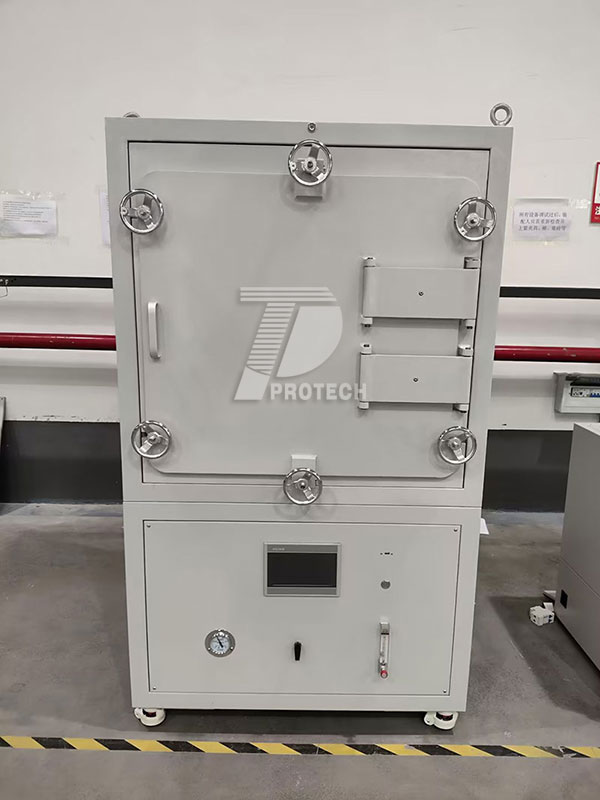
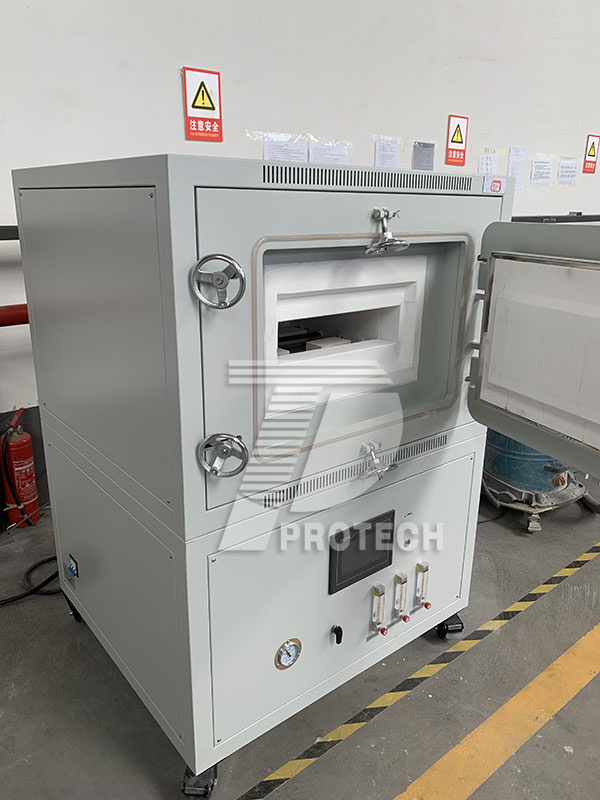
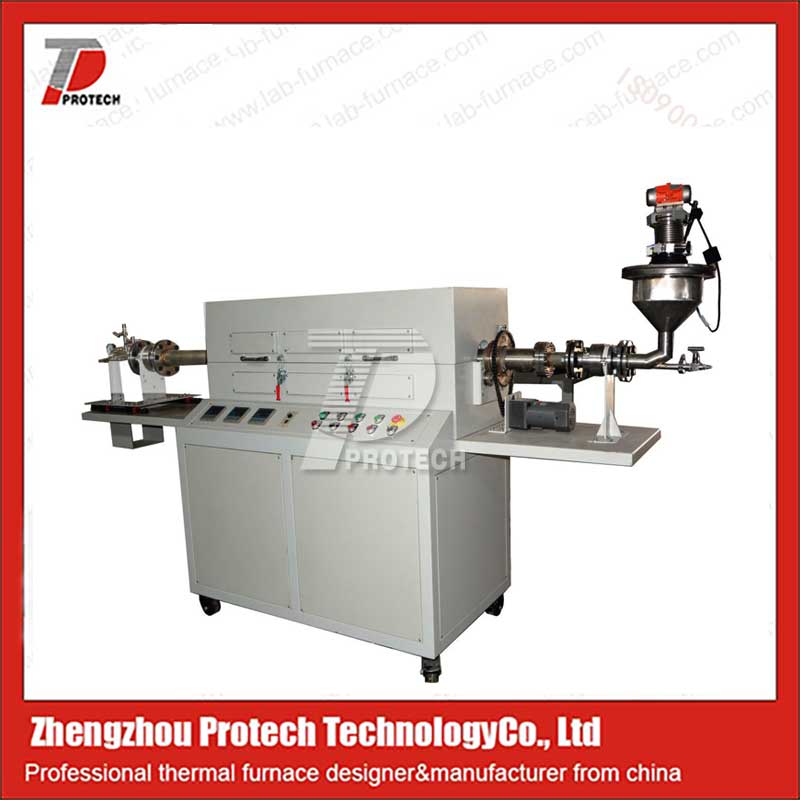
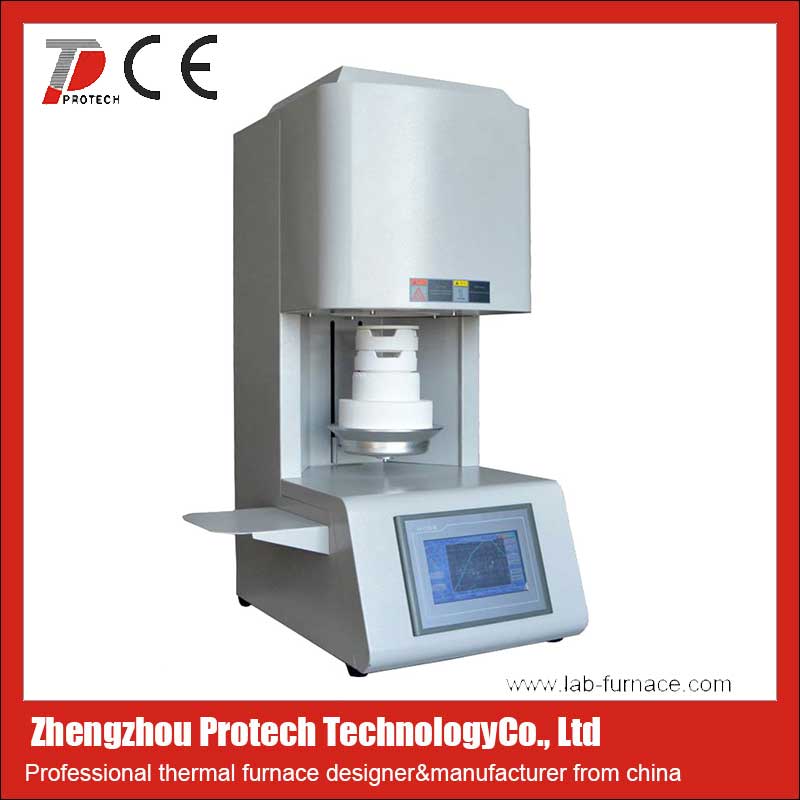
Muffle furnace with argon gas atmosphere (click on the picture to view product details)
1. Clear temperature range requirements
Select equipment based on the maximum processing temperature of the experiment or process, and the maximum temperature of the muffle furnace should be 100-200 ℃ higher than the actual operating temperature to ensure safety margin. For example:
If you need to handle high-temperature materials at 1500 ℃, you need to choose a muffle furnace with a maximum temperature of 1600-1700 ℃ (such as a silicon molybdenum rod heating model).
Low temperature scenarios (such as metal annealing) can choose models with temperatures ranging from 1000-1200 ℃ (such as silicon carbide rod heating).
2. Match furnace size and material
Size selection:
Sample volume: The furnace volume should be at least three times the total volume of the sample to avoid uneven heating caused by insufficient space. For example:
Process crucibles with a diameter of 50mm or a small amount of powder (≤ 50g), and choose 3L box furnaces with internal dimensions of 200 × 150 × 100mm.
Batch sintering of 10 pieces of semiconductor using a quartz boat (size 150 × 100 × 50mm) requires an internal 12L furnace of 350 × 300 × 120mm.
Expansion requirements: If there is a possibility of increasing the sample size in the future, the size can be selected at 1.5 times the current maximum, or modular tray design can be chosen (such as increasing capacity through layered trays).
Material selection:
High temperature scenarios (such as ceramic sintering): Refractory materials such as alumina, silicon carbide, or mullite are selected, with a temperature resistance of over 1600 ℃.
Low temperature scenarios (such as organic material processing): ordinary refractory bricks can be used to reduce costs.
Special atmosphere: If the sample may react with furnace materials at high temperatures (such as ceramics and certain refractory materials), a chemically resistant lining material should be selected.
3. Confirm the type of heating element
Heating elements directly affect temperature uniformity and service life, and should be selected according to the temperature range:
≤ 1200 ℃: Resistance wire (such as nickel chromium alloy) is selected, which has low cost but is prone to oxidation at high temperatures and has a short lifespan.
1300-1400 ℃: using silicon carbon rods, with strong oxidation resistance and fast heating, but prone to brittleness at high temperatures.
1600-1700 ℃: Using silicon molybdenum rod, it has better high temperature resistance and oxidation resistance, suitable for long-term high temperature operation.
4. Evaluate the accuracy of atmosphere control
Air path design:
Choose models with independent gas path interfaces that support the introduction of protective gases such as argon and nitrogen.
Confirm if the gas flow control range matches the requirements.
Uniformity:
Large furnaces require multi zone temperature control (2 zones above and below or 3 zones before and after), and are equipped with fans for forced convection to ensure uniformity of ≤± 5 ℃ at 1000 ℃.
Precision experiments require selecting furnaces with a capacity of ≤ 20L, or large furnaces with multi zone temperature control.
5. Check the sealing design
Furnace door structure:
Choose a fully sealed design to prevent argon gas leakage or dust spillage.
Confirm whether the sealing ring material is resistant to high temperatures (such as silicone rubber or fluororubber), and consider the deformation caused by thermal expansion.
Explosion proof design:
If handling flammable and explosive samples, it is necessary to choose a model with explosion-proof doors and ensure that the furnace body is at least 80cm away from the wall and there are no flammable materials within 1m of the surrounding area.
6. Pay attention to security configuration
Overtemperature protection: Choose models with hardware overtemperature protection and software temperature limiting function to prevent temperature loss of control.
Pressure release: If gas may be generated due to sample combustion in the furnace, a pressure release valve or explosion-proof device should be installed.
Exhaust system: When dealing with volatile organic compounds or corrosive gases, exhaust devices and exhaust gas purification systems are required.
7. Balancing energy consumption and efficiency
Heating speed: Small furnaces (≤ 10L) have fast heating and are suitable for frequent experiments; Large furnaces require multiple hours, but have a large processing capacity per operation.
Thermal insulation performance: Fiber lining (such as alumina fiber) is lightweight, has good insulation, and can reduce energy consumption; The insulation of refractory brick lining is generally good, but the cost is relatively low.
Intelligent temperature control: Choose models with PID temperature control algorithm and program setting function to reduce manual intervention and improve efficiency.
8. Choose reliable brands and after-sales service
Brand qualification: Priority should be given to manufacturers with production licenses, certifications, and third-party testing reports.
After sales service: Confirm whether installation and debugging, operation training, regular maintenance, and quick response repair services are provided.
User evaluation: Refer to peer use cases and avoid choosing brands with high failure rates or poor service.Click to learn more Atmosphere Furnaces! Or click on online customer service to learn more about product information!
Leave A Message