Compared to ordinary box furnaces, box-type atmosphere furnaces exhibit significant advantages in terms of functional characteristics, material design, safety and environmental protection, as well as application fields. Let's take a closer look!
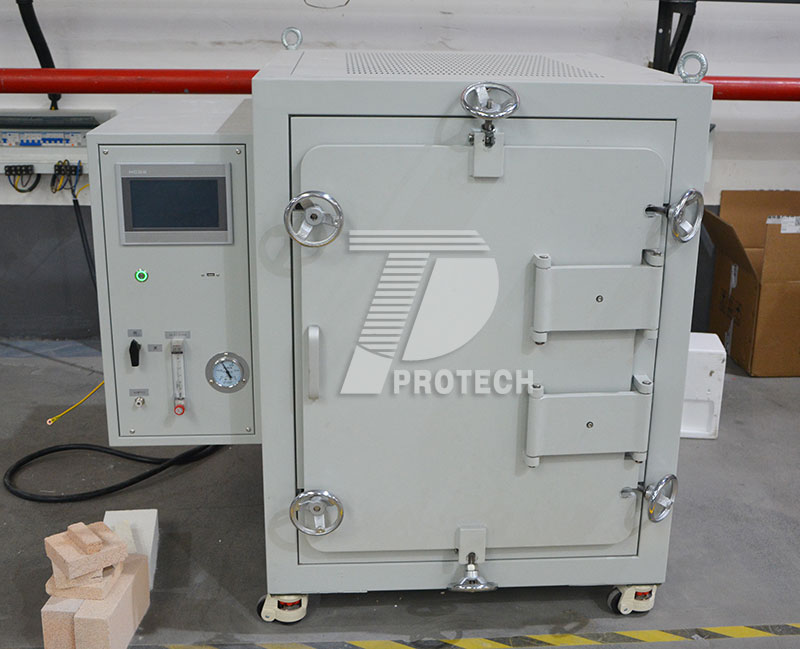
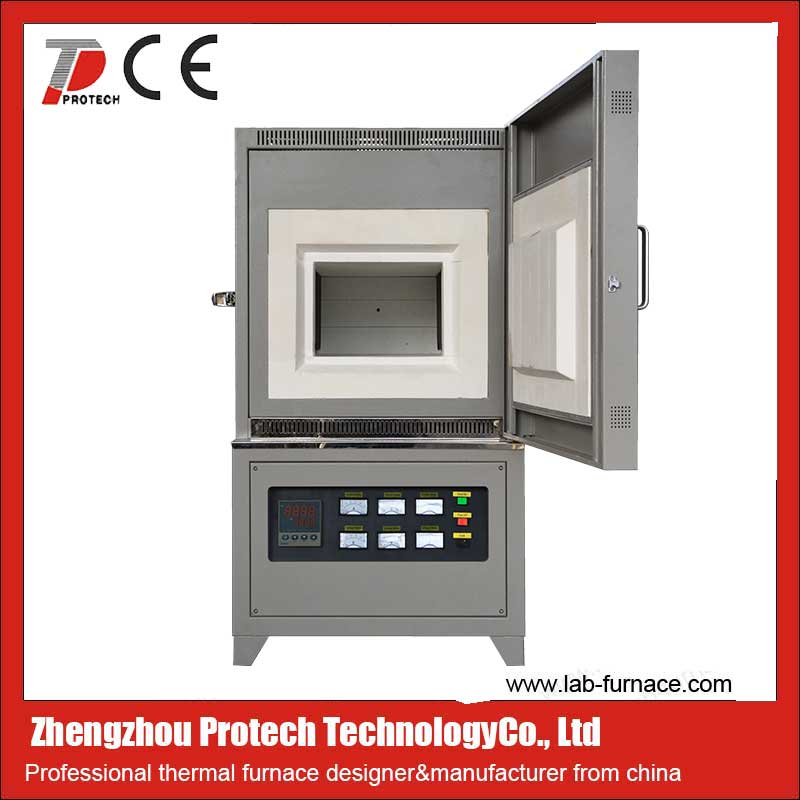
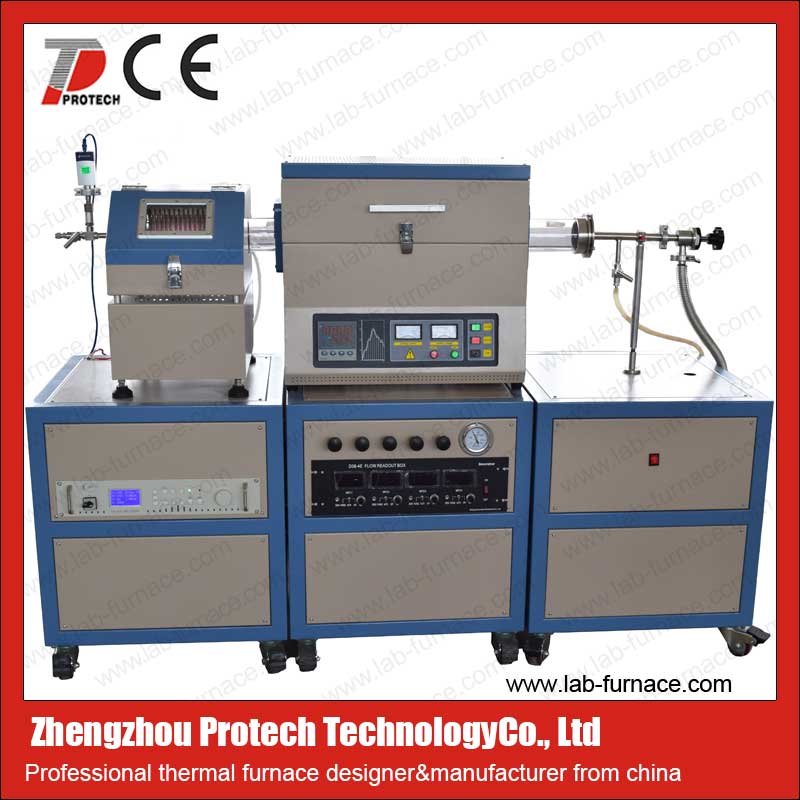
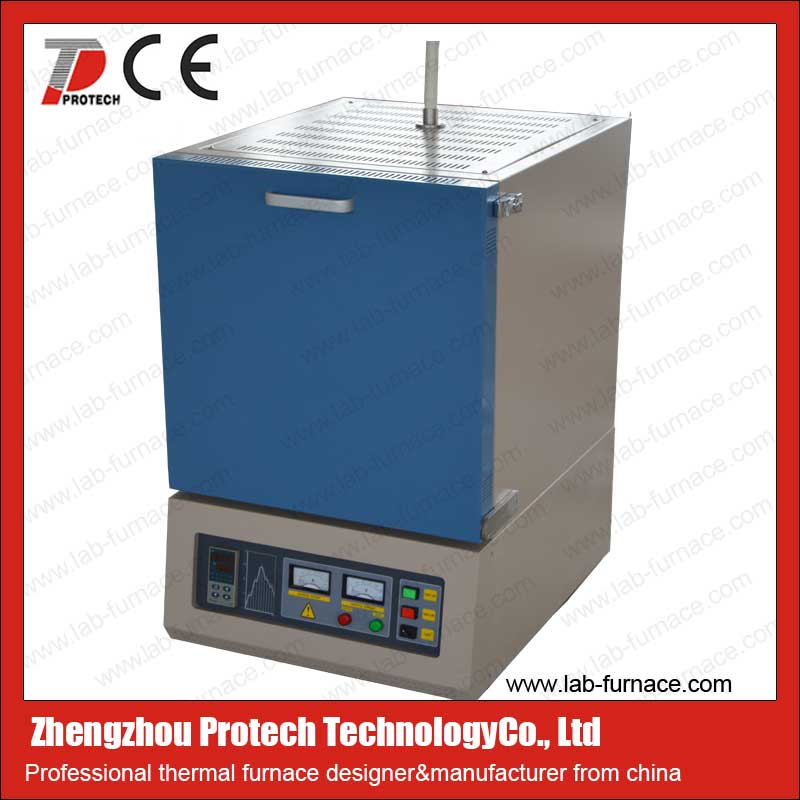
Commonly used small box-type atmosphere furnaces (click on the image to view product details)
1. Functional characteristics: Accurate control and efficient processing
Atmosphere control ability
Box-type atmosphere furnaces can be filled with various gases such as nitrogen, argon, and hydrogen, and support a vacuum environment, effectively isolating oxygen and preventing materials from oxidizing or corroding at high temperatures. For example, in metal heat treatment, inert gas protection can prevent decarburization of the workpiece surface and enhance material properties;
The vacuum environment is suitable for processes that require high cleanliness, such as semiconductor wafer annealing. Ordinary box furnaces can only heat in an air environment and cannot meet such requirements.
Temperature control accuracy
The box-type atmosphere furnace adopts an intelligent PID temperature control system, achieving a temperature control accuracy of ±1℃ and supporting multi-segment program temperature control (such as more than 30 segments). It allows for customization of the heating rate, holding time, and cooling curve. Conventional box-type furnaces have lower temperature control accuracy and rely on traditional temperature control methods, and temperature fluctuations may affect experimental reproducibility.
Heating rate and efficiency
Box-type atmosphere furnaces have a fast heating rate, for example, they can reach 1400℃ in 40 minutes, which significantly reduces heat treatment time and enhances production efficiency. Conventional box-type furnaces heat up more slowly, potentially prolonging the process cycle and increasing energy consumption.
2. Materials and Design: Durability and Uniformity
Furnace chamber material
The chamber of the box-type atmosphere furnace is constructed with high-performance insulation materials such as lightweight alumina ceramic fiber and high-purity alumina lightweight material, which boasts advantages like high temperature resistance, no slagging, and no volatilization. It offers high thermal efficiency and lower energy consumption. In contrast, the chamber of a conventional box-type furnace may be made of more traditional materials, resulting in poorer insulation and high temperature resistance, which can easily lead to heat loss.
temperature uniformity
The box-type atmosphere furnace ensures temperature uniformity (temperature difference ≤±5℃) inside the furnace and reduces experimental errors by optimizing the furnace chamber design (such as double-layer furnace doors and silicone rubber sealing rings) and heating element layout (such as uniform arrangement of silicon carbide rods). Ordinary box-type furnaces may have issues such as uneven furnace temperature and large temperature differences, which affect the quality of material processing.
structural design
The box-type atmosphere furnace adopts a split design between the furnace body and the controller, which is elegant and aesthetically pleasing; the side-opening door design of the furnace door facilitates easy operation; the lining plate-type heating elements on both sides make it convenient to replace the furnace wire. The structural design of ordinary box-type furnaces may be relatively simple, and their operational convenience is relatively low.
3. Safety and Environmental Protection: Multiple Protections and Green Production
Safety protection device
The box-type atmosphere furnace integrates multiple safety devices such as overtemperature alarm, leakage protection, overvoltage protection, gas leakage monitoring, and furnace door interlock (automatic heating stop when the furnace door is opened), ensuring the safety of experimental personnel and equipment.
Environmental performance
The box-type atmosphere furnace adopts resistance wire heating, with no emissions of waste gas or wastewater, meeting environmental protection requirements; precise atmosphere control reduces harmful gas emissions, making it suitable for environmentally friendly production processes. The environmental performance of ordinary box-type furnaces may vary depending on the heating method and materials used, but they are generally not as environmentally friendly as box-type atmosphere furnaces.
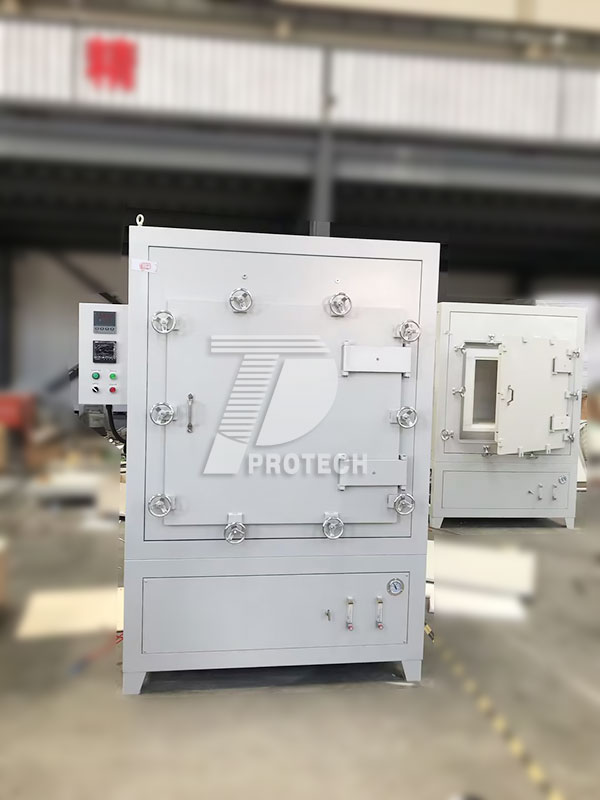
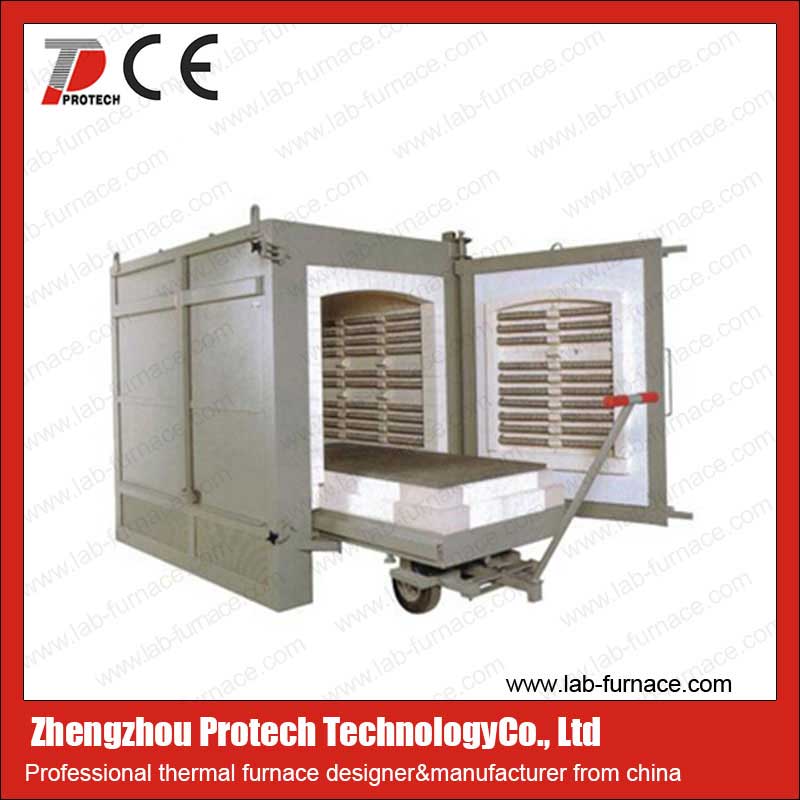
Pilot-scale box-type atmosphere furnace (click on the image to view product details)
4. Application Fields: Wide Adaptability and High-end Demand
research field
Box-type atmosphere furnaces are suitable for scientific research experiments such as ceramic sintering, nanomaterial synthesis, and metal powder metallurgy. They provide a reliable experimental platform for materials scientists, aiding in the research and optimization of material properties.
industrial production
In industrial processes such as metal annealing, quenching, and precision part brazing, box-type atmosphere furnaces can enhance product quality and production efficiency. For instance, in emerging technology applications like lithium battery material sintering and semiconductor wafer annealing, its high-precision temperature control and atmosphere control capabilities are crucial.
Special process requirements
Box-type atmosphere furnaces support heat treatment under vacuum or specific atmospheres, meeting the processing needs of materials sensitive to oxidation or reduction reactions, such as bright quenching, carbonitriding, and other processes that cannot be achieved with ordinary box furnaces.Click to learn more Custom Atmosphere Furnaces! Or click on online customer service to learn more about product information!

 English
 简体中文
简体中文 French
 日本語
日本語 Korean
 Português
 Русский
 Spanish