
 English
 简体中文
简体中文 French
 日本語
日本語 Korean
 Português
 Русский
 Spanish



NEWS
The vacuum atmosphere box furnace is a high-temperature processing equipment that combines a vacuum environment with atmosphere control functions. Its furnace chamber is designed as a rectangular box structure, enabling high-temperature heat treatment of materials under specific atmospheres (such as inert gas, reactive gas, or vacuum). It is widely used in fields such as material preparation, heat treatment, scientific research experiments, and industrial production. Let's take a detailed look at the vacuum atmosphere box furnace from four aspects: core characteristics, working principle, application fields, and selection recommendations!
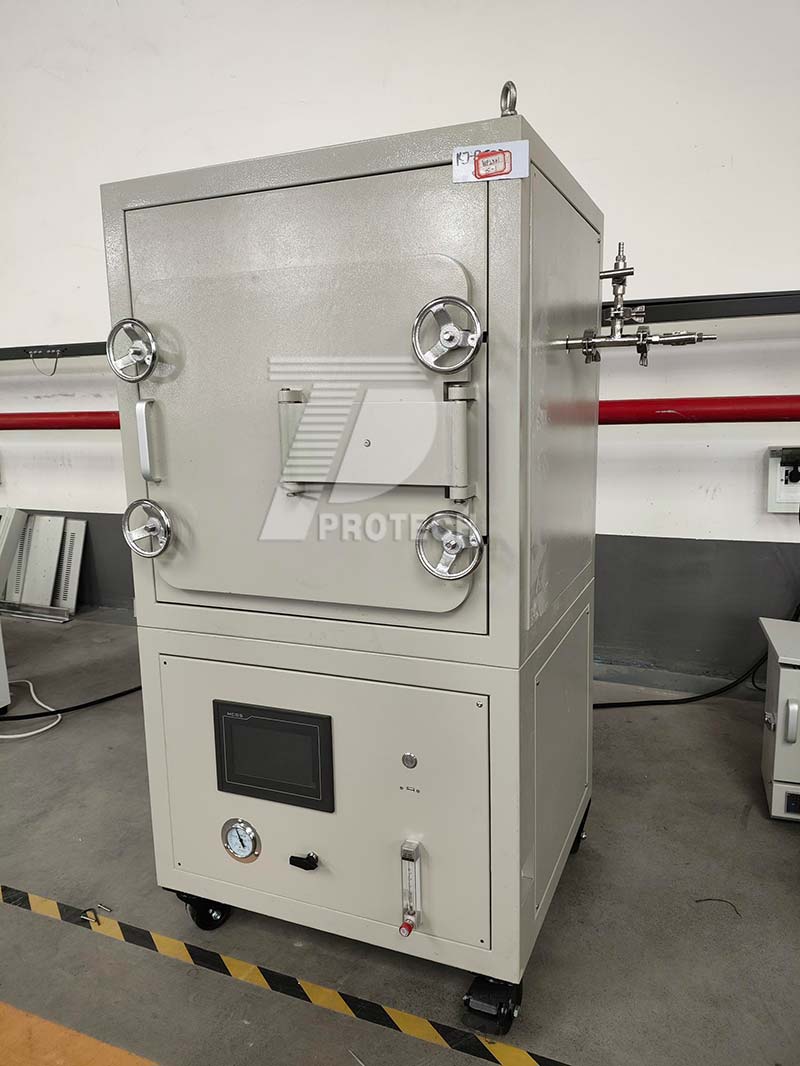
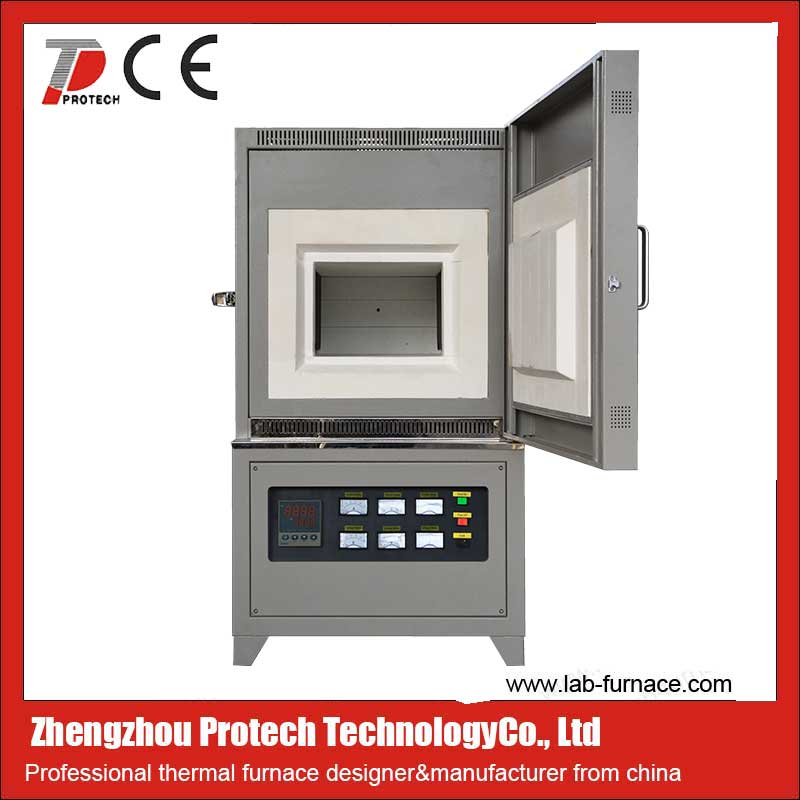
Commonly used vacuum atmosphere box furnace (click on the image to view product details)
1. Core features
Vacuum and atmosphere control:
Vacuum environment: By pumping out the gas inside the furnace with a vacuum pump, a low-pressure state (with a vacuum degree usually ≤0.1MPa) is formed, effectively preventing material oxidation, decarburization, or gas reactions. This is suitable for processes that require high purity (such as metal annealing and ceramic sintering).
Atmosphere control: Inert gases (such as nitrogen and argon), reactive gases (such as hydrogen and carbon monoxide), or mixed gases can be introduced to meet specific heat treatment requirements (such as metal reduction in a reducing atmosphere and carburizing treatment).
Precise temperature control:
The temperature range is typically from 500℃ to 1800℃, with some models capable of reaching even higher temperatures.
Equipped with a microprocessor control system, it supports PID regulation, fuzzy control, and self-tuning functions. The temperature display accuracy can reach ±1℃, the temperature field uniformity is ±5℃, and the heating rate is adjustable from 1 to 20℃/min.
Structural design optimization:
Double-layer furnace shell: The outer layer is made of stainless steel, while the inner layer is insulated with refractory fiber or lightweight ceramic fiber, resulting in a low surface temperature and better energy-saving effect.
Furnace door sealing: Equipped with high-temperature silicone rubber sealing rings and a water cooling system, it ensures airtightness and prevents atmosphere leakage.
Modular design: Equipped with multiple air intake interfaces, air mixing devices, and 485 communication interfaces, it supports remote control and data recording.
Safety performance:
It features over-temperature alarm, power-off protection, atmosphere leakage alarm, and electric leakage protection, ensuring safe and reliable operation.
2. Operating principle
Heating system: The heating elements (such as resistance wire, silicon carbide rod, and silicon molybdenum rod) generate heat when electrified, which is then transferred to the samples inside the furnace through thermal radiation and conduction.
Atmosphere system: The vacuum pump extracts gas from the furnace to create a vacuum, or introduces specific gas through the inlet port to create the desired atmosphere environment.
Control system: Monitor and adjust temperature, pressure, and gas flow in real-time to ensure stable process parameters.
3. Application areas
Materials Science: Metal Heat Treatment (Annealing, Quenching, Aging Treatment), Powder Metallurgy (Sintering, Hot Press Forming), Ceramic Material Preparation (High-Strength Ceramic Sintering).
Semiconductor manufacturing: processes such as wafer annealing, oxidation, and diffusion, which control the electrical properties and surface characteristics of materials.
New energy and environmental protection: preparation of solar cell materials, catalyst regeneration, and catalyst activity recovery in exhaust gas treatment.
Biopharmaceuticals: Biological sample heating treatment, protein crystallization experiment.
Laboratory research: material performance testing, catalyst research, and optical material preparation.
Other fields: glass heat treatment, metal processing (casting heat treatment, surface treatment), refractory material development, etc.
4. Selection suggestions
Temperature requirements: Select the temperature range according to process requirements (such as 500-1200℃, 1200-1400℃, or 1400-1700℃).
Vacuum degree and atmosphere: Confirm whether a vacuum environment or a specific atmosphere (such as inert gas, reactive gas) is required.
Furnace chamber size and loading capacity: Select the appropriate specifications based on the size and quantity of the samples.
Temperature control accuracy and uniformity: For temperature-sensitive materials, it is necessary to choose a high-precision temperature control model.
Additional functions: such as remote control, data recording, multi-segment program temperature control, etc.
Brand and after-sales service: Choose suppliers with mature technology and comprehensive services.Click to learn more Atmosphere Furnaces! Or click on online customer service to learn more about product information!
Leave A Message


