English
 简体中文
简体中文 French
 日本語
日本語 Korean
 Português
 Русский
 Spanish



NEWS
When choosing a 1200 degree box type resistance furnace, in order to ensure the purchase of products that meet the needs, have stable performance, and are safe and reliable, multiple factors need to be considered comprehensively. Let's take a detailed look below!
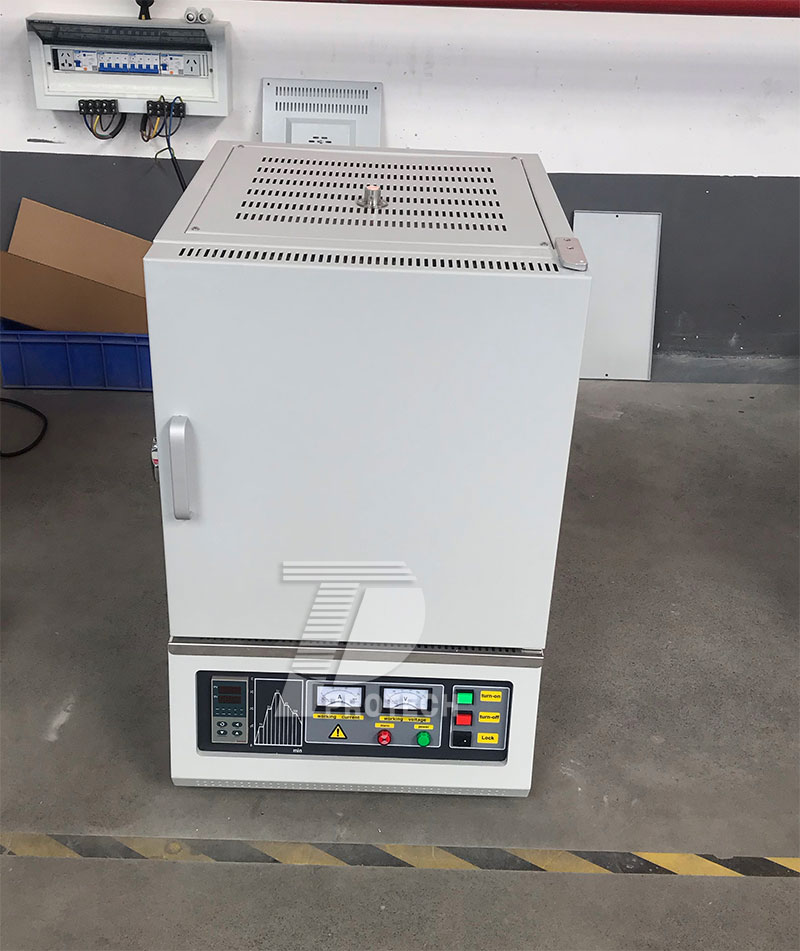
A commonly used 1200 degree box type resistance furnace (click on the image to view product details)
Temperature related parameters
Temperature range: Clearly specify that the required maximum temperature should be at least 1200 ℃, while paying attention to temperature uniformity, that is, the temperature differences at different positions in the furnace at the set temperature. The better the uniformity, the more it can ensure that the sample is processed under the same conditions, which is important for some temperature sensitive experiments or production that require accuracy.
Temperature control accuracy: refers to the degree to which the resistance furnace can stably control the temperature, generally expressed in ± ℃. The higher the temperature control accuracy, the smaller the temperature fluctuation, which can better meet the needs of high-precision experiments and production. For example, in some precision ceramic sintering processes, the temperature control accuracy requirement may reach ± 5 ℃ to ensure the performance and quality of the ceramics.
Heating rate: Different experiments and production processes have different requirements for heating rate. Rapid heating can improve production efficiency, but it may also cause significant thermal shock to the furnace structure and heating elements, affecting equipment lifespan; Slow heating is relatively mild, but it will prolong the production cycle. It is necessary to choose an appropriate heating rate according to specific needs.
Furnace size and material
Size selection: Determine the furnace size based on the size and quantity of the samples to be processed. Ensure that the sample can be placed inside the furnace and maintain a safe distance from the furnace wall to ensure uniform heat transfer and air circulation. If processing large quantities of samples, it may be necessary to choose larger furnace sizes; For small samples or small-scale experiments, small-sized furnaces are more energy-efficient and economical.
Material considerations: The furnace material directly affects the service life and performance of the resistance furnace. Common furnace materials include refractory materials (such as alumina hollow sphere bricks, lightweight refractory bricks, etc.) and ceramic fiber materials. Refractory furnaces have high temperature resistance and mechanical strength, but the heating rate is relatively slow; Ceramic fiber furnaces have the advantages of fast heating, light weight, and good insulation performance, but their high temperature resistance and mechanical strength are relatively low.
heating element
Type characteristics: Common heating elements include resistance wires (such as iron chromium aluminum alloy wire, nickel chromium alloy wire), silicon carbon rods, silicon molybdenum rods, etc. The price of resistance wire is relatively low and suitable for the medium and low temperature range; Silicon carbon rods can work at high temperatures with high heating efficiency, but they are prone to oxidation at high temperatures and have a relatively short service life; Silicon molybdenum rods have good oxidation resistance and stability at high temperatures, with a long service life, but they are relatively expensive.
Power matching: The power of the heating element should be reasonably selected based on factors such as furnace size, required heating rate, and temperature range. Low power, slow heating rate, unable to reach the set temperature; Excessive power not only increases equipment costs, but may also lead to uneven temperature inside the furnace and even damage to heating elements.
control system
Control methods: Currently, common control methods include positional control (such as simple on-off control) and continuous control (such as PID control). The positional control structure is simple and cost-effective, but the temperature control accuracy is relatively low; PID control can automatically adjust heating power based on temperature deviation, achieving better temperature control and suitable for occasions with high temperature requirements.
Display and operation: Select a control system with clear and intuitive temperature display to facilitate real-time understanding of the furnace temperature by operators. At the same time, the operating interface should be simple and easy to understand, making it convenient to set parameters such as temperature and time. Some good control systems also have data recording, storage, and analysis functions, which can meet more complex experimental and production needs.
Security protection function
Overtemperature protection: When the temperature inside the furnace exceeds a certain range of the set temperature, the overtemperature protection device will automatically cut off the heating power supply to prevent equipment and samples from being damaged by excessive temperature, and even cause safety accidents.
Overcurrent and overvoltage protection: protects the resistance furnace from damage in the event of voltage fluctuations or circuit failures in the power grid, ensuring the safe operation of the equipment.
Door lock safety switch: When the furnace door is opened, the door lock safety switch will automatically cut off the heating power supply, preventing operators from coming into contact with the high-temperature furnace when the furnace door is opened, and avoiding scalding accidents.
Brand and after-sales service
Brand reputation: Choosing products from reputable brands usually provides greater assurance in terms of product quality, performance, and reliability. These brands have undergone long-term market testing and possess comprehensive production processes and quality control systems, enabling them to provide better products.
After sales service: Good after-sales service is an important guarantee for the normal operation of equipment. Understand whether the manufacturer provides installation, debugging, operation training, maintenance and other services, as well as the response time and problem-solving ability of after-sales service. Timely after-sales service can reduce the impact of equipment failures on production or experimentation.Click to learn more customized muffle furnaces! Or click on online customer service to learn more about product information!
Leave A Message