
 English
 简体中文
简体中文 French
 日本語
日本語 Korean
 Português
 Русский
 Spanish



NEWS
Powder metallurgy, as a highly efficient and energy-saving near net forming manufacturing technology, is widely used in fields such as mechanical components, hard alloys, magnetic materials, and metal ceramics. High temperature sintering is the core process that determines the performance, density, strength, and service life of powder metallurgy products. The bell jar furnace has become the mainstream high-temperature sintering equipment in the powder metallurgy industry due to its good sealing performance, uniform temperature field, controllable atmosphere, and suitability for mass production. Next, let's take a look at the actual production scenario, explain in detail the working principle of the bell jar furnace, its specific application in the field of powder metallurgy, and the complete process of high-temperature sintering technology. At the same time, we will outline the key points of equipment use and process optimization plans.

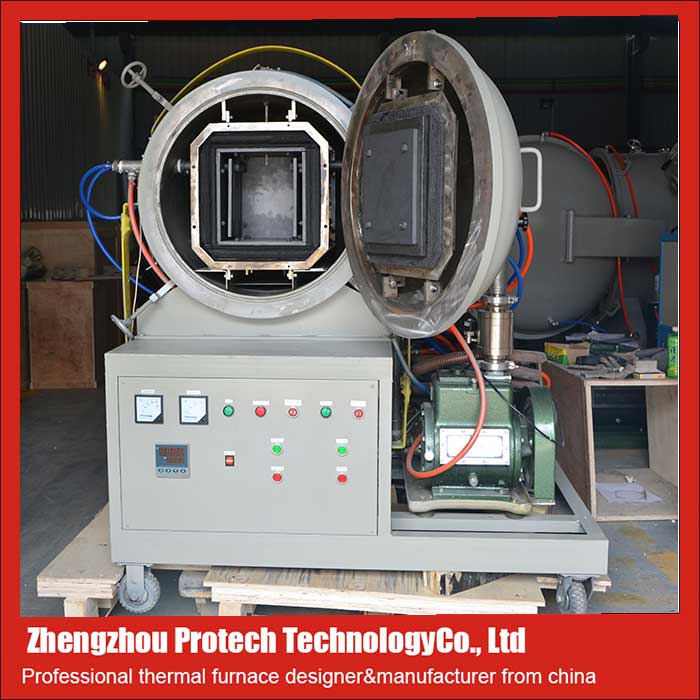
A commonly used 1200 degree bell jar furnace (click on the image to view product details)
1. Overview of the foundation of the bell jar furnace and its core advantages in adapting to powder metallurgy
Bell cover furnace, also known as hood furnace, belongs to intermittent high-temperature heat treatment equipment, mainly composed of furnace cover, furnace seat, heating system, sealing mechanism, atmosphere circulation system, temperature control system, lifting mechanism and other parts. When working, the furnace cover falls down as a whole to seal the furnace body, forming a closed sintering chamber, which can achieve various operating conditions such as atmosphere protection, vacuum, and atmospheric pressure, better matching the strict requirements of powder metallurgy sintering for temperature control, atmosphere, pressure, and cleanliness. Compared to equipment such as mesh belt furnaces, push plate kilns, and box furnaces, bell jar furnaces have five core advantages for powder metallurgy sintering:
Strong uniformity of temperature field
The equipment adopts a surround heating layout, combined with a professional insulation structure. The temperature difference inside the furnace is small, which can ensure consistent heating of the entire furnace workpiece and avoid local under burning, over burning, deformation, and uneven hardness of powder metallurgy products. The qualified rate of finished products is greatly improved.
Reliable sealing and controllable atmosphere
The furnace body adopts a multiple sealing structure with low leakage rate, which can stably introduce protective and reducing atmospheres such as nitrogen, argon, hydrogen, ammonia decomposition gas, etc., effectively preventing the oxidation and decarburization of metal powder bodies at high temperatures. It is suitable for sintering different raw materials such as iron-based, copper based, hard alloy, stainless steel powder, etc.
Suitable for large-sized and large batch workpieces
The furnace space is flexible and can be customized according to production capacity. It can sinter small precision powder metallurgy parts, as well as batch process large billets, plates, and irregular parts, meeting the needs of small and medium-sized trial production to large-scale production.
Flexible temperature rise and fall process
Support segmented programming temperature control, allowing for free setting of heating, insulation, and cooling rates, in line with the process characteristics of multi-stage temperature control in powder metallurgy sintering, facilitating the development of new products and optimization of production processes.
Stable operation and low maintenance costs
The equipment structure is mature, with strong durability of heating elements, seals, and circulation systems. The long-term continuous operation has a low failure rate, and daily cleaning, maintenance, and material replacement operations are simple, making it suitable for normal production in factories.
2. The main application scenarios of bell jar furnace in powder metallurgy
There are various types of powder metallurgy products, with different materials and applications. The sintering process and atmosphere requirements vary greatly. Bell furnace covers mainstream application areas in the industry due to its compatibility with working conditions
(1) Sintering of iron-based powder metallurgy parts
Iron based powder metallurgy is a more widely used category, including gears, shaft sleeves, gaskets, mechanical structural components, etc. This type of product is sintered with the goal of preventing oxidation and promoting the metallurgical bonding of powder particles. The bell jar furnace is filled with ammonia decomposition gas or nitrogen hydrogen mixed atmosphere, and sintering is completed at a high temperature of 1100 ℃~1250 ℃. At the same time, according to product requirements, composite processes such as carburizing and carbonitriding can be completed simultaneously, providing one-stop production and processing.
(2) Sintering of Hard Alloy and Tungsten Based Materials
Hard alloys, tungsten powder products, tungsten copper composite materials, etc. are generally sintered at temperatures ranging from 1400 ℃ to 1600 ℃, with high requirements for high-temperature stability and atmosphere purity. The bell jar furnace can achieve high-purity inert atmosphere protection, and some processes can be combined with pre vacuum to eliminate air and impurity gases in the furnace, seal the loss of carbon content and material oxidation, and ensure the hardness, wear resistance, and density of hard alloys.
(3) Sintering of copper based powder metallurgy products
Copper based oil containing bearings, copper based friction plates, conductive copper parts, etc. have relatively low sintering temperatures, generally between 800 ℃ and 1000 ℃. Copper powder is highly prone to oxidation. The sealed chamber of the bell jar furnace, combined with a reducing atmosphere, can quickly reduce the surface oxide layer of the billet, enhance the bonding strength of the powder particles, and ensure that the product's conductivity, wear resistance, and porosity meet the standards.
(4) Sintering of magnetic powder materials
Ferrites, soft magnetic materials, and permanent magnet powder products are highly sensitive to sintering temperature fields and atmospheres. Uneven temperature directly affects magnetic performance. A bell jar furnace with a uniform temperature field and more accurate atmosphere control can stably produce magnetic components with consistent magnetic properties, which are widely used in the production of supporting parts such as electronics, home appliances, and motors.
(5) Sintering of stainless steel powder metallurgy parts
The sintering of stainless steel powder bodies is prone to oxidation and intergranular corrosion problems. The bell jar furnace can adopt a composite working condition of vacuum and inert atmosphere, isolating oxygen at high temperatures to ensure the corrosion resistance, mechanical strength, and appearance quality of stainless steel products.
3. Analysis of the entire process of powder metallurgy high-temperature sintering in a bell jar furnace
The complete production of powder metallurgy is divided into four major stages: powder milling, compression molding, sintering, and post-treatment. Among them, the high-temperature sintering responsible for the bell jar furnace is the key step that connects the previous and subsequent stages. Based on the industry standard process, the entire sintering process is divided into seven stages: preparation before entering the furnace, material sealing, vacuum/atmosphere replacement, segmented heating and sintering, insulation and densification, controllable cooling, and cooling after exiting the furnace, which will be explained in detail one by one.
Step 1: Pre treatment of the billet before entering the furnace
The powder is mixed and pressed to obtain a green body, which needs to undergo basic inspection and pre-treatment before entering the furnace. Firstly, eliminate defective products that are cracked, missing, or deformed; Secondly, clean the surface dust and residual release agent of the billet to avoid impurities from contaminating the furnace and workpiece at high temperatures. For thin-walled and irregular green bodies that are prone to deformation, special refractory pads and fixtures are used to ensure uniform stress distribution and prevent collapse and deformation during high-temperature sintering.
Step 2: Workpiece loading and equipment sealing
Arrange the green bricks in an orderly manner according to the furnace layout, leaving gaps between workpieces to ensure atmosphere circulation and even heat transfer, and avoid dense stacking. After the loading is completed, start the lifting mechanism of the equipment, smoothly lower the bell jar furnace cover, press down the sealing structure of the furnace seat, check the sealing of the furnace door, pipeline, and interface, and confirm that there is no gas leakage hazard. This is the basis for the normal operation of the atmosphere sintering process.
Step 3: Vacuum pumping and atmosphere replacement
According to the product process selection, the working conditions are divided into two categories: atmosphere protected sintering and vacuum sintering.
Conventional iron-based and copper based products: continuously introduce protective gas directly into the closed furnace to complete air replacement and ensure that the oxygen content in the furnace is reduced to within the process standard;
High demand products such as hard alloy and stainless steel: First, start the vacuum pump to evacuate the furnace, remove air, water vapor, and impurities, and then fill it with high-purity protective atmosphere. Repeat the replacement 2-3 times to maximize the purity of the furnace atmosphere. After the replacement is completed, adjust the gas flow, maintain the micro positive pressure in the furnace, and prevent the reverse flow of external air.
Step 4: Segmented heating stage
Start the temperature control system and heat up in sections according to the preset process curve. It is not recommended to heat up quickly at once.
Low temperature range (room temperature~400 ℃): slow heating, mainly used to eliminate residual moisture, lubricants, and molding agents inside the billet. If the heating is too fast, the volatile substances will rapidly expand, leading to cracking and bulging of the billet;
Medium temperature range (400 ℃~800 ℃): Accelerate the heating rate, complete the reduction of the oxide layer on the surface of the powder particles, and initiate initial contact and physical bonding between particles;
High temperature section (800 ℃ to sintering temperature): steadily raise the temperature to the highest temperature set by the process. The sintering temperature varies for different materials, and this stage is the heating range of the sintering core, preparing for subsequent densification.
Step 5: High temperature insulation densification (core process)
When the furnace temperature reaches the set sintering temperature, entering the constant temperature insulation stage is also a key factor in determining the final performance of the product.
Under the dual effects of high temperature and protective atmosphere, atoms on the surface of powder particles diffuse, forming metallurgical bonds between particles. The internal pores of the billet continuously shrink, and the overall density, strength, and hardness continue to increase. The insulation time is set according to the product size, thickness, and material: small thin-walled parts are insulated for 1-2 hours, and thick walled and large volume workpieces are insulated for 3-6 hours. The entire process should maintain a stable atmosphere and constant temperature, and significant fluctuations are strictly prohibited.
Step 6: Controllable cooling stage
After the insulation process is completed, it enters the cooling stage and it is forbidden to directly start the furnace for rapid cooling at high temperatures. Slowly and gradually cool down according to the process curve, and naturally cool down with the furnace in the initial stage. When the temperature drops below 600 ℃, the cooling rate can be accelerated by combining atmosphere circulation and air cooling system. Slow cooling can stabilize the metallographic structure of materials, avoid cracking, internal stress, and warping deformation of workpieces due to excessive temperature differences, and ensure product dimensional accuracy and mechanical properties.
Step 7: Discharge, Cooling, and Post Sorting
When the furnace temperature drops below 100 ℃, stop the gas supply and temperature control program, and raise the furnace cover. The operator wears protective equipment to take out the sintered finished product and places it on a dedicated rack for natural cooling to room temperature. Finally, appearance inspection, size measurement, and performance sampling are carried out. Qualified products are transferred to subsequent processes such as oil immersion, finishing, and machining, while defective products are sorted and processed separately.
4. Common problems and process optimization solutions in bell jar furnace sintering
In the actual production of powder metallurgy, various process defects are prone to occur due to the influence of temperature, atmosphere, material loading, and heating and cooling rates. Based on the characteristics of the bell jar furnace equipment, corresponding solutions are provided:
Surface oxidation and yellowing of the product
Reason: Poor sealing of the furnace body, insufficient purity of the atmosphere, and low gas flow rate. Optimization: Check and replace the seals, improve the purity of the protective gas, increase the intake flow appropriately, and ensure a slight positive pressure inside the furnace.
Cracking and deformation of the workpiece
Reason: Heating up too quickly, cooling down too quickly, and improper placement of fixtures. Optimization: Extend the heating time in the low-temperature range, reduce the overall heating and cooling rate, optimize the furnace loading method, and use matching fixtures to support irregular parts.
Uneven hardness and density of the product
Reason: Deviation in furnace temperature field and excessive stacking of workpieces. Optimization: Regularly calibrate the temperature control system, clean the heating elements and insulation layer, reserve reasonable gaps during furnace installation, and ensure smooth circulation of heat flow and atmosphere.
Surface pores and pockmarks appear
Reason: Excessive impurities in the green body and incomplete degreasing. Optimization: Strengthen the pre-treatment of the green body, extend the low-temperature degreasing time, and improve the atmosphere displacement effect.
5. Key points for daily maintenance of equipment (ensuring process stability)
To ensure long-term sintering quality, daily maintenance of the bell jar furnace is essential:
Check the sealing of the furnace body, gas pipelines, and valves daily for any air leaks, and ensure that the fan and circulation system are operating normally;
Regularly clean the dust and sintering residues on the inner wall of the furnace and the surface of the insulation material to avoid impurities contaminating the workpiece;
Regularly calibrate temperature control instruments and thermocouples to ensure accurate temperature measurement and eliminate temperature deviations;
Before long-term shutdown, exhaust the residual gas in the pipeline and take measures to prevent dust and moisture in the furnace.
6. Summary
The bell jar furnace, with its advantages of uniform temperature field, reliable sealing, flexible working conditions, and mass production, has become the core equipment for high-temperature sintering in the powder metallurgy industry. It is widely used in the processing of all types of products such as iron-based, copper based, hard alloy, and magnetic materials. Powder metallurgy high-temperature sintering is a standardized and refined process flow, from billet pretreatment, furnace sealing, atmosphere replacement, to segmented heating, high-temperature insulation, and controllable cooling, each link will directly affect the quality of the finished product.

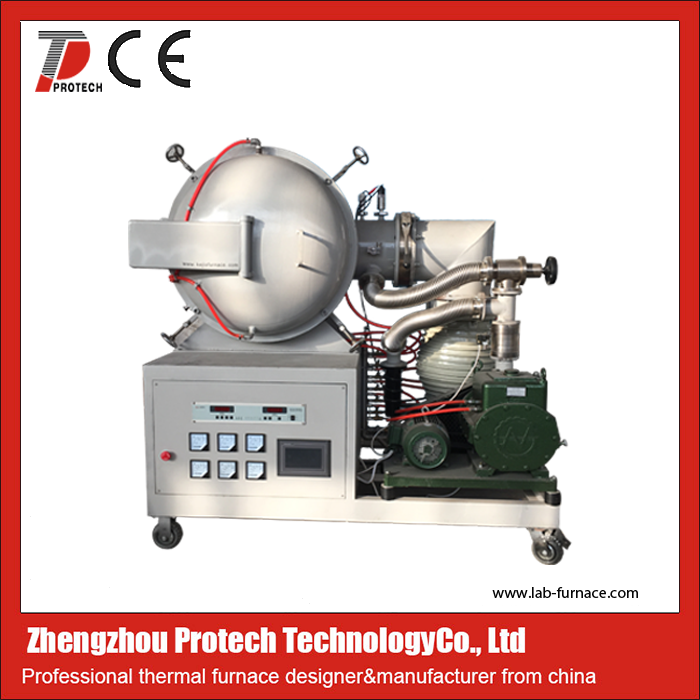
1600 degree bell jar furnace (click on the image to view product details)
Reasonably utilizing the characteristics of the bell jar furnace equipment, matching the corresponding temperature, atmosphere, and duration process curves with product materials, and doing a good job in daily equipment operation and process control, can not only improve the qualification rate of powder metallurgy products, but also effectively reduce production energy consumption and production costs, helping enterprises achieve stable and high-quality production.Click to learn more customized muffle furnaces! Or click on online customer service to learn more about product information!
Leave A Message


