
 English
 简体中文
简体中文 French
 日本語
日本語 Korean
 Português
 Русский
 Spanish



NEWS
When choosing atmosphere protection heat treatment equipment, 1400 ℃ atmosphere furnace and 1700 ℃ atmosphere furnace are the two mainstream high-temperature electric furnaces that research institutions, new material processing plants, and ceramic metallurgy industries often struggle with. The core differences between the two are reflected in six dimensions: heating elements, furnace temperature resistant materials, maximum constant temperature range, energy consumption and cost, atmosphere compatibility, and applicable sintering processes. The higher the temperature, the better. Conventional medium and low temperature sintering using a 1400 degree atmosphere furnace has a higher cost-effectiveness; For ultra-high temperature density sintering above 1400 ℃, preparation of refractory metals and special ceramics, a 1700 degree atmosphere furnace must be selected. Below, we will comprehensively analyze the differences, advantages, and disadvantages of the two devices, and provide a more accurate selection plan based on different process scenarios to help you control procurement and production operation costs.
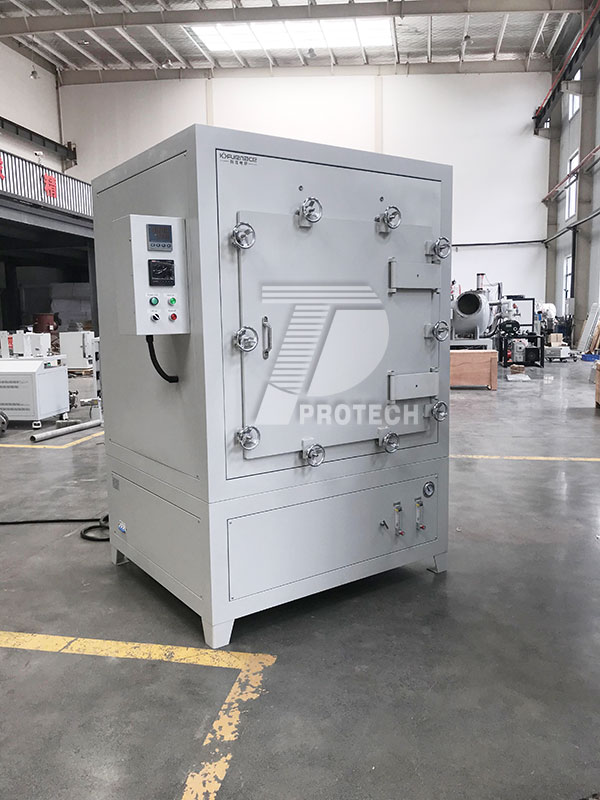
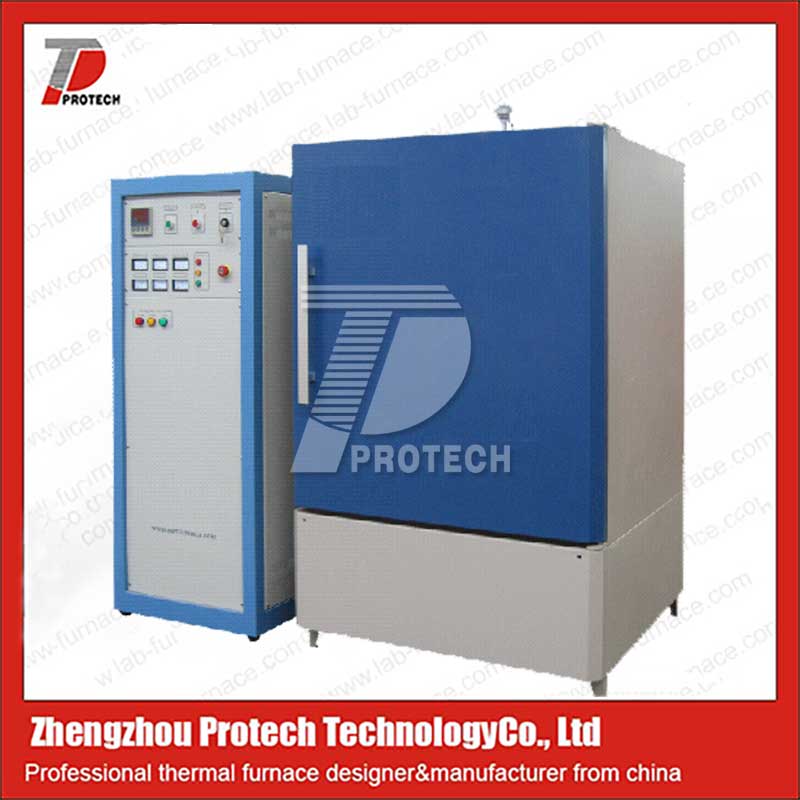
A commonly used 1400 degree atmosphere furnace (click on the image to view product details)
1. Preface: The rated temperature of the atmosphere furnace determines the upper limit of the hardware configuration of the entire machine
The atmosphere furnace relies on inert gases (nitrogen, argon) and reducing gases (hydrogen) to isolate the air, achieving non oxidative sintering, annealing, and solid-phase synthesis of workpieces. It is widely used in the research and production of structural ceramics, powder metallurgy, lithium battery powders, rare earth materials, hard alloys, and inorganic new materials.
Industry standard selection criteria: It is recommended that the long-term operating temperature of the equipment should not exceed 90% of the rated maximum temperature to ensure the service life of the heating element and insulation furnace. The two temperature zones of 1400 ℃ and 1700 ℃ directly divide the heat treatment track of medium high temperature and ultra-high temperature atmosphere, and the standards for internal fire-resistant, heating, and temperature measuring accessories are completely different.
2. 1400 degree atmosphere furnace vs. 1700 degree atmosphere furnace, comprehensive comparison of core differences
(1) Constant temperature operating temperature range (key selection watershed)
1400 ℃ Atmosphere Furnace
Maximum peak temperature: 1400 ℃;
Safe long-term constant temperature range: ≤ 1300 ℃, with a maximum short-term temperature rise not exceeding 1350 ℃.
Once the temperature exceeds 1350 ℃ for a long time, the heating rod accelerates oxidation loss, insulation fibers shrink and lose powder, and the overall failure rate of the machine increases significantly.
1700 ℃ Atmosphere Furnace
Maximum peak temperature: 1700 ℃;
Safe long-term constant temperature range: 1500~1600 ℃, can stably withstand the entire high temperature process of 1400~1600 ℃, and the short-term peak can reach 1650 ℃.
Having sufficient temperature margin, the temperature rise and fall process will not exceed the equipment's maximum tolerance value, resulting in a higher process fault tolerance.
(2) Material differences in core heating elements (root causes of cost and lifespan differences)
a. Standard configuration for 1400 degree atmosphere furnace: silicon carbon rod (SiC)
Silicon carbon rod and silicon carbide material heating element are universal configurations for the 1400 ℃ temperature range:
Advantages: Low procurement price, fast heating speed, decent resistance to cold and hot shocks, suitable for conventional inert atmospheres of air and nitrogen, accessories can be purchased everywhere, and replacement costs are very low;
Shortcoming: Easy to oxidize and age in high temperature environments above 1350 ℃, with a general service life of 2000-4500 hours; Unable to operate stably in high temperature conditions above 1400 ℃ for a long time.
b. Standard configuration for 1700 degree atmosphere furnace: MoSi ₂ silicon molybdenum rod
High temperature silicon molybdenum rod is a specialized heating element for working conditions above 1600 ℃:
Advantages: A dense silica protective film will be formed on the surface at high temperatures of 1600-1700 ℃, with stronger antioxidant properties and a high-temperature lifespan of up to 3000-8000 hours; The temperature field generates uniform heat and maintains a constant temperature for a long time without power attenuation;
Shortcoming: The texture is brittle at room temperature, and it is prone to breakage during handling, maintenance, and collision. The unit price of accessories is higher, and the cost of maintenance and replacement is higher than that of silicon carbide rods.
(3) The insulation and firing material grades of the furnace are different
1400 ℃ atmosphere furnace chamber
The mainstream adopts a 1450 grade high-purity alumina polycrystalline fiber furnace, integrated vacuum adsorption molding, with a temperature resistance upper limit of 1450 ℃, moderate insulation performance, and affordable price;
The firing plate is made of mullite material, which meets the load-bearing requirements of medium and low temperature ceramics and powder calcination. It has excellent thermal shock resistance and is suitable for frequent intermittent production.
1700 ℃ atmosphere furnace chamber
It is necessary to use 1750 grade high-purity alumina fiber and multi-layer composite insulation structure. The refractory fiber has higher purity and lower shrinkage rate, and does not shed slag or release gas at a high temperature of 1600 ℃ to prevent impurities from contaminating the workpiece;
The high-temperature bearing plate can be made of high-purity corundum material, which is resistant to ultra-high temperature creep and can withstand long-term high-temperature loads, and is suitable for high-density sintering conditions; The overall insulation layer has a thicker thickness, and the insulation standards for the furnace body have been comprehensively upgraded.
(4) Differences in Temperature Measuring Components and Temperature Control System Configuration
1400 ℃ furnace: equipped with S-type platinum rhodium thermocouple as standard, with a temperature measurement upper limit of 1600 ℃, meeting daily temperature measurement needs. Basic PID program temperature control, can edit 30 temperature rise and fall curves, suitable for conventional simple heat treatment processes;
1700 ℃ furnace: equipped with high-precision B-type dual platinum rhodium thermocouple, with a temperature measurement upper limit of 1800 ℃ and smaller high-temperature temperature measurement error; Equipped with a touch screen intelligent temperature control system, it supports storage of more than 30 process curves, computer online data export, multiple interlocking protections for overheating, breakage, and abnormal atmosphere, meeting the strict requirements of precision experiments on new materials.
(5) Energy consumption and full lifecycle operation and maintenance costs
Daily power consumption
The 1700 ℃ furnace has more insulation layers and greater furnace heat storage. At the same constant temperature, the power consumption is higher than that of the 1400 ℃ furnace; Continuous large-scale production incurs higher monthly electricity costs.
Consumables maintenance expenses
1400 degree furnace: Silicon carbon rods and refractory fiber accessories are cheap and easy to obtain, with major repairs every 3-4 years and low daily maintenance expenses;
1700 degree furnace: Silicon molybdenum rods and corundum accessories have a high unit price. Although they have a longer service life, the cost of replacement is high, making them suitable for long-term fixed high-temperature processes.
(6) Atmosphere adaptation and process tolerance
Both devices can be filled with reducing atmospheres of nitrogen, argon, and hydrogen, and can be evacuated to replace furnace air;
The difference lies in that the 1700 ℃ furnace has stronger high-temperature airtightness, and the furnace body seals and pipelines are all made of high-temperature and aging resistant materials. There is no gas leakage or seepage problem at 1600 ℃, and the stability of high-purity atmosphere sintering is much better than that of 1400 ℃ atmosphere furnace.
Comprehensive parameter comparison table
| Compare projects | 1400 ℃ atmosphere furnace | 1700 ℃ atmosphere furnace |
| Long term safe constant temperature | ≤ 1300℃ | 1500~1600℃ |
| Heating element | Silicon carbide rod (SiC) | MoSi ₂ |
| Furnace temperature resistance level | 1450 ℃ alumina fiber | 1750 ℃ high-purity alumina composite fiber |
| Standard thermocouple | S-type platinum rhodium | B-type double platinum rhodium high-precision |
| Whole machine purchase price | Low | More height |
| Daily power consumption | Lower | High |
| Heating element lifespan | 2000-4500h | 3000-8000h |
| Suitable atmosphere | Inert regular atmosphere is acceptable | Fully compatible with vacuum, hydrogen, and inert atmospheres, with better high-temperature airtightness |
| Process fault tolerance | Generally, use over temperature is strictly prohibited | High, sufficient temperature margin |
3. How to choose the most cost-effective option for different high-temperature process scenarios?
Scenario 1: Prioritize purchasing a 1400 degree atmosphere furnace (with high cost-effectiveness)
As long as the sintering and heat treatment temperature of the workpiece is less than or equal to 1300 ℃ throughout the process, choosing a 1400 ℃ atmosphere furnace directly reduces the comprehensive costs of purchasing machines, electricity, and maintenance
Process sintering temperature range: 800 ℃~1300 ℃;
Suitable products: ordinary alumina ceramics, talc ceramics, mullite products, iron oxide powder calcination, low carbon steel vacuum annealing, sintering of small and medium-sized permanent magnet materials, catalyst precursor calcination, and routine inorganic chemistry experiments in universities;
Production mode: Large batch intermittent mass production, limited budget, pursuit of equipment cost saving and durability;
No need for ultra-high temperature densification sintering above 1400 ℃.
Applicable industries: daily-use ceramics, refractory material processing plants, general powder metallurgy, chemical powder calcination workshops, primary and secondary school and ordinary university laboratories.
Scenario 2: A 1700 degree atmosphere furnace must be selected (irreplaceable)
To meet the requirements of any working condition, the 1400 ℃ furnace cannot meet the standard, and only a 1700 ℃ high-temperature atmosphere furnace can be purchased:
The sintering temperature needs to be consistently maintained between 1400 ℃ and 1600 ℃;
The product requires high density and purity, and trace impurities and uneven temperature fields can lead to cracking and substandard performance of the finished product;
✅ Typical workpieces: 99 high-purity alumina structural components, zirconia ceramics, pre fired silicon carbide bodies, annealing of tungsten molybdenum refractory metals, vacuum diffusion welding of titanium alloys, high-temperature synthesis of lithium positive electrode powders, rare earth luminescent materials, aluminum nitride electronic ceramic substrates;
The process requires long-term gas circulation and high vacuum atmosphere firing, with strict requirements for furnace airtightness and high temperature cleanliness;
New material research and development iteration, there is room for upward adjustment of process temperature in the future, and one device is compatible with multiple sets of high-temperature experimental curves.
Applicable industries: advanced ceramic enterprises, aerospace component heat treatment, lithium battery material manufacturers, key laboratories of research institutes, and precision manufacturing enterprises of hard alloys.
Scenario 3: Suggestions for compromise and transition selection
If the process temperature occasionally fluctuates within the range of 1300~1400 ℃ and there is no long-term demand for ultra-high temperature, a high-end 1400 ℃ enhanced atmosphere furnace can be customized. The insulation layer can be thickened, high-quality silicon carbon rods can be selected, and a small temperature margin can be reserved. The price is much lower than the standard 1700 ℃ furnace, which is suitable for use during the transition period of the process.
4. Summary mnemonic for selecting high-temperature atmosphere furnace
Constant temperature ≤ 1300 ℃, mass production of conventional ceramic powder → choose a 1400 degree atmosphere furnace for lower cost;
1400-1600 ℃ ultra-high temperature sintering, high-purity precision materials, refractory metal heat treatment → choose 1700 ℃ atmosphere furnace, stable process and high yield rate;
Fixed low-temperature flow rate for reopening the low-temperature furnace; Research and development are diverse, pursuing long-term process compatibility and selecting high-temperature furnaces.
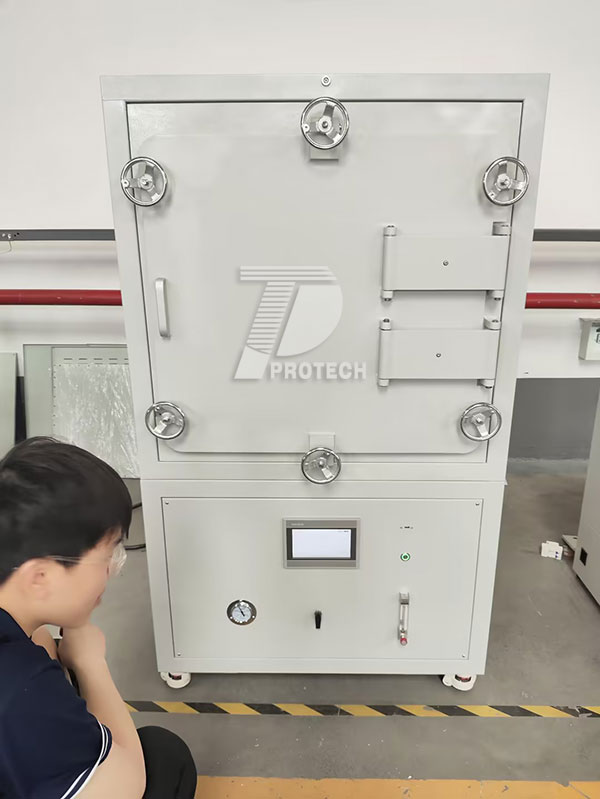
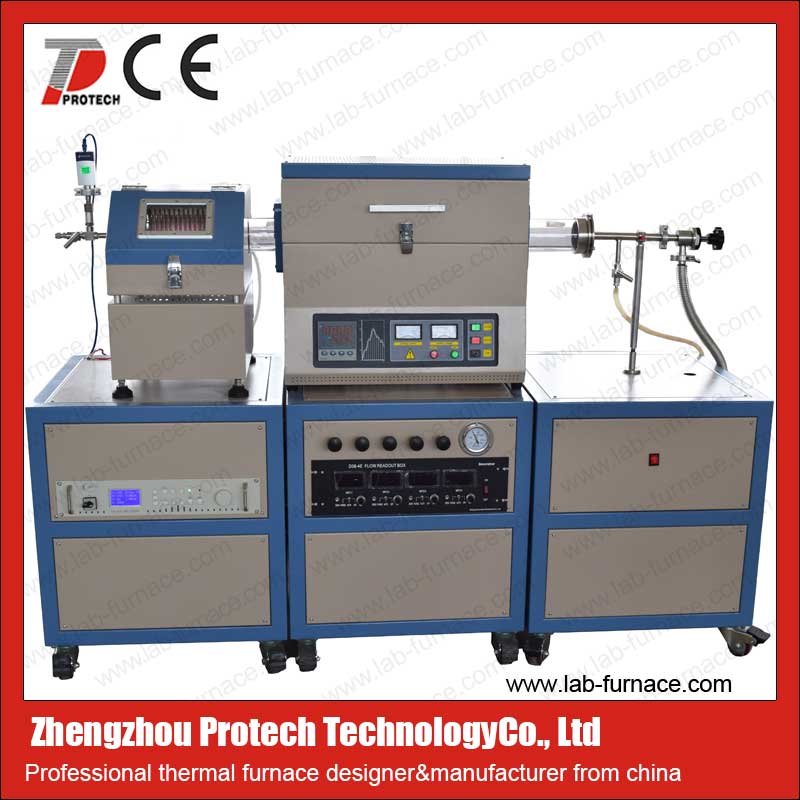
A commonly used 1700 degree atmosphere furnace (click on the image to view product details)
5. Summary
The selection of atmosphere furnace requires comprehensive calculation of equipment investment and usage costs based on actual sintering temperature, furnace volume, type of gas introduced, and annual output. If you need to customize a box type atmosphere furnace or a tube type atmosphere furnace, we can provide specific process parameters and tailor a high-temperature heat treatment equipment solution that is suitable for your working conditions.Click to learn more customized atmosphere furnaces! Or click on online customer service to learn more about product information!
Leave A Message


