
 English
 简体中文
简体中文 French
 日本語
日本語 Korean
 Português
 Русский
 Spanish



NEWS
When choosing high-temperature vacuum heat treatment equipment, most processing plants and new material enterprises will be confused about how to choose between high-temperature graphite vacuum furnace and molybdenum plate (molybdenum screen) vacuum furnace. Both belong to the mainstream industrial vacuum high-temperature furnaces, with core differences concentrated in five dimensions: heating insulation materials, temperature tolerance, furnace cleanliness, atmosphere adaptation, procurement price, and later operation and maintenance costs. There is no absolute superiority or inferiority, only the differentiation of process adaptation: ultra-high temperature sintering, mass production pursuit of low-cost preferred graphite vacuum furnace; The workpiece is strictly prohibited from carburizing, requires a hydrogen atmosphere, and is subjected to precision high-purity heat treatment. The molybdenum plate vacuum furnace has a higher cost-effectiveness. Below, we will comprehensively analyze the differences, advantages and disadvantages, and applicable processes of the two types of equipment, helping enterprises select cost-effective and durable vacuum furnace equipment based on their own production needs.

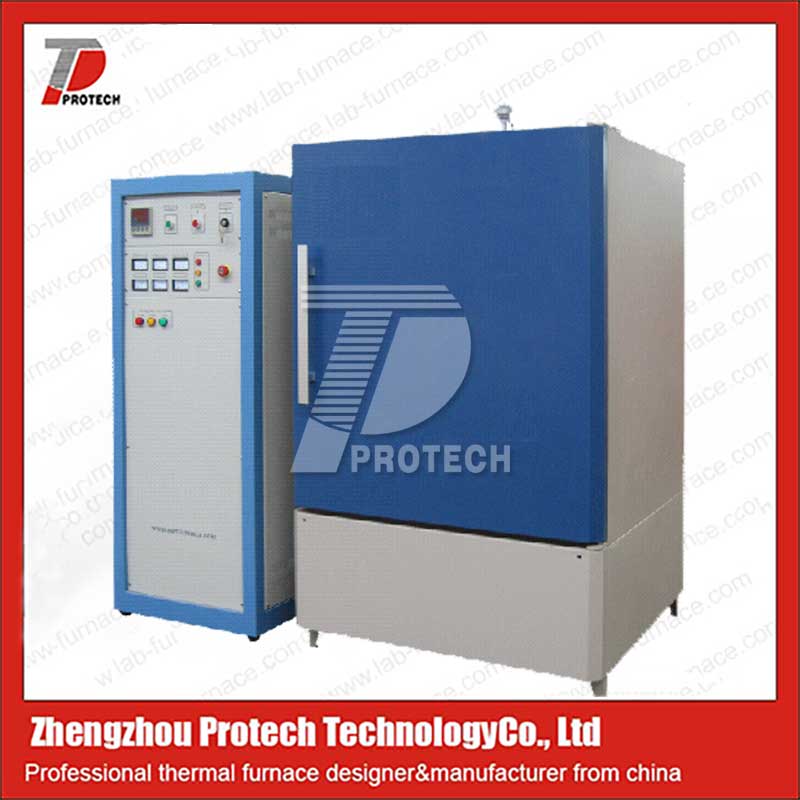
Commonly used molybdenum screen vacuum furnace (click on the picture to view product details)
1. Introduction: The material of vacuum furnace hot zone is the core of selection
The heating and insulation chamber (hot zone) inside the vacuum furnace is the heart of the equipment, which is mainly divided into two categories according to the main materials: graphite carbon felt hot zone vacuum furnace and molybdenum metal radiation screen (molybdenum plate/molybdenum screen) vacuum furnace. Widely used in industries such as powder metallurgy, hard alloys, precision brazing, aviation alloys, ceramic sintering, medical materials, carbon material graphitization, etc.
Many purchases only compare the purchase price, ignoring temperature limits, carbon pollution, energy consumption, and consumable replacement costs. Long term use can lead to product scrapping, frequent equipment maintenance, and high production costs. Compare the differences in core parameters between the two devices item by item below.
2. Detailed difference and comparison between high-temperature graphite vacuum furnace and molybdenum plate vacuum furnace
(1) Extreme operating temperature (core watershed)
High temperature graphite vacuum furnace
Long term stable working temperature: 1600 ℃~1800 ℃, short-term peak can reach 2000 ℃~2200 ℃, it is a commonly used equipment for mass production of ultra-high temperature conditions in the market. Graphite has high temperature resistance and is not easily deformed or cracked after repeated high and low temperature cycles. It is suitable for various high-temperature sintering processes above 1400 ℃.
Molybdenum plate vacuum furnace (molybdenum screen vacuum furnace)
Molybdenum metal is prone to recrystallization and embrittlement at high temperatures. The long-term safe use limit is 1250 ℃ -1350 ℃. It is strictly prohibited to operate at a constant temperature exceeding 1400 ℃ for a long time, and the instantaneous maximum temperature should not exceed 1600 ℃. Once used at excessive temperatures, the molybdenum plate will quickly become brittle, warped, and crack, and the entire molybdenum insulation screen will be scrapped directly.
The first criterion for selection: If the process temperature is greater than 1400 ℃, the molybdenum plate furnace can be directly abandoned and only a graphite vacuum furnace can be used.
(2) Cleanliness inside the furnace and carbon pollution risk
Molybdenum plate vacuum furnace: no carbon pollution throughout the process, with full cleanliness
The overall hot zone is composed of metal molybdenum plates joined together to form a radiation insulation layer. The structure is dense, with no carbon powder evaporation or carbon atom precipitation at high temperatures. The workpiece will not have surface carburization, carbon black adhesion, or uneven surface hardness problems; The furnace has a lower gas release rate and can maintain a high vacuum state for a long time, making it suitable for precision workpieces sensitive to carbon elements.
Graphite vacuum furnace: There is a risk of natural carbon precipitation
The insulation layer is made of porous materials such as graphite felt and carbon felt, which slowly release carbon molecules and fine carbon dust in high temperature environments; Long term production can lead to surface carbonization of metal workpieces, resulting in defects such as color difference, increased brittleness, and insufficient strength of brazed joints; Every time the furnace is turned on, it will adsorb water vapor impurities, and the longer the equipment is used, the worse its ability to maintain the ultimate vacuum.
(3) Applicable atmosphere and environmental differences
Molybdenum plate vacuum furnace adapts to a wider range of atmospheres
It can operate simply in vacuum or be subjected to long-term hydrogen atmosphere to complete degreasing, annealing, and sintering processes. Molybdenum material is resistant to hydrogen corrosion and has stable working conditions, making it a commonly used furnace type for hydrogen heat treatment.
Use hydrogen atmosphere with caution in graphite vacuum furnaces
At high temperatures, carbon and hydrogen undergo a chemical reaction to generate methane gas, which continuously corrodes the graphite insulation layer and consumes graphite consumables, greatly shortening the service life of the furnace. It is generally recommended to use it only in a pure vacuum environment.
(4) Comparison of energy consumption and heating and cooling efficiency
Graphite vacuum furnace is more energy-efficient and energy-saving
The thermal insulation performance of graphite is much better than that of metal molybdenum radiation screen, and the furnace heat loss is lower; Its own heat capacity is small, the heating rate is fast, the cooling cycle is short, and the production time of a single batch is shorter. Under the same constant temperature conditions, the electricity consumption is lower than that of a molybdenum plate furnace, and the energy-saving advantage of large-scale continuous production is very obvious.
The energy consumption of the molybdenum plate vacuum furnace is relatively high
The metal molybdenum screen has a fast heat dissipation speed and poor insulation effect, requiring continuous power supply to supplement heat and maintain the set temperature; The temperature rise and fall rate is gentle, the production cycle is longer, and the monthly electricity cost is higher.
(5) Procurement cost, maintenance cost, overall service life (key to cost-effectiveness)
a. Initial purchase price of complete machine
Under the premise of the same effective volume of the furnace and the same vacuum system configuration, the purchase price of the entire molybdenum plate vacuum furnace is higher than that of the graphite vacuum furnace. Molybdenum is a rare and refractory precious metal, with high raw material costs. The production cost of a complete set of molybdenum insulation screens is much higher than that of graphite carbon felt insulation structures.
b. Daily maintenance and consumables replacement costs
Graphite vacuum furnace: High cost-effectiveness of consumables. After the aging and powdering of graphite felt, it can be partially cut and replaced, and the procurement of accessories is convenient and the unit price is low; The entire hot zone has a long service life, minimal maintenance and replacement costs, and low technical requirements for operators.
Molybdenum plate vacuum furnace: maintenance costs are expensive. The alternating cycle of hot and cold will gradually cause the molybdenum plate to become brittle and deformed, and the weld seam to crack, making it impossible to repair locally. After damage, the entire molybdenum screen must be replaced; Molybdenum accessories have a long ordering cycle and high selling price. Sudden cooling, heating, and bumping are strictly prohibited in daily life, and the operating standards are strict.
c. Comprehensive usage cost throughout the entire lifecycle
Extensive mass production, allowing for slight carburizing: the total cost of graphite furnace is lower;
High value-added precision workpieces eliminate carbon pollution and scrap: Molybdenum plate furnaces save waste losses and have higher long-term comprehensive benefits.
(6) Comprehensive parameter comparison table
| Compare projects | High temperature graphite vacuum furnace | Molybdenum plate (molybdenum screen) vacuum furnace |
| Long term constant temperature range | 1600-1800 ℃, maximum 2200 ℃ | ≤ Stable use at 1350 ℃ |
| Carbon pollution situation | There is carbon volatilization, and the workpiece is prone to carburizing | No carbon deposition, clean inside the furnace |
| Available atmosphere | Pure vacuum only, hydrogen gas is prohibited | Both vacuum and hydrogen atmospheres can be used |
| Energy consumption | Good insulation, energy-saving, fast heating and cooling speed | Fast heat dissipation and higher power consumption |
| Initial investment for purchasing | Low price | High cost |
| Post maintenance costs | Consumables are cheap and maintenance is simple | The cost of replacing molybdenum parts is high |
| Vacuum stability | decreasing year by year, with a large amount of air release | Long term high vacuum constant |
3. How to choose the most cost-effective option for different process scenarios?
Scenario 1: Prioritize purchasing high-temperature graphite vacuum furnaces (recommended cost-effectiveness)
By meeting any of the following production conditions, the comprehensive cost of graphite vacuum furnace is better:
The sintering and heat treatment process temperature of the workpiece is greater than 1400 ℃, and the molybdenum plate furnace cannot meet the process requirements;
The product allows for slight carburization, and carbon elements will not affect the performance and qualification rate of the finished product;
✅ Suitable products: hard alloy cutting tools, tungsten steel stamping molds, zirconia/alumina industrial ceramics, iron-based copper based powder metallurgy parts, graphite product purification sintering, carbide product processing;
The factory produces in large quantities on assembly lines and wants to lower the purchase budget and monthly electricity expenses; The production process only requires a pure vacuum environment, without the need for hydrogen annealing or degreasing processes.
Suitable industries: tool and mold processing factories, general powder metallurgy factories, high-temperature refractory ceramic production enterprises, carbon material processing manufacturers.
Scenario 2: Molybdenum plate vacuum furnace needs to be selected
Due to the following process requirements, only molybdenum screen and molybdenum plate vacuum furnaces can be purchased:
Strictly prohibit carburizing of workpieces, as trace carbon pollution can result in batch product scrapping;
Applicable workpieces: titanium alloy parts, nickel based high-temperature alloys, stainless steel precision components, precious metal accessories, medical implant alloys, semiconductor ceramic substrates, AMB copper-clad laminates;
The process flow requires the introduction of a hydrogen atmosphere to complete degreasing, sintering, and vacuum brazing;
Heat treatment of high value-added products such as aerospace components, optical accessories, and precision instrument components;
Small batch and multi batch trial production, emphasizing process stability and finished product yield.
⚠️ Taboo reminder: Processing volatile non-ferrous metals such as copper and zinc is not suitable for molybdenum plate furnaces. Metal vapor can corrode the molybdenum screen and accelerate embrittlement aging. It is recommended to use graphite vacuum furnaces.
4. Summary of Cost saving Tips for Choosing a Vacuum Furnace
Temperature exceeding 1400 ℃, not afraid of carburization, mass production → Choose graphite vacuum furnace, save money on both purchasing and using electricity;
Within 1300 ℃, avoid carbon pollution, require a hydrogen atmosphere, and use precision high-end components → Choose a molybdenum plate vacuum furnace, strictly control waste products for better cost-effectiveness;
Large volume universal heat treatment: graphite furnace; Small batch high value-added precision machining: molybdenum plate furnace.

Commonly used graphite vacuum furnace (click on the image to view product details)
5. Summary
The selection of high-temperature vacuum furnace needs to be comprehensively calculated based on furnace size, process temperature, processing material, atmosphere requirements, and annual output. If you are preparing to purchase vacuum heat treatment equipment, you can provide specific production parameters, and we will calculate the total price of the two devices for you and tailor a vacuum furnace solution that is suitable for the working conditions.Click to learn more customized vacuum furnaces! Or click on online customer service to learn more about product information!
Leave A Message


