
 English
 简体中文
简体中文 French
 日本語
日本語 Korean
 Português
 Русский
 Spanish



NEWS
When choosing a high vacuum sintering furnace, many research laboratories, powder metallurgy factories, and ceramic processing enterprises will struggle with the configuration of the thermal field. Should we choose a graphite heating furnace or a multi-layer molybdenum screen radiation heating furnace? There is no absolute good or bad between the two, the core difference lies in the working temperature range, whether the workpiece is afraid of carbon pollution, process atmosphere, vacuum precision, and production cost. Below, we will explain the performance, advantages and disadvantages, and adaptability to industry scenarios of two heating structures in stages: low temperature, medium temperature, high temperature, and ultra-high temperature, to help you quickly choose the right vacuum sintering furnace.
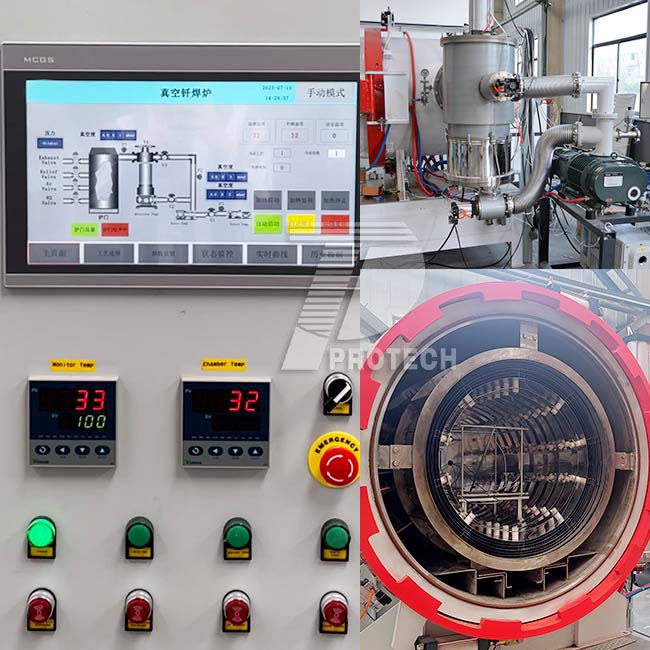
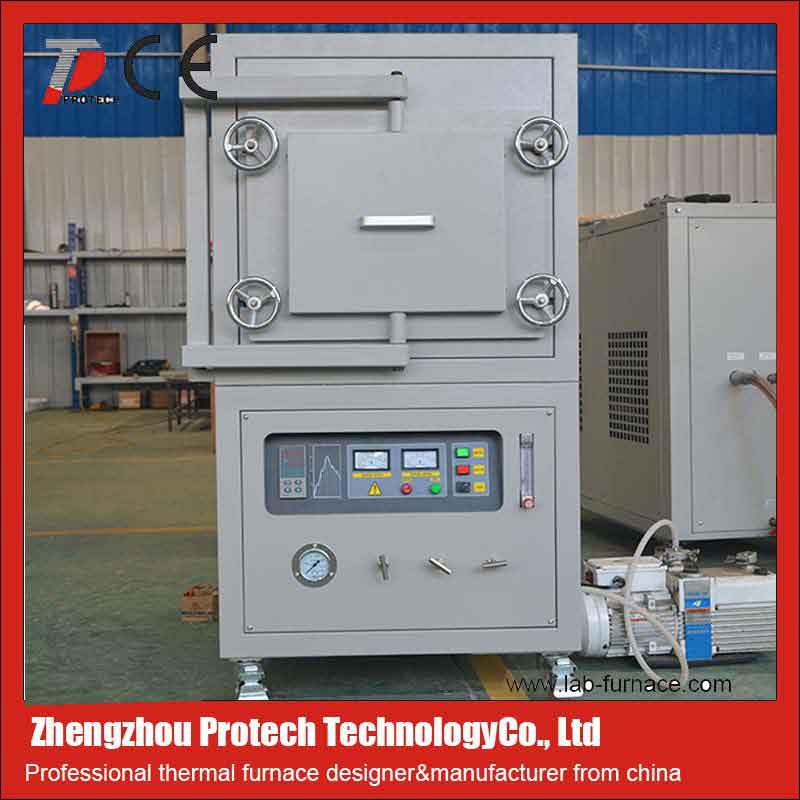
Commonly used molybdenum screen vacuum furnace
1. Introduction to the basic characteristics of two heating structures
(1) Graphite heating vacuum sintering furnace
Using graphite heating elements combined with graphite carbon felt insulation layer as the thermal field, relying on graphite radiation heat transfer to increase temperature. Graphite has a melting point of up to 3650 ℃ -3700 ℃, good high-temperature resistance in vacuum environment, small heat capacity, fast heating rate, excellent insulation performance, and affordable equipment manufacturing cost. It is a commonly used high-temperature sintering furnace thermal field solution in the market.
The short board is made of graphite material with porous properties. After opening and closing the furnace door, it is easy to adsorb water vapor. Under high temperature conditions, trace amounts of carbon dust will slowly precipitate, which can easily cause surface carburizing pollution of the workpiece; Under high temperature hydrogen environment, graphite will undergo chemical reactions and consume furnace consumables, so the hydrogen atmosphere process is not suitable for graphite furnaces.
(2) Molybdenum screen heating vacuum sintering furnace
The heating element is combined with multi-layer metal molybdenum radiation insulation screen to form a full metal hot zone, and the overall furnace interior is made of carbon free material. Molybdenum thermal field has a low gas release rate and a clean furnace environment, which can isolate carbon element contaminated workpieces; Capable of withstanding hydrogen and reducing atmospheres for a long time, and can easily maintain high vacuum and stable pressure; The disadvantage is that molybdenum metal has poor thermal insulation ability, fast heat loss during operation, high energy consumption, and is prone to embrittlement after repeated cold and hot cycles, resulting in higher equipment procurement costs.
2. Comparing and adapting operating conditions within different temperature ranges
(1) ≤ 1200 ℃ low temperature to medium low temperature range
a. Molybdenum screen heating is preferred
1200 ℃ belongs to the stable working range of molybdenum metal, and the molybdenum screen is not prone to high-temperature creep and has a long service life.
Adaptation scenario
Titanium alloy, medical alloy, high-purity stainless steel powder sintering annealing;
Electronic ceramics, sensitive target materials, and semiconductor materials are strictly prohibited from carburizing workpieces;
Need to introduce hydrogen gas for degreasing and reducing atmosphere sintering process;
Precision laboratories and new material research and development in universities require clean furnaces and stable ultimate vacuum degrees.
b. Graphite heating is suitable for secondary working conditions
Only suitable for ordinary alumina ceramics and ordinary metal samples, the workpiece is not afraid of trace carbon impurities, only for pure vacuum sintering, pursuing low equipment cost and fast heating.
(2) High temperature range of 1100 ℃ to 1300 ℃
This temperature range belongs to the overlapping range of two heating methods and needs to be selected based on the material purity requirements.
Molybdenum screen heating vacuum sintering furnace (with a long-term stable upper limit of 1300 ℃)
Multi layer thick molybdenum insulation screen, with uniform temperature control and no carbon deposition.
Adaptation scenarios: sintering of precious metals, transparent ceramics, high-purity electrolytes for lithium batteries, heat treatment of aviation precision components; Production lines that require frequent switching between vacuum and atmosphere.
Graphite heating sintering furnace
The insulation advantage of graphite thermal field at 1300-1600 ℃ is fully released, with fast heating and cooling speed, energy saving, and suitable for large-scale production.
Adaptation scenarios: Hard alloy, tungsten cobalt carbide materials, ordinary structural ceramics, carbon based material sintering; The factory produces in large quantities, and the workpieces can accept the influence of trace carbon, mainly to reduce the cost of electricity and consumables.
(3) High temperature range of 1600 ℃ -2000 ℃
Shortboard of molybdenum screen heating: Pure molybdenum components are prone to softening, creep, and rapid loss under high temperatures above 1300 ℃ for a long time. Ordinary molybdenum screen furnaces are no longer suitable for long-term constant temperature operation and can only be heated up for a short period of time.
Therefore, graphite heating structures are preferred for temperatures above 1300 ℃.
The graphite heating furnace can operate stably for a long time at 1800-2000 ℃, with a thermal field that is not easily deformed and strong heat shock resistance.
Adaptation scenarios: Non oxide ceramics such as silicon carbide and silicon nitride, refractory powders, graphite bodies, and high-temperature alloy sintering; Industrial batch high-temperature calcination and laboratory preparation of ultra-high temperature samples.
(4) Over 2000 ℃ ultra-high temperature range
The molybdenum material has reached its tolerance limit, and the molybdenum screen heating structure is no longer usable.
Graphite heating is the standard configuration, and the short-term peak temperature can reach above 2200 ℃, meeting the ultra-high temperature sintering and graphitization processing needs of refractory metal bodies, special inorganic materials, and high-temperature carbon materials.
3. Summary of advantages and disadvantages of graphite heating and molybdenum screen heating
Graphite heating vacuum sintering furnace
✅ Advantage
High temperature resistance upper limit, suitable for ultra-high temperature processes above 2000 ℃;
Graphite felt has good insulation and low heat dissipation loss, making mass production more energy-efficient;
Fast heating rate and sensitive response to cold and hot cycles;
The heating element is easy to process, and the overall selling price and later consumables cost are lower.
❌ shortcoming
Porous materials are easy to absorb and release air, and the vacuuming process takes longer;
High temperature releases carbon particles, which can easily cause workpiece carburizing;
It is not suitable to introduce hydrogen gas atmosphere for a long time, as the reaction between carbon and hydrogen will corrode the furnace.
Molybdenum screen (all metal) heating vacuum sintering furnace
✅ Advantage
Zero carbon environment inside the furnace, eliminating carburizing impurities, suitable for high-purity materials;
The gas release rate of molybdenum metal is very low, which can achieve ultra-high vacuum and better pressure holding performance;
Resistant to hydrogen gas, multiple reducing atmospheres, and strong process compatibility;
Stable thermal field within 1600 ℃, suitable for high-precision scientific research samples.
❌ shortcoming
Metal radiation screen has fast heat dissipation and higher constant temperature power consumption;
Molybdenum materials are prone to brittleness and creep at high temperatures, and should not be operated above 1300 ℃ for a long time;
Molybdenum raw materials are expensive, and the overall equipment cost and accessory replacement cost are relatively high.
4. Industry Selection Guide
Powder metallurgy and hard alloy industry: mass production using graphite heating; Molybdenum screen heating is used for sintering titanium based, high-purity stainless steel, and medical powder parts;
Advanced ceramic processing: ordinary alumina ceramics use graphite furnaces; Transparent ceramics, aluminum nitride, and high-purity functional ceramics are preferred for molybdenum screen thermal field;
University and research institute laboratories: multi atmosphere experiments, new material research and development, avoid carbon pollution, choose molybdenum screen heating vacuum sintering furnace; Choose graphite heating for sintering experiments at temperatures above 2000 ℃;
New energy and semiconductor target materials: all use molybdenum screen carbon free furnaces to ensure the purity of the target materials is not affected by carbon impurities;
Carbon materials and graphite products are sintered into graphite: a fixed graphite heating vacuum sintering furnace is selected.
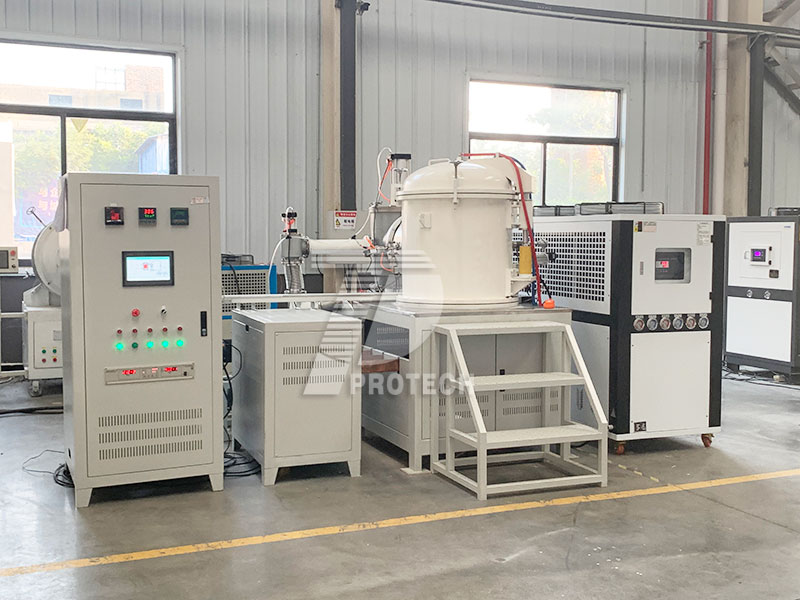
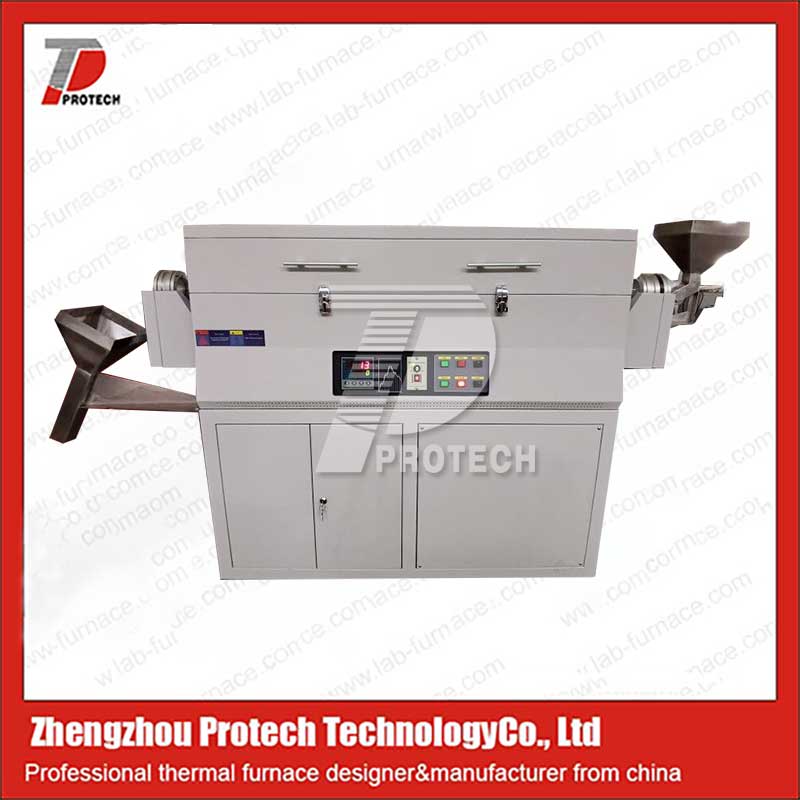
Commonly used graphite vacuum furnace (click on the image to view product details)
5. Summary
Simply remember the temperature selection mnemonic: choose molybdenum screen for carbon resistance below 1300 ℃, and graphite for energy-saving production above 1300 ℃; Molybdenum screen heating is selected for hydrogen atmosphere process, and graphite furnace is identified for ultra-high temperature sintering.
Our electric furnace source manufacturer can customize various specifications of high vacuum sintering furnaces for molybdenum screen heating and graphite heating. The furnace size and vacuum unit configuration can be customized according to customer sintering temperature, workpiece material, and atmosphere requirements. If you have equipment parameters and quotation needs, please feel free to consult.Click to learn more vacuum furnaces! Or click on online customer service to learn more about product information!
Leave A Message


