
 English
 简体中文
简体中文 French
 日本語
日本語 Korean
 Português
 Русский
 Spanish



NEWS
In experimental and production scenarios such as new material sintering, chemical vapor deposition, crystal growth, and powder calcination, a controllable temperature gradient environment is often required. Single temperature zone tube furnaces can only achieve a single constant temperature and cannot meet the requirements of gradient heat treatment. Multi temperature zone tube furnaces rely on segmented independent temperature control structures to construct stable and controllable axial temperature gradients inside the same furnace tube. Many users are curious about how the gradient temperature of a multi zone tube furnace is achieved. Below, we will provide a detailed explanation from several dimensions, including hardware structure, control system, insulation design, and process debugging.

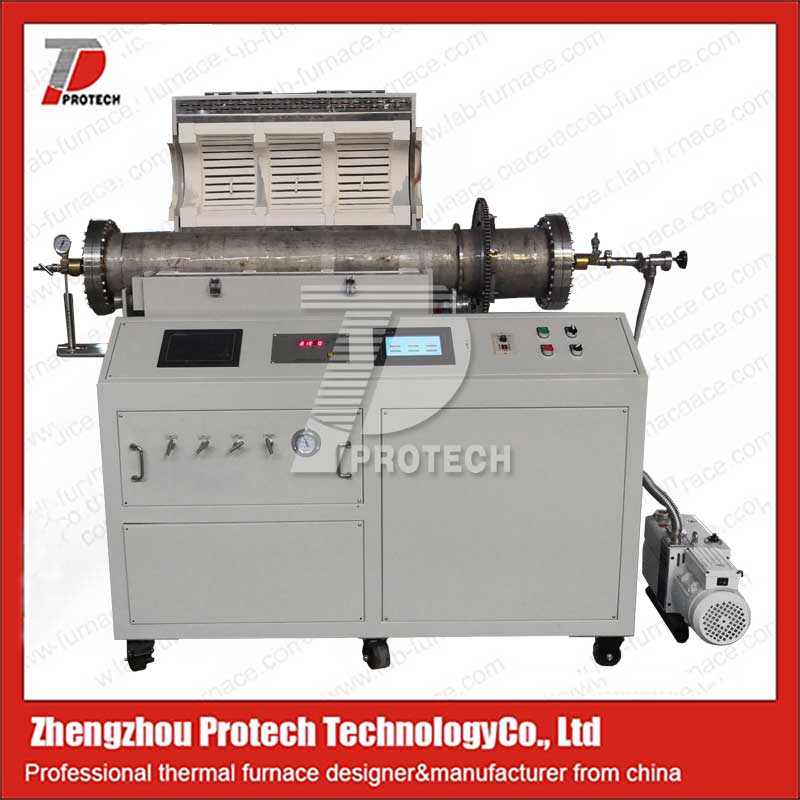
Customized multi zone tube furnace (click on the image to view product details)
1. Hardware foundation: segmented independent heating structure
The multi zone tube furnace divides the furnace body into 2, 3, or even more independent heating zones along the axis of the furnace tube, which is the hardware prerequisite for generating gradient temperature. Each temperature zone is a complete independent heating unit that is independent of each other.
(1). Independent heating element
Each temperature zone is equipped with dedicated heating elements, and resistance wires, silicon carbon rods, and silicon molybdenum rods are selected according to the highest temperature of the equipment. The heating elements are evenly arranged in the corresponding temperature zone furnace, only responsible for heating in this area, and do not interfere with heating in other temperature zones. Dual temperature zone and triple temperature zone are commonly used specifications in the industry, and 4-6 temperature zones can also be customized according to non-standard processes.
(2). Independent thermocouple collects temperature
Each temperature zone is equipped with a dedicated thermocouple (N/S/B type, matching the device temperature level) to collect the true temperature of the zone in real time, transmit the temperature signal to the temperature control system, and collect the temperature of each zone separately without interfering with each other.
(3). Temperature interval thermal isolation structure
Install alumina fiber insulation layer between temperature zones to reduce heat conduction between adjacent temperature zones and minimize heat disturbance from high temperature zones to low temperature zones. If there is a lack of good insulation, a large amount of heat from the high-temperature zone will be conducted to adjacent areas, and the gradient will be smoothed out, making it impossible to form a stable temperature difference. Insulation structure is one of the key structures to ensure the fidelity of the gradient.
2. Core control logic: Multi loop PID independent temperature control
Just having segmented heating hardware cannot automatically generate gradients, relying on multi loop temperature control instruments (touch screen multi-channel controllers) to achieve closed-loop adjustment is the core logic of gradient temperature implementation.
(1). Each temperature zone corresponds to an independent PID control loop, and the operator sets the target temperature, heating rate, and insulation time for each temperature zone separately. For example, in a three zone tube furnace, the first zone is set at 500 ℃, the second zone is set at 800 ℃, and the third zone is set at 1100 ℃. The furnace tube axis forms an increasing temperature gradient of 500-800-1100 ℃; It is also possible to set the middle to be high and the ends to be low, forming a gradient distribution of high temperature in the middle and low temperature on both sides.
(2). Thermocouples transmit the actual temperature in real-time, and the controller compares the set temperature with the measured temperature, dynamically adjusting the output power of each temperature zone through thyristors/solid-state relays. If the temperature is too low, increase the power; if the temperature is too high, decrease the power. The closed-loop maintains each temperature zone stable at the set value, and the temperature control accuracy can generally reach around ± 1 ℃.
>Note: The gradient is not automatically generated by the device, and different target temperatures need to be manually set for different temperature zones. By relying on natural thermal transition between each temperature zone, a continuous and smooth temperature transition zone is formed inside the furnace tube. The gradient slope is determined by the temperature difference between adjacent temperature zones and the length of the temperature zone. The steeper the temperature difference and the shorter the temperature zone, the steeper the gradient slope; The smaller the temperature difference, the smoother the gradient.
3. Two gradient modes: step gradient and linear gradient
(1) Step by step gradient
The temperature difference between different temperature zones is large, and a segmented step temperature field is formed inside the furnace tube. Suitable for the integrated process of step-by-step calcination, preheating, high-temperature reaction, and slow cooling. For example, the front-end temperature zone is used for material preheating, the middle temperature zone is used for high-temperature sintering, and the back-end temperature zone is used for slow cooling of the sample.
(2) Approximate linear gradient
Gradually increasing/decreasing temperatures are set in adjacent temperature zones, relying on the natural transition of heat in the temperature range to obtain a temperature field that is close to linear variation. It is commonly used in scientific research experiments such as crystal growth, directional solidification, CVD vapor deposition, etc. To obtain a smoother linear gradient, the number of temperature zones can be increased, and more segments can fit a more ideal linear temperature field.
4. Key factors affecting the gradient temperature effect
(1). Thermal crosstalk in the temperature range: The insulation layer has poor quality, and a large amount of heat from the high temperature zone flows to the low temperature zone, weakening the gradient. When selecting, attention should be paid to the furnace insulation material and insulation partition design.
(2). Heating rate: The heating rate should not be too fast, as rapid heating will increase the mutual interference of heat in the temperature range and deteriorate the stability of the gradient. It is recommended to control it within 5-10 ℃ per minute.
(3). Furnace tube material and size: Coarse furnace tubes have stronger thermal conductivity and weaken the gradient effect; The thermal conductivity of corundum tube and quartz tube is different, which will slightly change the gradient curve.
(4). Atmosphere and airflow: When protective gas and carrier gas are introduced, the airflow carries heat and changes the temperature distribution inside the furnace. For gradient processes, a fixed gas flow rate is required, and consistent parameters are maintained for each experiment.
5. Practical application scenarios of gradient temperature in multi zone tube furnace
-New material research and development: gradient annealing and directional solidification experiments to study the phase changes of materials at different temperatures;
-CVD chemical vapor deposition: The material passes through the preheating zone, reaction zone, and deposition zone in sequence to achieve gas-phase synthesis;
-Powder sintering and calcination: achieving preheating high temperature reaction slow cooling continuous heat treatment;
-Simulate geological temperature environment and conduct scientific experiments on simulated geological conditions.

Customize four tube furnaces (click on the image to view product details)
6. Selection Tips
If the process only requires simple constant temperature, a single temperature zone tube furnace can meet the requirements; Only when the process clearly requires gradient temperature field and segmented heat treatment, is it necessary to choose multi temperature zone models. The more temperature zones there are, the better. Dual temperature zones and triple temperature zones can meet most conventional gradient processes. For special working conditions, non-standard customization of four temperature zones or above can be considered. At the same time, the equipment supports vacuum and multi-channel atmosphere input, and is suitable for various process requirements such as sintering, annealing, and gas-phase reaction.Click to learn more customized multi zone tube furnaces! Or click on online customer service to learn more about product information!
Leave A Message


