
 English
 简体中文
 French
 日本語
 Korean
 Português
 Русский
 Spanish



NEWS
Protective gas tube furnace, also commonly known as atmosphere protective tube furnace, relies on inert protective gases such as nitrogen and argon to isolate the air and avoid oxidation, decarburization, and contamination of samples at high temperatures. It is widely used in university laboratories, new material research and development, powder metallurgy, ceramic sintering, metal annealing, CVD vapor deposition, and other scenarios. Many procurement personnel only focus on the highest temperature when making purchases, ignoring key indicators such as gas path, sealing, temperature field, etc. After purchasing equipment, they cannot match the process. Below are the core parameters that must be carefully checked when purchasing protective gas tube furnaces.
1. Temperature parameters: distinguish between the highest temperature and long-term continuous use temperature
Temperature is the basic indicator of tube furnace, do not directly select according to the nominal maximum temperature.
(1). Maximum temperature: The peak temperature that the equipment can reach in a short period of time, which can only be kept warm for a short period of time and is not suitable for long-term production processes;
(2). Long term continuous working temperature: The safe temperature for continuous operation of normal processes, generally about 100 ℃ lower than the highest temperature. For example, for a tube furnace with a nominal temperature of 1200 ℃, it is recommended to control it within 1100 ℃ for long-term stable use; Long term use of 1400 ℃ models is recommended to not exceed 1300 ℃.
(3). Matching view: heating rate, temperature control accuracy, constant temperature zone length, temperature field uniformity. Research sintering experiment, recommended temperature control accuracy of ± 1 ℃, temperature field uniformity in the constant temperature zone of ± 3-5 ℃; Multi temperature zone models can achieve gradient heating, suitable for special material processes. Heating elements also need to be matched with temperature ranges. Resistance wires are used for low-temperature models, silicon carbon rods are selected for 1400 ℃ levels, and silicon molybdenum rods are selected for higher temperatures.
2. Furnace tube material: Choose according to temperature and atmosphere, selecting the wrong one can easily lead to cracking
The furnace tube is the core carrier for protecting the atmosphere, and the material directly determines whether the equipment can adapt to your gas environment.
-Quartz tube: high transparency, allowing for intuitive observation of sample reactions; Long term use limit of 1100 ℃, suitable for inert atmospheres of nitrogen and argon. The disadvantage is that it softens at high temperatures and cannot be used for processes above 1200 ℃. Hydrogen gas will accelerate aging in high temperature environments for a long time.
-High purity corundum tube (alumina tube): high temperature resistance, strong chemical stability, can withstand up to 1400-1600 ℃ for a long time, better resistance to acidic, alkaline, and reducing atmospheres, more suitable for sintering ceramic and carbon materials, but the disadvantage is that it is opaque and cannot observe the sample state.
-Special working conditions: Alloy furnace tubes can be selected for strong corrosive atmospheres and need to be customized separately.
Simultaneously check the inner diameter and effective length of the furnace tube, match the size of the single discharge sample with the loading amount.
3. Gas system and sealing performance (the most important aspect of protecting gas tube furnaces)
The core function of a protective tube furnace is to maintain a stable protective atmosphere, and sealing and gas paths are the selection points.
(1). Air intake path: Confirm how many air intake paths are available, single or multiple can be selected; Flow meter types, float flow meter, mass flow meter. It is recommended to use a mass flowmeter for high-precision experiments and mixed gas ratios to more accurately control the gas flow rate.
(2). Flange sealing structure: Priority should be given to using 304 stainless steel flanges+double-layer sealing rings, KF quick release interfaces, and leakage rate indicators should be confirmed. If the sealing is poor and air continues to infiltrate the furnace tube, the sample will still oxidize and the protective atmosphere will be completely ineffective.
(3). Pressure control: Check if there is a pressure gauge and exhaust outlet. Some processes require slight positive pressure and continuous introduction of protective gas to drive air out of the furnace tube; If it is necessary to evacuate before inflating for protection, it should be confirmed that a vacuum pump can be used.
>Reminder: When using flammable and explosive gases such as hydrogen, it is necessary to select anti backfire devices, gas alarm components, and exhaust gas treatment devices to ensure safety protection.
4. Vacuum configuration (optional as needed)
Many protective gas processes require first evacuating the air and then filling it with protective gas.
-Simple atmosphere version: only with inflation interface, no vacuum function, suitable for simple continuous ventilation protection;
-Mechanical pump combination: capable of achieving low vacuum, suitable for most conventional sintering and annealing processes, and filled with argon/nitrogen after vacuuming;
-High vacuum configuration: Molecular pump unit, suitable for high-purity materials, CVD experiments, and scenarios with high oxygen content requirements.
Before procurement, clarify whether the process requires pre vacuuming and the maximum vacuum degree that needs to be achieved.
5. Furnace and insulation structure
The recommended furnace material is alumina fiber lightweight insulation furnace, which has good insulation performance, low heat storage, fast temperature rise and fall speed, and better energy-saving effect. Check the temperature resistance level of the furnace, the thickness of the insulation layer, and whether the furnace shell has a double-layer air-cooled structure to avoid the shell being hot to the touch and improve operational safety.
6. Control system, safety and after-sales service
(1). Temperature control system: PLC+touch screen program temperature control, supports multi-stage heating, insulation, and cooling curve storage, can save multiple process curves, and can be repeatedly called. The thermocouple type matches the temperature range, with N type for low temperature and S/B type for high temperature.
(2). Safety protection: power outage due to overheating, leakage protection, disconnection alarm, overvoltage protection; Flammable and explosive atmospheres must be equipped with independent safety interlocks.
(3). After sales and customization: Confirm the warranty period of the equipment and the supply of accessories. If it is non-standard pipe diameter, multi temperature zone, or special gas path, confirm the manufacturer's customization capability.

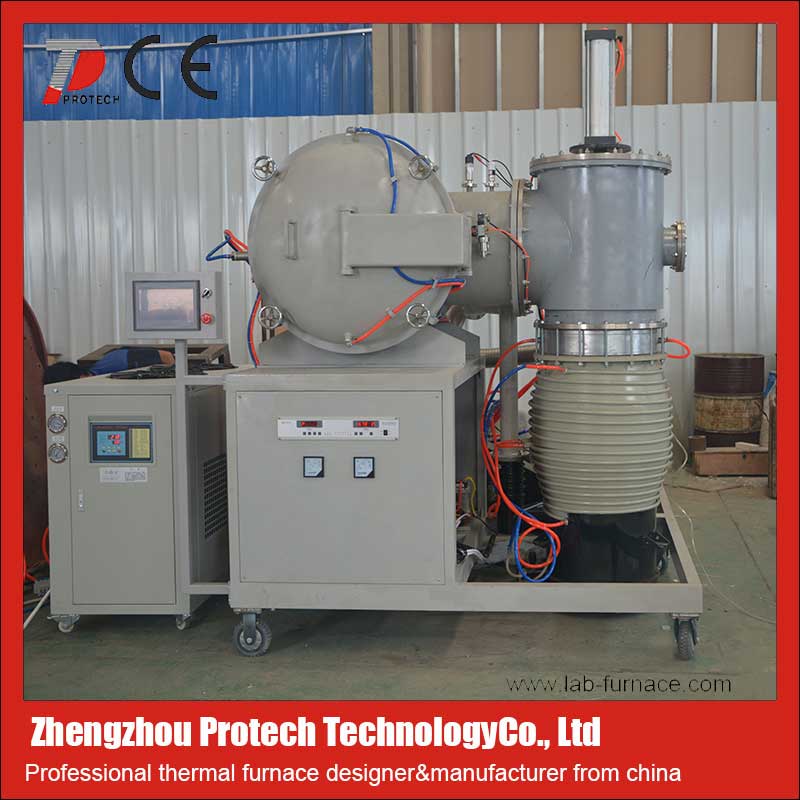
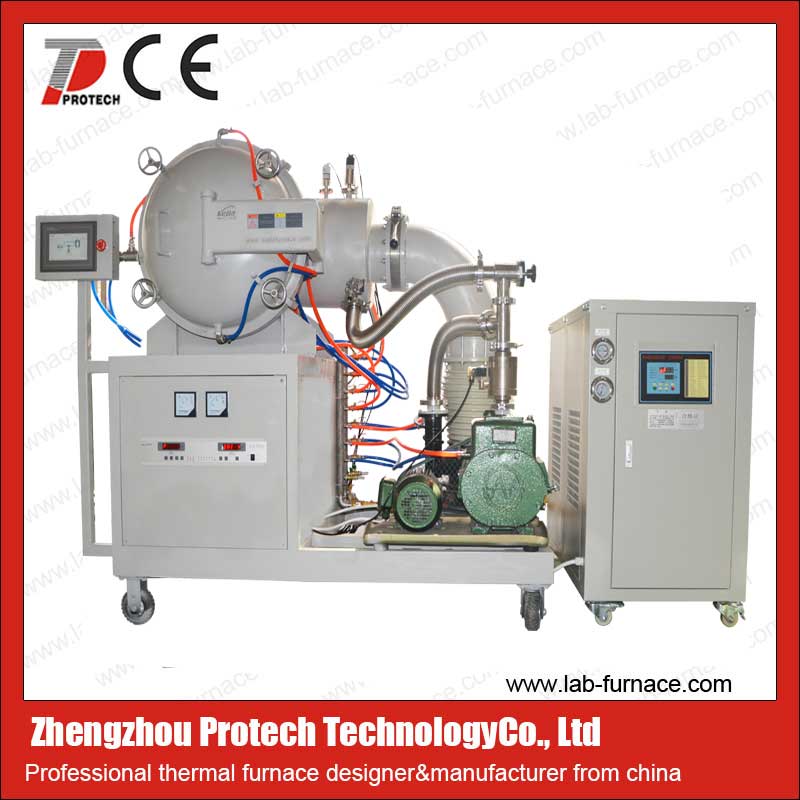
Customized high vacuum gas tube furnace (click on the image to view product details)
Summary
When choosing a protective gas tube furnace, priority should be given to evaluating it from four dimensions: process temperature, furnace tube material, gas path sealing, and vacuum requirements, and then matching it with the size of the constant temperature zone, control system, and safety configuration, rather than simply comparing price and maximum temperature. University research and new material enterprises can choose standard models or non-standard customized protective gas tube furnaces according to the requirements of sintering, annealing, and reduction processes.Click to learn more customized tube furnaces! Or click on online customer service to learn more about product information!
FAQ
Q: What gases are generally used in protective gas tube furnaces?
A: Conventional nitrogen and argon inert protective gases; Some processes can be reduced with hydrogen gas, while corrosive gases require customized anti-corrosion furnace tubes and flanges.
Q: Do we have to evacuate to pass the protective gas?
A: No, it's not. Simple processes can continuously introduce protective gas and rely on gas flow to expel air; For samples with strict oxygen content, it is recommended to evacuate first and then inflate for protection.
Leave A Message


