
 English
 简体中文
简体中文 French
 日本語
日本語 Korean
 Português
 Русский
 Spanish



NEWS
Vacuum brazing furnace is the core heat treatment equipment for precision metal connections. It completes brazing in a closed high vacuum environment, with no oxidation of the workpiece, low porosity of the weld seam, and low residual stress. It is widely used in the processing of heat exchangers, hard alloy cutting tools, aerospace, and new energy thermal management components. Many procurement selections only focus on the highest temperature, ignoring key indicators such as vacuum stability, temperature field uniformity, and cooling system, ultimately resulting in problems such as virtual welding, porosity, workpiece deformation, and batch defects. Next, based on the requirements of precision brazing technology, we will summarize the key points for selecting a complete set of vacuum brazing furnaces to help enterprises and researchers choose the right brazing equipment.

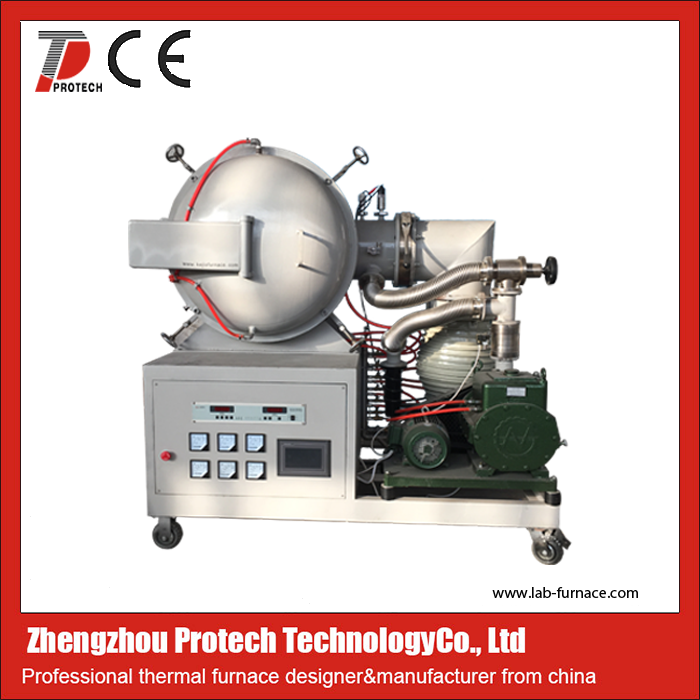
Small vacuum brazing furnace (click on the image to view product details)
1. Determine the process temperature and heating zone structure, and reserve temperature margin
The first step in selection is to distinguish between the "maximum temperature limit" and "long-term continuous operating temperature" of the equipment, while matching the melting point of the brazing material.
The brazing temperatures corresponding to different metal brazing materials vary greatly: aluminum based brazing materials are about 550~650 ℃, silver based brazing materials are 700~850 ℃, and nickel based high-temperature brazing materials are 950~1150 ℃. When selecting, it is recommended to reserve a margin of 50-100 ℃ for the long-term operating temperature of the equipment compared to the actual brazing process temperature, in order to reduce the long-term high-temperature aging of heating elements and extend the service life of the equipment.
Select heating elements and thermal field materials as needed:
-Nickel chromium heating: suitable for low-temperature aluminum brazing, low cost;
-Graphite heating zone: commonly used for medium to high temperature brazing, suitable for stainless steel and hard alloys;
-Molybdenum insulation screen heating: High temperature, high-precision brazing, suitable for aviation components such as titanium alloys and high-temperature alloys.
The temperature control system prioritizes multi-stage programmable PID temperature control, supports storing multiple sets of brazing process curves, and can set preheating, insulation, brazing, and gradient cooling. The uniformity of temperature field is the core indicator of precision brazing. It is recommended to control the temperature difference in the constant temperature zone of industrial mass-produced models under full load within ± 5 ℃, and high-end precision equipment can reach ± 3 ℃, ensuring that all workpiece brazing materials in the furnace melt synchronously and wet evenly, avoiding inconsistent weld strength of products in the same batch.
2. Selection of vacuum system, with a focus on ultimate vacuum and pressure rise rate
Vacuum is the foundation of vacuum brazing, and insufficient vacuum can cause workpiece oxidation, weld inclusions, and directly reduce welding strength. Selection should not only consider the ultimate vacuum, but also the working vacuum and pressure rise rate (leakage rate) are more critical.
(1). Brazing of ordinary stainless steel and copper parts: working vacuum of 10 ⁻¹~10 ⁻² Pa;
(2). Titanium alloy, high-temperature alloy, semiconductor precision parts: require high vacuum, with a working vacuum of 10 ⁻³~10 ⁻⁴ Pa, generally equipped with mechanical pump+Roots pump+molecular pump/diffusion pump unit, combined with cold trap, to reduce oil pollution of the workpiece.
>The pressure rise rate (furnace leakage rate) is the core indicator for judging the sealing quality of the furnace body, and it is recommended that the pressure rise rate of precision brazing furnaces be ≤ 0.3Pa/h. The high pressure rise rate, continuous vacuum pressure drop during the heating process, and easy oxidation of the workpiece are also the main reasons for the unstable mass production of many domestic furnaces.
3. Effective furnace size, loading capacity, matching production capacity requirements
To determine the effective size of the furnace, it is not enough to only look at the shape of the workpiece, but also to reserve space for tooling fixtures and material racks.
-Laboratory small sample: small vertical vacuum brazing furnace, small volume hot zone, suitable for process research and sample making;
-Industrial mass production: Horizontal single/double chamber vacuum brazing furnace, large volume furnace, suitable for continuous production of heat exchangers and large quantities of cutting tools.
The dual chamber furnace is divided into a heating chamber and a cooling chamber, and the workpiece can be quickly transferred to the cooling chamber after heating, shortening the production cycle; The single chamber furnace has a simple structure and lower equipment investment, making it suitable for small-scale production. When selecting, determine the furnace specifications based on the weight and external dimensions of the workpiece loaded in a single furnace, and confirm the load-bearing capacity of the furnace body.
4. Cooling system configuration, controlling workpiece deformation and residual stress
Precision metal parts brazing, the cooling rate directly affects the deformation of the workpiece and the microstructure and properties of the weld seam.
Common cooling methods:
(1). Natural slow cooling: suitable for aviation precision parts with high deformation requirements, with a long cooling cycle;
(2). Inert gas pressurized gas cooling (nitrogen/argon): mainstream configuration, adjustable cooling rate, gradient cooling to release welding stress, prevent deformation of thin plate heat exchangers and thin-walled parts;
When selecting, confirm the heat transfer capacity of the air-cooled system, the speed regulation function of the fan, and the cooling rate can be freely set within the process curve. Some workpieces do not allow rapid cooling and require support for segmented slow cooling to avoid cracking and excessive residual stress.
5. Additional process functions and atmosphere selection
Some brazing processes require the introduction of a small amount of protective gas on a vacuum basis to achieve blowing and degassing.
-Workpiece degreasing and degassing: During the heating stage, vacuum pre pumping is used to remove oil and water vapor from the surface of the workpiece, preventing carbon deposition caused by high-temperature decomposition and resulting in weld porosity;
-Multi way intake module: capable of introducing nitrogen and argon gas, used for furnace cavity blowing and pressurized gas cooling.
If the surface of the workpiece is heavily contaminated with oil, priority should be given to selecting a vacuum unit with degassing and cold trap structure to reduce volatile matter pollution of the furnace, pollution of the heating insulation layer, and reduce equipment maintenance frequency.
6. Safety interlocking, maintenance costs, and equipment customization
Vacuum brazing furnace belongs to high-temperature vacuum equipment, and safety protection functions are essential: over temperature power-off protection, vacuum pressure interlock, water pressure protection, gas pressure alarm, automatic shutdown due to faults, etc., to prevent safety accidents caused by misoperation.
When purchasing, it is necessary to consider the maintenance costs in the later stage: whether the heating elements, sealing gaskets, vacuum pump oil, and insulation layer are easy to replace, and the supply cycle of accessories.
The equipment supports non-standard customization: customized furnace size, independent temperature control in multiple temperature zones, observation windows, dedicated fixtures, special gas path systems, and is suitable for personalized brazing processes in different industries.

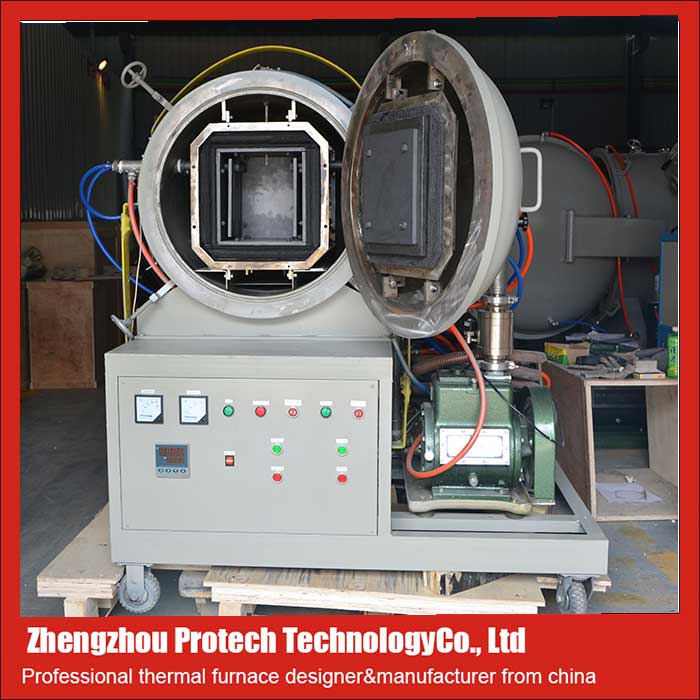
High temperature vacuum brazing furnace (click on the image to view product details)
Summary
When choosing a vacuum brazing furnace, it is not enough to simply compare equipment prices. Prioritize matching the five core parameters of brazing temperature, temperature field uniformity, vacuum degree and pressure rise rate, effective furnace volume, and cooling system. Small experimental vacuum brazing furnaces are selected for small-scale research and development, while horizontal double chamber air-cooled vacuum brazing furnaces are prioritized for mass production. By selecting based on workpiece material, single production capacity, and deformation control requirements, we aim to reduce product defect rates and stabilize precision brazing quality. Heat exchangers, hard alloy cutting tools, aviation high-temperature alloys, and new energy thermal management components can all be equipped with corresponding vacuum brazing furnaces, supporting customized non-standard solutions.Click to learn more customized vacuum furnaces! Or click on online customer service to learn more about product information!
Leave A Message


