
 English
 简体中文
简体中文 French
 日本語
日本語 Korean
 Português
 Русский
 Spanish



NEWS
In industrial production and scientific research experiments, the performance of the atmosphere furnace directly determines the product quality and experimental accuracy. Customized atmosphere furnaces can be designed with targeted core parameters to avoid the problem of equipment and process mismatch, and improve efficiency and success rate. This article combines the characteristics of different processes, disassembles the key points of selection, and helps to better match needs and avoid misunderstandings.
1. The prerequisite for selecting the core of a customized atmosphere furnace is to clarify the three basic requirements
Before selecting, it is necessary to clarify the core basic parameters, which are the prerequisite for process adaptation. Focus on the following three points:
a. Clarify the process temperature requirements
Temperature is the core of selection, and different processes have varying requirements for temperature range and temperature field uniformity. When selecting, it is necessary to clarify the maximum temperature, common temperature, and temperature field uniformity required for the process, in order to determine the heating method and furnace material.
b. Determine the type of atmosphere and purity requirements
Customized atmosphere furnaces can be filled with specific atmospheres to achieve anti oxidation, decarbonization and other effects. Common atmospheres include inert, reducing, oxidizing, carburizing, etc. When selecting, it is necessary to clarify the atmosphere type, purity requirements, flow control accuracy, and consider atmosphere circulation to ensure uniform distribution.
c. Clearly define the furnace size and loading capacity
The furnace size and loading capacity need to match the process requirements to avoid energy waste or inability to meet batch requirements. Simultaneously consider vertical and horizontal loading methods to ensure that they do not affect the uniformity of the temperature field and the circulation of the atmosphere.
2. Customized atmosphere furnace selection schemes corresponding to different processes
The requirements for different high-temperature treatment processes vary greatly, and the following are the adaptation solutions for mainstream scenarios:
a. Sintering process: Suitable for high temperature and high atmosphere purity, emphasizing uniform temperature field
Sintering technology is widely used in fields such as ceramics and lithium battery materials, with the core being high-temperature molding and avoiding oxidation to ensure product density.
Key selection points:
-Temperature: Choose a high-temperature furnace with a temperature range of 1600-1800 ℃, with priority given to graphite heating for fast heating and uniform temperature field;
-Atmosphere: Priority is given to inert atmosphere, and an atmosphere purification system can be configured.
-Additional features: Program temperature control system, high-purity furnace material, and atmosphere circulation system that can be configured for large-scale processes.
Adaptation scenarios: ceramic sintering, lithium battery material sintering, powder metallurgy, carbon material graphitization, etc.
b. Annealing process: Suitable for medium and low temperature, mild atmosphere, with emphasis on temperature control accuracy
Annealing process is used for metal and semiconductor materials, with the core of eliminating internal stress, improving toughness, and facilitating subsequent processing.
Key selection points:
-Temperature: Choose a furnace body of 200-1000 ℃, prioritize resistance heating, precise temperature control, and low energy consumption.
-Atmosphere: Metal annealing can be carried out in an inert or reducing atmosphere, while semiconductor annealing requires a high-purity inert atmosphere.
-Additional features: High precision PID temperature control system, suitable for small laboratory or large industrial furnaces.
Adaptation scenarios: metal and semiconductor annealing, stress relief for precision parts, etc.
c. Nitriding process: adapted to specialized atmosphere, emphasizing atmosphere control accuracy
Nitriding is a metal surface treatment process that involves forming a hardened layer to enhance wear and corrosion resistance.
Key selection points:
-Temperature: Nitriding at 500-600 ℃, with priority given to resistance heating and stable temperature control.
-Atmosphere: Ammonia decomposition gas for nitriding, equipped with high-precision flow rate and detection system.
-Additional functions: Sealed furnace, programmed temperature control, configurable atmosphere recovery system.
Adaptation scenarios: Metal parts nitriding, bearing surface hardening, etc.
d. Laboratory small-scale experimental process: adapted to miniaturization, high precision, and emphasizing flexibility
The core requirement for customized atmosphere furnaces in laboratories is small, convenient, and adjustable, suitable for small sample experiments.
Key selection points:
-Size: Small furnace (150mm * 150mm * 150mm), saving space.
-Temperature and control: 500-1500 ℃, temperature control accuracy ≤ ± 1 ℃, supports programmed temperature control, stable heating.
-Atmosphere: Supports multi atmosphere switching, adjustable flow and purity, and a simple and convenient control system.
Adaptation scenarios: university research, enterprise research and development, small-scale sample testing, etc.
3. Customized Atmosphere Furnace Selection and Avoiding Pits Guide
When selecting, it is necessary to avoid the misconception of "emphasizing price over adaptation" and keep in mind the following four points:
a. Do not blindly pursue high temperatures: choose the highest temperature according to the actual process to avoid increasing costs and energy consumption.
b. Pay attention to the purity and sealing of the atmosphere: ensure that the atmosphere is purified properly, the furnace is well sealed, and avoid product scrap.
c. Do not ignore temperature control and temperature field: For precision scenes, it is necessary to clarify the uniformity of the temperature field to avoid quality deviation. For scenes with high requirements for temperature field uniformity, it is recommended to choose multi-faceted heating.
d. Priority should be given to manufacturers with strong capabilities in design, production, and after-sales service to avoid equipment failure risks.

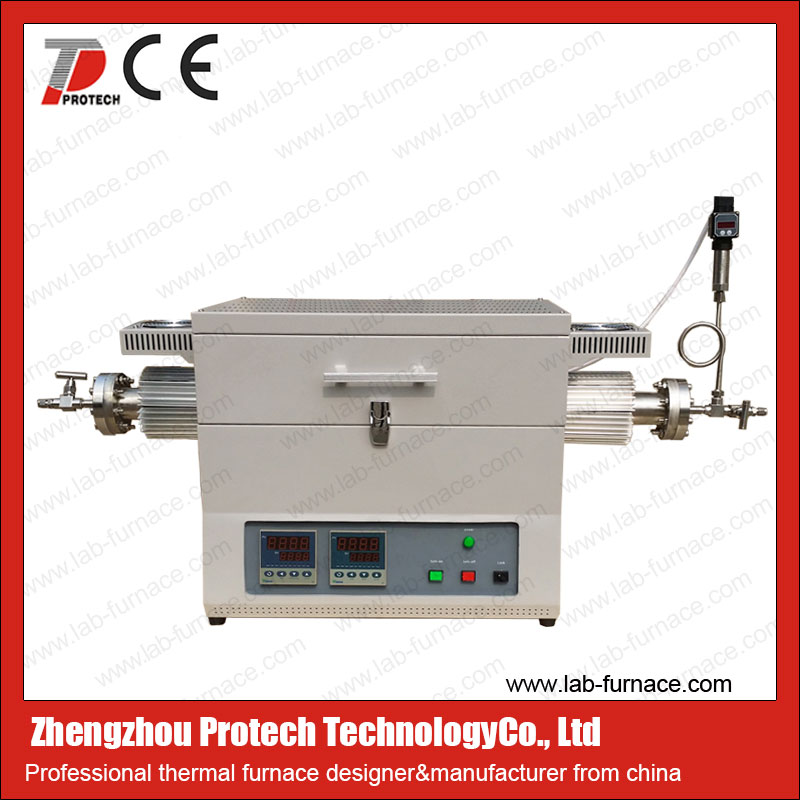
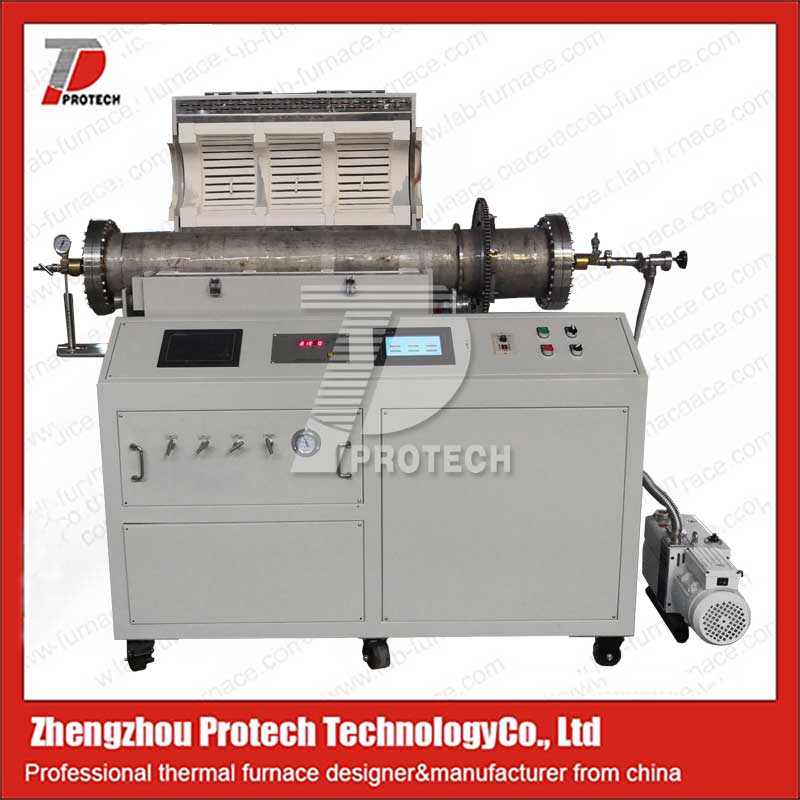
Customized touch screen atmosphere furnace (click on the image to view product details)
4. Summary
The core of selecting customized atmosphere furnaces is "process adaptation", which determines parameters based on temperature, atmosphere, and loading requirements to avoid misunderstandings. Good matching technology is necessary to leverage equipment advantages, improve efficiency, and reduce losses.
If you are unsure how to select, you can consult professional manufacturers based on specific process parameters to obtain exclusive solutions, ensuring better compatibility between equipment and process.Click to learn more customized atmosphere furnaces! Or click on online customer service to learn more about product information!
Leave A Message


