
 English
 简体中文
简体中文 French
 日本語
日本語 Korean
 Português
 Русский
 Spanish



NEWS
When it comes to powder calcination, precursor heat treatment for battery materials, and catalyst activation, the laboratory often encounters a difficult choice: whether to buy an experimental rotary furnace or a tube furnace with the same furnace tube?
The two types of furnaces have similar appearances and prices, but their working principles are completely different - one makes the material "move", and the other makes the material "lie still". This difference has a significant impact on the results of powder processing. This article explains the principles, differences, and applicable scenarios of the two, helping you choose the right one at a time.

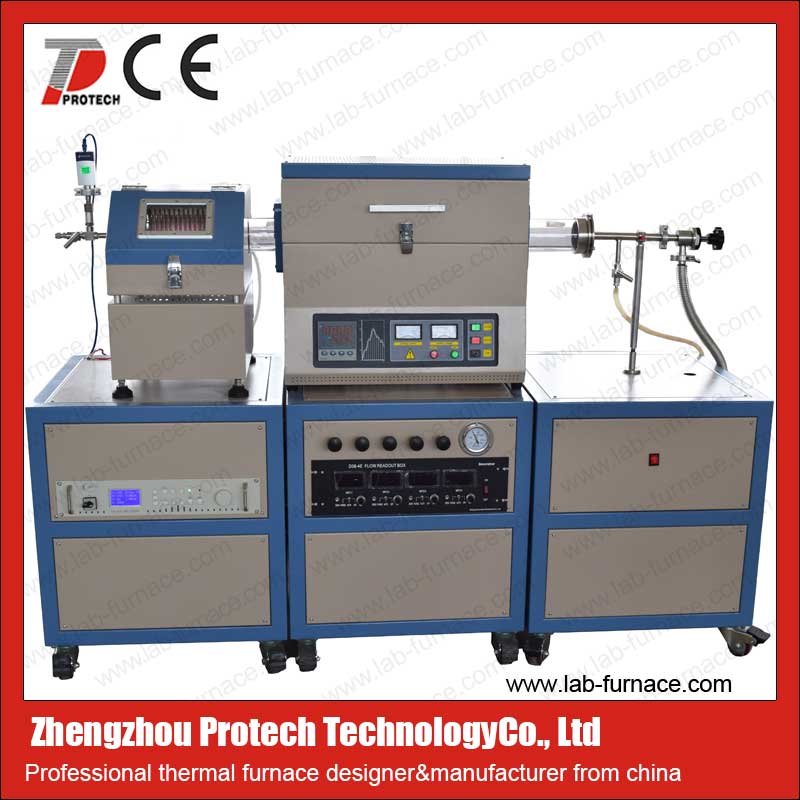
Commonly used tube furnace (click on the image to view product details)
1. Working principle: one rotation, one stillness
Experimental rotary furnace: The furnace tube can rotate at low speed around the axis (usually adjustable from 0-20rpm), and the material can roll, flip, and slowly advance inside the tube by tilting at an angle. The powder is always in a "dynamic" state inside the furnace.
Tube furnace: The furnace tube is fixed in place, and the sample is placed in a crucible or material boat and heated in a constant temperature zone. The material is heated in a 'static' state throughout the entire process.
The fundamental difference determines the vastly different performance of the two in powder processing.
2. The core difference in powder processing: uniformity of heating
What are the fears of powder processing? Uneven heating.
In a tube furnace, powders are stacked in a crucible, and heat conduction mainly relies on radiation and heat conduction, with the surface heating first and the interior heating later. The thicker and denser the powder, the greater the temperature difference between the inside and outside, which can easily lead to:
-Localized over burning, localized under burning, inconsistent product performance;
-Powder agglomeration and sintering adhesion require subsequent crushing;
-Incomplete response and large fluctuations in data between batches.
In the rotary furnace, the powder continuously rolls and flips with the rotation of the furnace tube, and each particle can alternately contact the hot zone, resulting in much better heating uniformity than static stacking. For powder processing, this is the core value of rotary furnaces:
-The material is uniformly heated and has good batch stability;
-Reduce clumping, adhesion, and loose discharge;
-The reaction is more complete, especially suitable for processes that require uniform atmosphere contact.
3. Comparison of Structure and Application Scenarios
| Comparison item | Experimental rotary furnace | Tube furnace |
| Furnace tube | rotatable (0-20rpm), tiltable | Fixed |
| Material status | Dynamic rolling, uniform heating | Static stacking, large temperature difference between inside and outside |
| Suitable for materials | Powder and granular materials | Blocks, bars, small amounts of powder |
| Batch Processing | Suitable for continuous/large batches | Suitable for small batches and precise experiments |
| Atmosphere control | Can communicate with the atmosphere, with high sealing requirements | Good sealing and precise atmosphere control |
| Operation | Loading and discharging are slightly more complicated | Simple and direct |
| Price | Slightly higher | Relatively low |
| Typical application | Battery material calcination, powder synthesis, catalyst activation | Ceramic sintering, metal heat treatment, sample annealing |
4. Which scenarios must be selected back to the converter?
(1). Calcination of battery material precursors: The calcination process of lithium iron phosphate and ternary material precursors requires high uniformity, and rotary furnaces are a common choice in laboratories and production lines;
(2). Continuous processing of large quantities of powder: a continuous process that requires materials to be continuously fed, flipped, and discharged inside the tube, which can only be achieved by a rotary furnace;
(3). Powder synthesis and activation: catalyst support activation, powder oxidation-reduction, require sufficient contact between materials and atmosphere, and the advantages of rotary furnace are obvious;
(4). Powder process that needs to prevent clumping: The material is not easily stuck into blocks during rolling.
5. Which scenarios are more suitable for tube furnaces?
(1). Small batch precise experiment: With fewer samples, the static heating of the tube furnace is simpler and more controllable;
(2). Block, rod, and strip samples: These shapes do not require rolling, and the constant temperature zone of the tube furnace is more suitable for processing;
(3). High precision atmosphere control: The sealing structure of the tube furnace is relatively simple and reliable, and the stability of the inert/reducing atmosphere process is better;
(4). Basic experiments with limited budget: Tube furnaces are cheaper, simpler in structure, and easier to maintain.
6. Selection suggestion: Remember one sentence
Make powder, choose rotation; Make block materials, small samples, and select tube type.
Add three additional dimensions of judgment:
(1). Check the material form: powder/particle → priority rotary furnace; Block/bar material → tube furnace;
(2). Check batch size: from tens of grams to hundreds of grams per batch, both are acceptable; Large batch, continuous → rotary furnace;
(3). Uniformity requirements: The process is sensitive to temperature differences and requires batch stability → rotary furnace.
7. When choosing a rotary furnace for experiments, it is important to check these points
-Is the furnace tube speed adjustable (0-20rpm) and the tilt angle adjustable
-Does the furnace tube material (quartz/corundum/heat-resistant steel) match the process temperature and atmosphere
-Maximum temperature and long-term operating temperature margin (process temperature+10%~15%)
-Atmosphere introduction and sealing: Does it support air/nitrogen/argon, and is the sealing reliable
-Temperature control accuracy and number of program temperature control segments
-Is the design of the continuous feeding device and discharge port convenient for the feeding and discharging methods
-Anti jamming and anti bonding design (key to powder technology)
-Security protection and supply of consumables (furnace tubes, seals), after-sales support

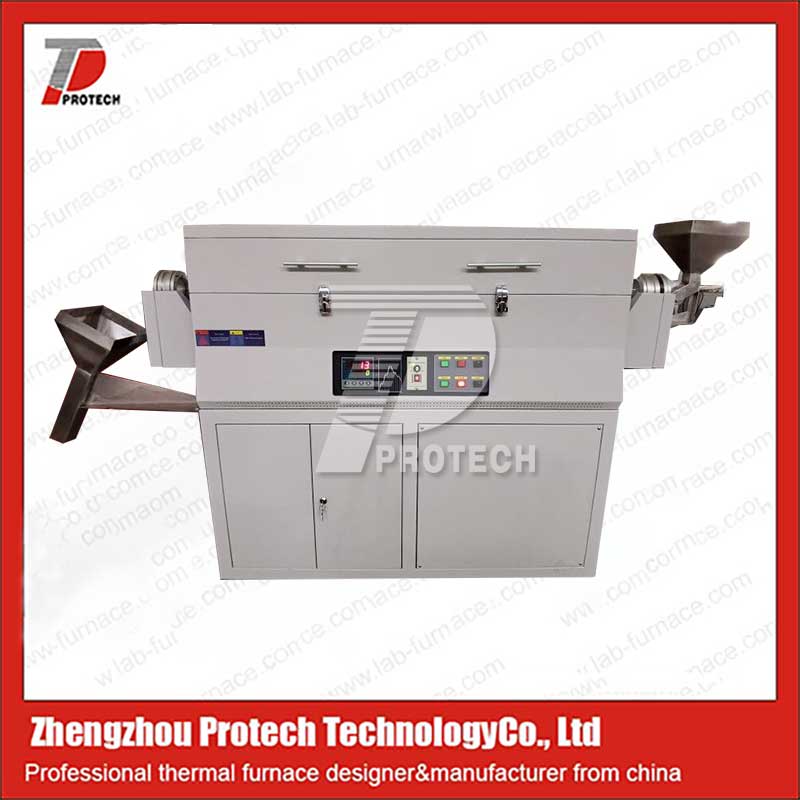
A commonly used experimental rotary furnace (click on the image to view product details)
Conclusion
The relationship between the rotary furnace and the tube furnace used in experiments is not about who replaces whom, but about the division of labor based on material form and process requirements. Powder processing, pursuing uniformity, anti caking, and batch stability, rotary furnace is a better solution; Small batch, block sample, precise atmosphere experiment, tube furnace is more worry free and practical.
When selecting, tell the manufacturer your material form, batch size, maximum process temperature, and whether you need an atmosphere. Let professionals help you check the furnace tube material, speed range, and sealing scheme, and you can choose the one that truly matches the process.Click to learn more rotary tube furnaces! Or click on online customer service to learn more about product information!
Leave A Message


