
 English
 简体中文
简体中文 French
 日本語
日本語 Korean
 Português
 Русский
 Spanish



NEWS
In scientific research experiments and small-scale production such as biomass pyrolysis, solid waste pyrolysis, material carbonization, catalytic pyrolysis, etc., high-temperature pyrolysis tube furnace is the core heat treatment equipment. Unlike ordinary heating tube furnaces, pyrolysis tube furnaces have high requirements for temperature stability, atmosphere sealing, and high temperature and corrosion resistance of furnace tubes.
Many university laboratories and research enterprises often encounter selection errors when purchasing equipment: temperature parameters do not match the experiment, the atmosphere system cannot adapt to the cracking process, and the furnace tube material is corroded and cracked, which not only affects the accuracy of experimental data, but also increases equipment maintenance costs and delays scientific research progress.
Let's take a look at the key points for selecting the core of a high-temperature pyrolysis tube furnace. The focus is on disassembling the selection method from three key dimensions: working temperature, atmosphere environment, and furnace tube material, to help users accurately match their own pyrolysis experimental process and select high adaptability, high durability, and high-precision pyrolysis tube furnace equipment.
1. Temperature parameter selection: distinguish between rated temperature and actual operating temperature
Temperature is the core basic parameter for selecting high-temperature pyrolysis tube furnaces, which directly determines whether the equipment can meet the pyrolysis and cracking needs of different materials such as biomass, plastics, solid waste, and nanomaterials. When selecting, do not only consider the maximum temperature of the equipment, but also focus on distinguishing between extreme temperature and long-term stable operating temperature.
The maximum temperature of conventional high-temperature pyrolysis tube furnaces on the market is divided into multiple levels: 1000 ℃, 1200 ℃, 1400 ℃, and 1600 ℃. The experimental scenarios adapted to different temperature levels vary greatly
(1) 1000 ℃ -1200 ℃: Suitable for conventional biomass pyrolysis, straw carbonization, ordinary solid waste cracking, and low-temperature catalytic experiments. It is a commonly used temperature range for basic experiments in materials and environmental majors in universities, with high cost-effectiveness and meeting most of the conventional pyrolysis needs.
(2) 1200 ℃ -1400 ℃: Suitable for medium and high temperature pyrolysis processes such as plastic cracking, rubber pyrolysis, harmless treatment of hazardous waste, and carbonization of metal materials. It is also the mainstream temperature range for current scientific research trials, with higher temperature control accuracy and better temperature uniformity.
(3) 1400 ℃ -1600 ℃: Suitable for high-precision experiments such as thermal decomposition of high-end nanomaterials, cracking of high-purity ceramics, and high-temperature sintering cracking of special powders, mostly used for new material research and high-end scientific research projects.
Key selection reminder: It is recommended that the long-term operating temperature of the equipment be 100 ℃ -200 ℃ higher than the required temperature for the experiment to avoid long-term full load high-temperature operation, which may cause aging of heating elements and damage to the furnace, effectively extending the service life of the equipment and ensuring stable pyrolysis experimental data.
At the same time, priority should be given to selecting a program-controlled temperature control system, which supports customized multi-stage heating, insulation, and cooling curves, accurately controls the pyrolysis rate, and better matches various dynamic pyrolysis experimental processes.
2. Atmosphere system selection: match the atmosphere environment according to the pyrolysis process
The vast majority of pyrolysis, cracking, and carbonization experiments cannot be conducted in an air environment. Oxygen can cause material oxidation and combustion, disrupting the pyrolysis reaction process. Therefore, atmosphere configuration is of utmost importance in the selection of high-temperature pyrolysis tube furnaces, directly determining the success or failure of the experiment.
According to different experimental processes, the selection of atmosphere for high-temperature pyrolysis tube furnaces can be mainly divided into three categories, which are suitable for different pyrolysis scenarios:
(1) Inert atmosphere environment
Introduce inert gases such as nitrogen and argon to isolate air and oxygen, prevent high-temperature oxidation of materials, suitable for routine experiments such as biomass carbonization, powder pyrolysis, and polymer material pyrolysis. This type of scenario has moderate requirements for equipment sealing, and only needs to be equipped with a basic gas path control system and flow regulating valve.
(2) Restore the atmosphere and environment
Introduce reducing gases such as hydrogen and carbon monoxide for material reduction cracking and metal oxide pyrolysis modification experiments. This scenario requires high equipment sealing and explosion-proof performance, and professional explosion-proof gas circuits and sealing flange structures must be selected to eliminate the risk of gas leakage.
(3) Vacuum pyrolysis environment
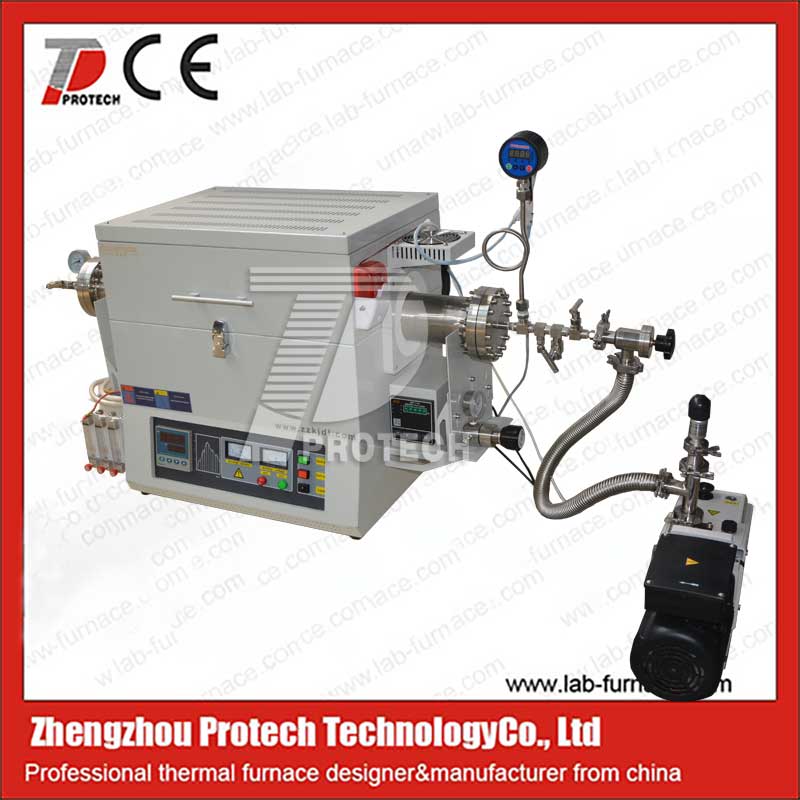
First evacuate and then introduce a trace atmosphere or pure vacuum environment for pyrolysis, suitable for pyrolysis experiments of high-purity materials, precision powders, and semiconductor materials. It can effectively avoid impurity interference and improve the purity of pyrolysis products. When selecting equipment, special attention should be paid to the maximum vacuum degree and pressure rise rate. The higher the vacuum degree, the higher the experimental accuracy.
Selection summary: Conventional biomass and solid waste pyrolysis are carried out in ordinary inert atmosphere furnaces; High end precision materials and high-purity pyrolysis experiments are conducted using a vacuum atmosphere integrated pyrolysis tube furnace; The reduction gas experiment must be equipped with explosion-proof special configurations to eliminate safety hazards.

A commonly used rotary pyrolysis furnace (click on the image to view product details)
3. Selection of furnace tube material: Suitable for temperature and atmosphere, preventing corrosion and cracking
Furnace tubes are the core consumables of high-temperature pyrolysis tube furnaces, which come into direct contact with high-temperature materials and various atmospheres. Improper material selection can lead to problems such as high-temperature deformation, acid-base corrosion, cracking, and gas leakage, seriously affecting the progress of experiments. At present, the mainstream furnace tube materials on the market are divided into four categories: quartz glass, corundum, silicon carbide, and stainless steel. The selection differences are as follows:
(1) Quartz glass furnace tube
Temperature resistance range: 0-1200 ℃, good transparency, good airtightness, high cost-effectiveness, suitable for inert atmospheres such as nitrogen and argon, without metal impurity pollution. Suitable for conventional biomass pyrolysis, powder carbonization, and basic teaching experiments in universities. The disadvantage is that it is not resistant to high temperature and strong alkali corrosion, and is prone to aging and cracking under high temperature reducing atmosphere.
(2) Gangyu furnace tube (made of alumina material)
Temperature resistance range: 0-1600 ℃, high temperature resistance, corrosion resistance, high strength, suitable for most inert atmospheres and weak reducing atmospheres, it is the mainstream choice for medium high temperature pyrolysis experiments. Suitable for processes such as plastic cracking, solid waste pyrolysis, and high-temperature carbonization of materials, the service life is much longer than that of quartz furnace tubes, and the cost-effectiveness is very high.
(3) Silicon carbide furnace tube
Temperature resistance range: 0-1800 ℃, with good high temperature resistance, thermal conductivity, thermal shock resistance, and strong corrosion resistance. It can adapt to high temperature, strong reduction, and complex atmosphere environments. Mostly used for high-end new material research and development, special powder pyrolysis, high-precision pyrolysis experiments, suitable for long-term high-frequency use, the disadvantage is that the price is relatively high.
(4) High temperature resistant stainless steel furnace tube
Temperature resistance range: 0-1000 ℃, strong toughness, non fragile, good sealing, suitable for low-temperature, atmospheric pressure, and conventional atmosphere pyrolysis experiments, mostly used for industrial small-scale production, not suitable for high-temperature and strong corrosion scientific research experiments.
4. Assist in selecting details and avoid procurement misconceptions
In addition to the three core points of temperature, atmosphere, and furnace tube material, when selecting, attention should also be paid to the detailed configuration to avoid equipment and process mismatch:
(1) Furnace size: Select the pipe diameter and the length of the constant temperature zone of the furnace body based on the amount of material used in a single experiment. Excessive material can lead to uneven pyrolysis and affect experimental data;
(2) Temperature control accuracy: High precision temperature control of ± 1 ℃ is preferred for scientific research experiments to ensure accurate and controllable pyrolysis curves;
(3) Sealing structure: Double structures of flange sealing and silicone sealing are preferred for pyrolysis experiments to prevent air leakage and ensure atmosphere stability;
(4) Customization requirements: Special pipe diameters, special temperatures, special atmospheres, and slide inlet and outlet structures can all be customized to meet personalized experimental processes.
5. Summary
The core selection logic of high-temperature pyrolysis tube furnace: equipment gear is determined by experimental temperature, equipment configuration is determined by process atmosphere, and furnace tube material is determined by material characteristics. Conventional biomass and solid waste pyrolysis experiments, with 1200 ℃ corundum furnace tube inert atmosphere equipment sufficient to meet the requirements; High temperature silicon carbide furnace tubes and vacuum explosion-proof integrated equipment are preferred for precision materials, vacuum cracking, and strong reduction processes.
Professional equipment selection can significantly improve experimental efficiency and data accuracy, while reducing equipment loss costs. If you have specific requirements for experimental materials, temperature, and atmosphere, you can consult the manufacturer to customize a dedicated high-temperature pyrolysis tube furnace solution that is suitable for various scientific research experiments and small-scale production scenarios.Click to learn more customized tube furnaces! Or click on online customer service to learn more about product information!
Leave A Message


