
 English
 简体中文
简体中文 French
 日本語
日本語 Korean
 Português
 Русский
 Spanish



NEWS
In experimental scenarios such as university research, new material development, powder pyrolysis, CVD deposition, lithium battery material sintering, and small-scale sample annealing, vertical tube furnaces have become the mainstream heat treatment equipment in laboratories due to their advantages of vertical furnace structure, convenient loading and unloading, stable temperature field, and small footprint.
Many users only focus on the highest temperature when purchasing vertical tube furnaces, ignoring core parameters such as temperature zone configuration, furnace tube material, and atmosphere adaptability. This results in problems such as inability to match experimental processes, uneven sample sintering, gas leakage and oxidation, and frequent equipment failures after the equipment arrives, seriously affecting the experimental progress. To accurately select a vertical tube furnace that is suitable for one's own process, the three key dimensions of temperature control zone, furnace tube, and atmosphere are the core. Below, we will comprehensively disassemble professional selection techniques to help everyone avoid procurement misunderstandings.

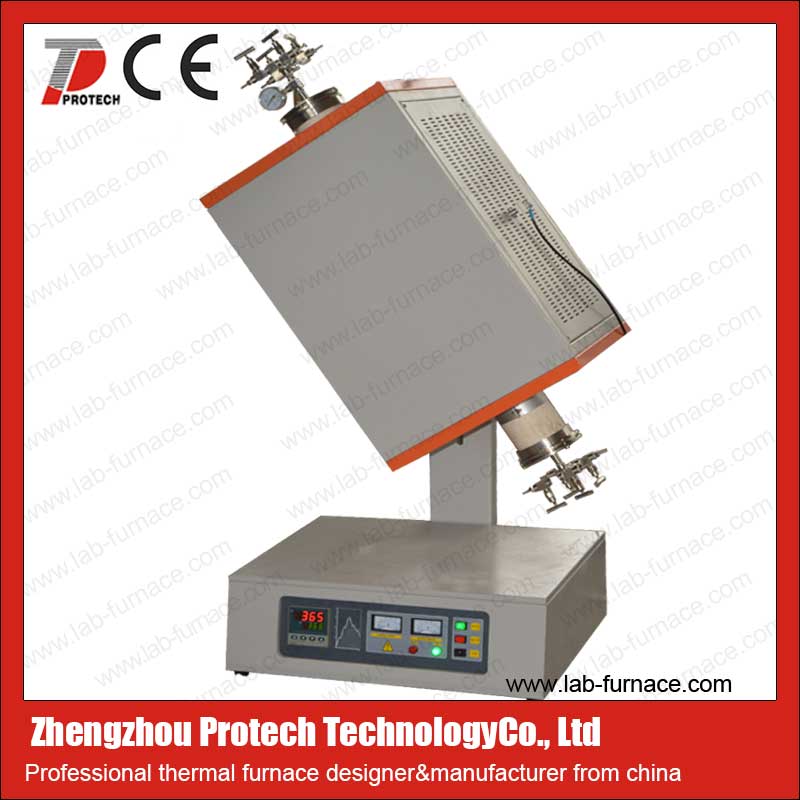
A commonly used vertical tube furnace (click on the image to view product details)
1. Temperature zone selection: Check the number of temperature zones, constant temperature length, and temperature control accuracy
The temperature zone is the core factor determining the heat treatment effect of a vertical tube furnace, which directly affects the uniformity of sample heating and the repeatability of experimental data. The selection mainly depends on the number of temperature zones, effective constant temperature zone length, temperature control accuracy, and heating rate.
(1) Selection of the number of temperature zones
Vertical tube furnaces on the market are divided into three mainstream types: single temperature zone, double temperature zone, and triple temperature zone, which are suitable for different experimental needs:
Single temperature zone vertical tube furnace: simple structure, high cost-effectiveness, short constant temperature zone length, suitable for short-term sintering, conventional annealing, simple pyrolysis experiments, suitable for university basic teaching and ordinary material small-scale experiments, is the mainstream choice for entry-level models.
Dual temperature zone vertical tube furnace: independent temperature control at the top and bottom, with a more uniform temperature gradient and a longer constant temperature range, which can effectively avoid the problem of large temperature differences between the top and bottom of the sample. It is suitable for powder material sintering, slow pyrolysis, and high-precision annealing experiments, meeting most of the conventional scientific research needs.
Three temperature zone vertical tube furnace: multi-stage independent temperature control, better temperature field uniformity, can accurately simulate gradient heating, segmented insulation process, suitable for CVD film deposition, long sample heat treatment, high-end new material research and development, precision cracking and other high-precision experiments, suitable for scientific research projects and enterprise research and development small-scale trials.
(2) Selection of constant temperature zone and temperature control parameters
Core principle of selection: The sample height must be completely within the effective constant temperature zone. If the sample exceeds the constant temperature zone, problems such as uneven heating up and down, poor sintering effect, and large experimental data deviation may occur. Before procurement, it is necessary to match the length of the corresponding constant temperature zone based on the sample size and loading height.
Priority is given to selecting a high-precision intelligent temperature control system with a temperature control accuracy of ± 1 ℃. It supports more than 30 temperature control programs and can customize heating, insulation, and cooling curves to meet various refined heat treatment processes. At the same time, pay attention to the heating rate. Conventional experiments can be adjusted from 1-10 ℃/min, while rapid pyrolysis experiments can be customized with high-speed heating configurations to meet diverse process requirements.
2. Furnace tube selection: matching materials according to temperature, atmosphere, and material characteristics
Furnace tubes are the core consumables of vertical tube furnaces, which come into direct contact with high-temperature samples and process atmospheres. Improper material selection can easily lead to problems such as high-temperature deformation, corrosion cracking, gas leakage, and sample contamination. At present, the mainstream furnace tube materials are divided into three types: quartz, metal, and corundum, with significant differences in adaptation scenarios. The selection should be based on temperature range and experimental conditions.
(1) Quartz furnace tube
Temperature resistance range: 0-1200 ℃, good transparency, excellent airtightness, high cost-effectiveness, no metal impurities contaminating the sample. Suitable for conventional experiments with inert atmospheres such as nitrogen and argon, it is often used for ordinary powder sintering, basic pyrolysis, and teaching experiments. It is also currently the preferred furnace tube material for scientific research laboratories.
(2) Metal pipes (made of stainless steel or other materials)
Temperature resistance range: 0-1000 ℃, high temperature resistance, cheap price, low cost, can be used for larger pipe diameters, accommodate more materials, can draw higher vacuum, strong compressive strength, mostly used for annealing and sintering of metal materials.
(3) Gangyu furnace tube (made of alumina material)
Temperature resistance range: 0-1600 ℃, high temperature resistance, thermal shock resistance, corrosion resistance, high structural strength, it is a universal model for medium and high temperature experiments. Suitable for most inert and weak reducing atmosphere processes, it can be used for experiments such as lithium battery materials, ceramic powders, metal oxide sintering, solid waste pyrolysis, etc. It has a long service life and high cost-effectiveness.
3. Atmosphere selection: match the atmosphere system according to the heat treatment process
The core advantage of a vertical tube furnace compared to a regular muffle furnace is the ability to achieve controlled atmosphere heat treatment. Most material pyrolysis, sintering, and annealing processes require isolation from air and oxygen to prevent sample oxidation, deterioration, and decarburization. When selecting, it is necessary to accurately match the atmosphere configuration according to the experimental process.
(1) Inert atmosphere configuration (universal version)
Introduce inert gases such as nitrogen and argon, isolate air and prevent oxidation, suitable for over 90% of routine experiments, including powder carbonization, ordinary material sintering, conventional annealing and other processes. The equipment is equipped with basic gas circuits, flow meters, and sealing flanges to meet the requirements, with a simple structure and low operating costs.
(2) Restore atmosphere configuration (special version)
For experiments on reducing atmospheres such as hydrogen and ammonia decomposition gases, a specialized explosion-proof vertical tube furnace must be selected. The equipment should be equipped with hydrogen corrosion-resistant furnace tubes, explosion-proof gas circuits, pressure relief protection devices, and exhaust gas treatment systems to prevent gas leakage and explosion risks. It is suitable for experiments such as metal material reduction, catalyst preparation, and alloy modification.
(3) Vacuum atmosphere configuration (high-precision version)
For processes that require first vacuuming and then filling with protective gas, or pure vacuum environment heat treatment, a pre evacuated vertical tube furnace should be selected. Focus on the maximum vacuum degree and pressure holding performance of the equipment. High vacuum environment can completely eliminate impurities and oxygen interference, and is suitable for precision experiments such as semiconductor materials, high-purity powders, and precision thin film materials.
4. Additional selection details for vertical tube furnace (key to avoiding pits)
(1) Sealing performance: Priority is given to using flange silicone sealing and double-layer sealing structure for better air tightness, effectively preventing air leakage and oxygen infiltration, and ensuring atmosphere stability;
(2) Safety configuration: Essential functions include over temperature power-off, overcurrent protection, couple breaking protection, and pressure alarm. Additional explosion-proof and exhaust gas treatment devices are required to restore atmospheric conditions;
(3) Customized services: For non-standard processes such as special pipe diameters, extended constant temperature zones, multiple gas distribution, and rapid heating, equipment configurations can be customized as needed.

Customized vertical tube furnace with preheating (click on the image to view product details)
5. Selection Summary
The core logic for selecting a vertical tube furnace is to select the temperature zone based on experimental accuracy, furnace tubes based on temperature and medium, and atmosphere based on process requirements. Basic teaching, routine small test menu temperature zone+quartz/metal tube+inert atmosphere configuration; Selecting double/triple temperature zones and corundum/quartz furnace tubes for medium high temperature and high-precision scientific research experiments; Restoration and vacuum precision processes must be matched with specialized explosion-proof and vacuum integrated equipment.
Reasonable selection not only ensures accurate and highly repetitive experimental data, but also significantly reduces equipment wear and maintenance costs, which is the basic guarantee for better conducting material heat treatment experiments.Click to learn more vertical tube furnaces! Or click on online customer service to learn more about product information!
Leave A Message


