
 English
 简体中文
 French
 日本語
 Korean
 Português
 Русский
 Spanish



NEWS
In the heat treatment production and scientific research experiments of industries such as new materials, powder metallurgy, precision ceramics, and hard alloys, high-temperature sintering of materials is prone to problems such as oxidation, decarburization, coarse grain size, and surface pollution. Ordinary muffle furnaces and simple tube furnaces are difficult to meet higher process requirements. The high vacuum sintering furnace, as a heat treatment equipment that integrates vacuum extraction, precise atmosphere control, and high-temperature sintering, can achieve pressureless sintering in a high vacuum environment, as well as control atmosphere protection sintering, reduction, and annealing processes by introducing gases such as nitrogen, argon, and hydrogen. It is the core thermal equipment for scientific research laboratories and industrial mass production.

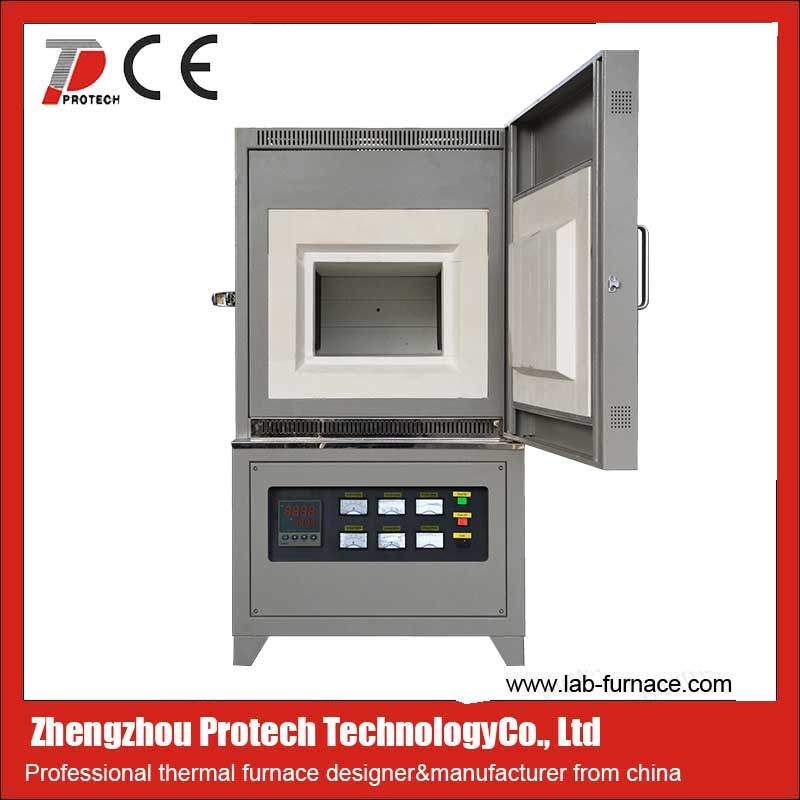
Small vacuum sintering furnace (click on the picture to view product details)
1. Equipment working principle
The high vacuum controllable atmosphere sintering furnace is mainly composed of a vacuum unit, a closed furnace, an atmosphere gas supply system, an MFC mass flow controller, an intelligent temperature control system, and a pressure monitoring module.
The process flow is generally divided into three stages: first, the vacuum unit is started to extract air, water vapor, and impurities from the furnace chamber, achieving the required high vacuum degree for the process and removing adsorbed gases inside the billet; Afterwards, according to the material requirements, choose to maintain the vacuum state or fill it with protective gas or reaction gas, and replace it multiple times to reduce the oxygen content in the furnace; Finally, according to the preset heating curve, the temperature is raised and insulated in a stable vacuum or controlled atmosphere environment to allow atomic diffusion inside the powder body, completing densification sintering. After cooling, high-performance workpieces are obtained.
The entire system can freely switch modes: pure vacuum sintering, inert atmosphere protected sintering, and reducing atmosphere heat treatment, adapting to differentiated material process requirements.
2. Core advantages
(1). Isolate oxidation and ensure material purity
The high-density closed chamber is combined with a high vacuum system, and the atmosphere is replaced multiple times to control the oxygen content in the furnace to a very low level. This fundamentally avoids the oxidation and deterioration of easily oxidizable materials such as tungsten molybdenum, samarium iron nitrogen, aluminum nitride, and hard alloys at high temperatures. The finished product has a bright surface and fewer impurities.
(2). Accurate and controllable atmosphere parameters
Equipped with a mass flow meter, it can stably adjust gas flow rate, ratio, and furnace pressure, support single or mixed gas input, with small atmosphere fluctuations and high consistency in performance of products from the same batch, suitable for the research and development of new materials sensitive to atmosphere.
(3). High temperature control accuracy, supporting multiple program curves
Adopting PID intelligent program temperature control, dozens of pre-set heating, insulation, and cooling process curves can be set, with adjustable heating and cooling rates and good temperature field uniformity, effectively controlling grain growth and stabilizing material mechanical, electrical, and magnetic properties.
(4). One machine for multiple purposes, compatible with multiple types of heat treatment processes
One device can achieve multiple heat treatment processes such as vacuum sintering, atmosphere sintering, degreasing, annealing, solid solution, reduction, etc., reducing equipment investment and providing high cost-effectiveness for laboratory and pilot production lines.
3. Main application areas
-Powder metallurgy and hard alloy industry: hard alloy cutting tools, metal injection molding MIM parts, vacuum sintering of refractory alloys to improve workpiece hardness and wear resistance.
-Advanced ceramic field: sintering of electronic ceramics such as aluminum nitride, silicon carbide, aluminum oxide, and piezoelectric ceramics to ensure ceramic density, insulation, and thermal conductivity.
-Magnetic materials: Samarium iron nitrogen, neodymium iron boron and other magnetic materials are sintered in an atmosphere to suppress abnormal grain growth and stabilize magnetic properties.
-Research and development of new energy and new materials: vacuum heat treatment and reduction experiment of battery materials, nano powders and composite materials.
-Metal heat treatment: bright annealing and stress relief treatment for titanium alloys, high-temperature alloys, tungsten molybdenum molybdenum alloys.
4. Key selection references
When choosing a high vacuum controlled atmosphere sintering furnace, one should not only compare the highest temperature, but also evaluate it comprehensively based on their own process
(1). Vacuum index: Distinguish between low vacuum and high vacuum, prioritize the selection of molecular pump high vacuum units for high-purity material sintering, and pay attention to equipment leakage rate parameters;
(2). Long term operating temperature: It is recommended to choose a temperature that is about 100 ℃ lower than the nominal maximum temperature of the equipment to extend the life of the furnace and heating elements;
(3). Atmosphere configuration: Confirm the material of the gas pipeline and the accuracy of the flow meter. If reducing gases such as hydrogen are used, they must be equipped with safety explosion-proof and exhaust gas treatment devices;
(4). Furnace material: Graphite thermal field, molybdenum heating element, and alumina fiber furnace have their own suitable scenarios, and it is necessary to avoid high-temperature reactions between furnace material, materials, and atmosphere;
(5). Chamber size: Distinguish between laboratory small sample equipment, pilot furnaces, and industrial production furnaces, and customize furnace specifications according to non-standard loading quantities;
(6). Manufacturer after-sales service: Vacuum furnaces are precision thermal equipment, while vacuum pumps, seals, and heating components are vulnerable parts. Priority should be given to manufacturers with stable supply of accessories and timely response.

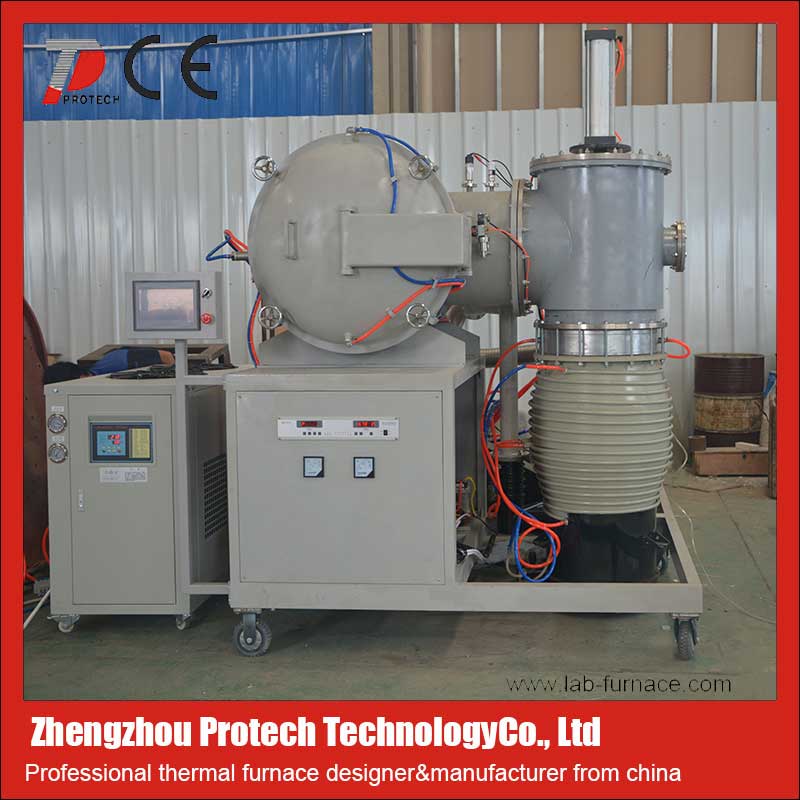
Industrial high output vacuum sintering furnace (click on the picture to view product details)
5. Summary
With the rapid development of the new materials industry, the requirements for heat treatment environment are becoming increasingly stringent. High vacuum sintering furnaces and controlled atmosphere sintering heat treatment equipment have become commonly used equipment for the preparation of fine materials. The vacuum mode is suitable for materials that require degassing and non oxidation dense sintering, while the controllable atmosphere mode is suitable for reduction and protection sintering processes. The flexible process switching ability can well meet the experimental and mass production needs of universities, research institutes, and new material enterprises.
If the existing standard models cannot match the special process, size, and atmosphere scheme, you can contact the manufacturer for non-standard customization.Click to learn more customized vacuum furnaces! Or click on online customer service to learn more about product information!

Leave A Message


